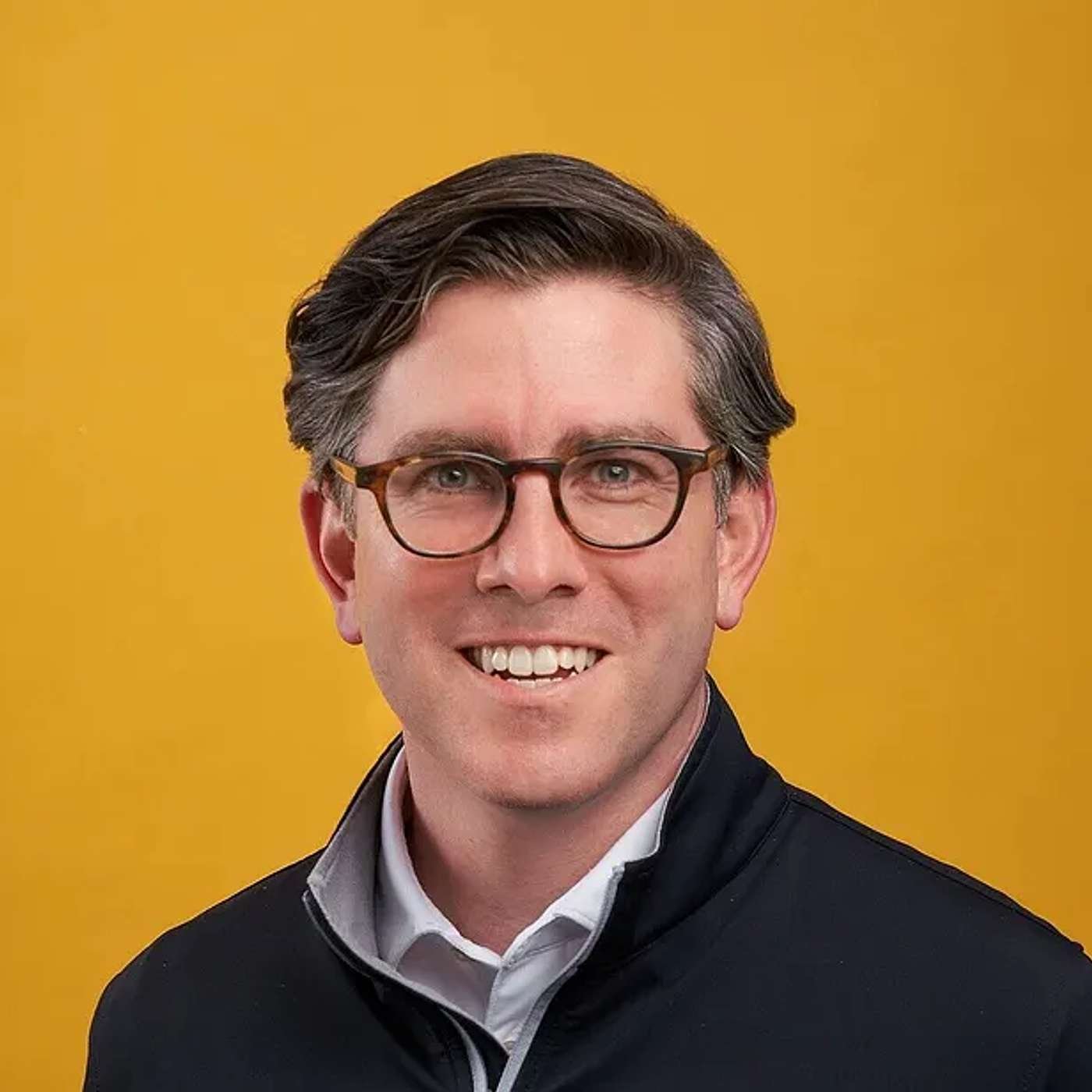
Georgia is the second-largest data center market in the country, and its grid is straining under load growth no one predicted five years ago. Michael Chanin, CEO of Cherry Street Energy, joins Tim to break down how behind-the-meter solar and storage are stepping in, why utilities need private capital to keep rates in check, and what a multi-gigawatt data center outside Savannah means for the region.
Tim sits down with Michael Chanin, CEO of Cherry Street Energy, a vertically integrated power company based in Georgia that develops, owns, and operates behind-the-meter solar and storage for commercial and industrial customers across the Southeast.
Georgia repealed its ban on third-party solar ownership in 2015, opening the door for “Solar Energy Procurement Agreements” (Georgia’s version of a PPA). Since then, Cherry Street has built a customer base that includes Delta Air Lines, Porsche Cars North America, Gulfstream, and the City of Atlanta, offering no-cost, no-upfront-investment solar that cuts customers’ energy bills and carbon footprint.
Chanin and Tim dig into what is driving unprecedented load growth in Georgia: the state is now the second-largest data center market in the US after Virginia, and OpenAI recently announced its “Project Camellia” data center campus near Savannah in Effingham County, a $20 billion, 3.2-gigawatt (3,200 MW) project built in partnership with Georgia Power. On the recording, Chanin describes the project as a joint Anthropic/OpenAI announcement and cites 4,000 megawatts of capacity; public reporting on this specific project ties it to OpenAI at roughly 3,200 MW, so that detail is worth a quick check with Chanin or Cherry Street before publishing.
Other topics covered:
- How Cherry Street’s economics pencil out: average customer electricity cost of 10-12 cents/kWh, build costs under $1.50/watt, and how real-time pricing has made solar competitive even against historically cheap fossil generation
- Cherry Street’s solar-plus-storage pilot with Georgia Power and the emerging value stack for behind-the-meter batteries (capacity payments, energy payments, demand management)
- Georgia’s Public Service Commission, including Chair Jason Shaw and newly elected Democratic commissioners Alicia Johnson and Peter Hubbard
- Cherry Street’s vertically integrated delivery model: in-house engineers, general contractors, and site supervisors that take a project from signed contract to energized system in under 100 days
Cherry Street Energy shows what happens when a state removes one legal barrier and lets the market do the rest. Georgia’s 2015 shift on third-party ownership opened the door. Rising load growth from data centers and electrification is now forcing utilities, regulators, and private developers to work together on a scale nobody planned for a few years ago. Chanin’s take is clear: solar and storage are not a side story in Georgia’s power future. They are becoming part of how the state keeps the lights on and the bills manageable. Listen to the full conversation for the details on Cherry Street’s build process, its storage pilot with Georgia Power, and what EPCs and developers should know before entering the Southeast market.
Connect with Michael Chanin, Cherry Street Energy
LinkedIn: https://www.linkedin.com/in/michaelchanin/
Website: https://www.cherrystreet.com/
Connect with Tim
Clean Power Hour
Clean Power Hour on YouTube
Tim on Twitter
Tim on LinkedIn
Email tim@cleanpowerhour.com
Review Clean Power Hour on Apple Podcasts
The Clean Power Hour is produced by the Clean Power Consulting Group and created by Tim Montague. Contact us by email: CleanPowerHour@gmail.com
Corporate sponsors who share our mission to speed the energy transition are invited to check out https://www.cleanpowerhour.com/support/
The Clean Power Hour is brought to you by CPS America, maker of North America’s number one 3-phase string inverter, with over 6GW shipped in the US. With a focus on commercial and utility-scale solar and energy storage, the company partners with customers to provide unparalleled performance and service. The CPS America product lineup includes 3-phase string inverters from 25kW to 275kW, exceptional data communication and controls, and energy storage solutions designed for seamless integration with CPS America systems. Learn more at http://www.chintpowersystems.com
0:51
You know, I'd hope the listeners would reach out in ways that we can be supportive because of what we call the Cherry Street scandal. As you might know, Tim, we're vertically integrated, which is to say, from the first customer conversation to the ongoing operations and maintenance, we manage a seamless process in doing that. It's
intro:
1:14
the clean energy industry is moving fast. The deals are getting bigger. The technology is evolving, and the stakes have never been higher. Welcome to the Clean Power Hour, the podcast for solar, storage, and microgrid professionals who want to stay ahead of it all, each week, your host Tim Montague, industry advisor and president of Clean Power Consulting Group, brings you unfiltered conversations with the leaders actually building the energy transition. Now, here's your host Tim Montague.
Tim Montague:
1:49
Today on the Clean Power Hour, what's going on in the Southeast United States? My guest today is a very storied company in the Georgia market and the Southeast, Cherry Street Energy, and their CEO Michael Chanin. Welcome to the show.
Michael Chanin:
2:05
Thank you so much for having me, Tim.
Tim Montague:
2:07
Great to have you. And Cherry Street has been on my mind for many years, and I finally got off the diamond. Here we are. So thank you for making tim for the show. You know, the I went to Artie Southeast for the first time this year, and it was a smaller show, but people were quite upbeat about the southeast, and it's noteworthy that some of the developers that I work with here in the Midwest are moving into the Georgia market. So tell us a little bit, Michael, about the Georgia market specifically. What were the origins of Cherry Street, and and then paint us a picture, if you would, of the markets that you're particularly interested in,
Michael Chanin:
2:54
of course, and thanks for having me, and appreciate the time and the work you do with your audience, educating the marketplace about what's possible and what's happening. Cherry Street is a power company. We're headquartered in Georgia, operate in the southeast, as you say, that sells competitively priced electricity, whether it's retail or wholesale. We got our start in Georgia with behind the meter commercial and industrial customers. The law changed. The third party ownership law changed in Georgia, and then laws occurred in the Carolinas and in Virginia, allowing for this customer-sided distributed generation, almost always for us behind the meter, and that's really where we where we focus. Increasingly now, we participate in some utility programs, and Cherry Street is acquiring some in front of the meter utility programs. Still, really in that southeastern footprint. Interestingly, perhaps this was actually my first year as well at the RE Plus Southeast event, which was good to see everyone. I've gone to Anaheim and Las Vegas and have that industry connectivity, and it's it's nice. I think there's some focused elements in the Southeast Georgia, which is where we spend most of our time, has unprecedented growth, load growth, and that's causing both price escalation and a real focus from customers to try to find solutions to manage their electricity spend, to have more control over the price that they pay, and some reliability, especially with the incorporation of storage, increasingly in the Georgia market, there's now going to be storage pilots where we can incorporate and have some of what the market seems to call these virtual power plants. And for us in our distributed power network, we can have solar plus storage and manage more on the demand side, as well as helping the system have a flatter load shape from its customers, so we see increased relevance for what
we do:
5:00
distributed generation, the incorporation of solar, the technology to support the system and the growth. Which Georgia is now the second largest data center market in the country after Virginia, and so it's just a need for more electricity, and this technology is by far the best to serve the communities where we are.
Tim Montague:
5:20
The Clean Power Hour is brought to you by SDE Sinclair Designs and Engineering, fixed tilt and carport racking, design, engineering, permitting, and manufacturing all under one roof in Michigan, no outside vendors, no waiting in someone else's queue, just fast turnaround and steel that ships when you need it. Ask Ag Energy Co. in Illinois or Sunrise Solar in the Mid-Atlantic. They'll tell you what it's like to work with the Sinclair team. SDE everything in house. Visit Sinclair-Designs.com. It does seem like we're at the right place at the right time in clean energy, even though the federal government is seemingly pushing back on solar, wind, and to a lesser extent batteries. The market talks, right? Money matters, and what gets built in the built environment is what is most cost-effective and available at any time. And it's hard to beat solar and batteries right now if you're a facility operator, whether that's a data center or a factory, or an office park, or a hotel, or a campus. I mean, you name it, and that price adoption curve, of course, is our friend, right? We have reached a certain point with, especially batteries now, right, where batteries are affordable, and you can 5x, for example, 456, depending on the market, x the value of energy by adding batteries. So it is very heady days. I'm curious, since Georgia is such a big data center market, and you know I follow data center news pretty extensively. It seems like a both and where the data center operators do want to pursue perhaps a microgrid initially, so they can speed their interconnection, but they're not resting on the laurels of any one technology. Have you guys gotten involved in any data center projects?
Michael Chanin:
7:26
No, I mean not not the ones of scale. I mean we we provide some to what used to perhaps be a large data center, like a seven to 10 megawatt data center, but but not any of the hyperscale data centers. We have not. We started having conversations in the last six months, both on the substation design, which seems like it's becoming a bit of a bottleneck, and in some of these, as you describe, kind of the bridge Capacity solar is just not a great direct pair, as you know, to that consistent load. And even doing so with storage, there may be some other solutions. You know, I think in Georgia, what we've been hearing increasingly is those who thought that they might have interconnection sooner in the next couple of years have just necessarily been delayed, and interestingly, even this past week, Anthropic OpenAI announced an enormous data center outside of Savannah in Effingham County, which is it's just huge. I mean, a 4000 megawatts of capacity double what we just built in Georgia. The most recent nuclear plants in the country were outside of Augusta. Plant Vogel Unit Three and Four each. These are AP 1000 Westinghouse. You know these are gigawatt nuclear plants that cost $18 billion each in a decade to build, and they're talking about a data center that is twice that size coming online, you know, in the next couple of years. And so the the state is really focused, and I'd say the region similarly on this all of the above approach. And you know, you've seen I know Vernova, you know, has this enormous backlog. We work with Mitsubishi Power outside of Savannah at their plant, where they've got you know years of backlog for gas turbines, and so I think everyone is just focused as much as serving that load. It's to say, what what do we do with everyone else, and how can we support that system, which is where we do spend a lot of time? So not directly with data centers, but supporting all of the others who used to, by the way, be quite large load customers, like a you know tire manufacturer that has a 65 megawatt plant, is seeing their real time price fluctuate in ways that five years ago would have been unimaginable in in our market, and so the solar solution becomes a really really compelling support for their operations. And for a company like Cherry Street that owns and operates and maintains, we're vertically integrated this infrastructure. So we invest, you know, 10s of millions of dollars into our customers to create for them that type of predictability and that coordination and close coordination with our utility partners as well to make sure that we can do it safely and reliably, and they can continue running operations in a predictable fashion.
Tim Montague:
10:33
So, you mentioned that power purchase agreements became legal. I think you call them something else still in Georgia. In Georgia, yeah,
Michael Chanin:
10:44
they're called solar energy procurement agreements.
Tim Montague:
10:48
And what this does is it unlocks 30. Party ownership, so you're building a solar or solar now a solar and battery asset that feeds power into the facility at some contracted price and offsets you know their load, reduces their carbon footprint, and then saves them money without making any upfront investment in infrastructure, right? So that's the basic value proposition. Why
Michael Chanin:
11:21
save money, go green?
Tim Montague:
11:22
Yeah, save money, go green. And and I noticed on your website,
Michael Chanin:
11:25
no cost, save money, go green.
Tim Montague:
11:27
On your website, you lean heavily also on the environmental footprint. Is is. Would you say that's typical of your ideal customer that they care about reducing their carbon footprint?
Michael Chanin:
11:42
We've not had a customer said they did not care, and we've not closed any deals only because they care. All of them, though you know, Delta Airlines has incredible commitments and and does a lot of work across their impact. They care a lot. Porsche Cars North America at their headquarters cared a lot, and and I think it matters. The city of Atlanta cares a lot, and they've made a commitment, a date certain that you know they want to eliminate it from. This is the combustion of carbon from all of their operations. So I do think that we've got customers that care deeply about it, and they are all in challenging spots because of the budget reality that they face and kind of the the negotiation of each of their roles, and so one of the great abilities that you know in 2015 the law changed in Georgia, allowing this third party model to own these assets because it took away what was the primary objection to them incorporating renewable power? This clean energy.
Tim Montague:
12:55
Yeah. When you think about how utilities see the landscape, they're charged first and foremost with providing you know reliable power, 24/7, 365, and for the most part, they do a good job at that.
Michael Chanin:
13:14
Yeah,
Tim Montague:
13:16
are they in some way by the current system required to guarantee a certain cost of energy, or is it sky's the limit? They can just continue to pass along whatever cost they see because there is this supply and demand, right? Demand is going up. We're building a lot of infrastructure, like data centers, like electric vehicle charging stations. We're also electrifying HVAC, so it's kind of a perfect storm now of load growth that we hadn't really seen for several years. Where where are the utilities at on this? And you and I, I think, are in agreement that renewables are a way to levelize the cost of energy, but the utilities don't always see it that way.
Michael Chanin:
14:03
Totally agree, and we're trying to surface in conversations like this and others. I hope can continue to do so, Tim. Historically, in a flat load growth case, which was the last 15 years in Georgia before maybe 23 or something like this, just absolutely flat from a a load growth perspective. The the perception, and before that, it really was just about it, the GDP growth and the utility and the price growth from a CPI was pretty predictable and pretty correlated. That broke three years ago, and so we're helping to educate what's going to be a change? Because to your point, the argument was that Delta choosing solar, you know, some residents on the residential side choosing solar created a cost shift. That's to say, these individuals had the benefit of taking you know their own generation, and that capacity then would shift cost of operations to others. That math breaks down now, and what is actually the case is the addition of distributed generation providing this capacity at the point of consumption brings down the overall cost of operation for everyone, and we actually, our chief technology officer Ben Damiani has now published and he'll present. He did at the Americas PV conference. He's going to Korea to present at the World Conference. Metro Atlanta was what we studied-a combination of using AI tools and the. Data set that we have, the Atlanta has about 10 gigawatts of rooftop and parking capacity, and that would bend the shape of the cost curve down. Your initial question was, does the utility, the regulated utility, have a obligation requirement, regulatory requirement, to make the electricity affordable. Their mandate is safe, reliable, affordable, and that is a balance. And it's to say there are levers that the Public Service Commission can pull to make sure that they try to maintain affordability, but a lot of this without help outside the system is going to be unavoidable. We need more transmission. Georgia has 18,000 miles of transmission. Georgia Power has requested and received approval to add another 1,000 miles of transmission, and that's just crazy complicated. In the last six years, 18,000 total miles, we've added 273 in the last six years. So just to add in 1000 miles in the next five is very very expensive and really pretty challenging to achieve. Those are net new miles, and so what we confront from an affordability perspective is a need for all sorts of corporations and individuals to step in and support the system to avoid these pretty dramatic in our market rate increases.
Tim Montague:
17:28
Yeah, I mean, from a first principles perspective, it's it's not that complicated, right? You don't need as much transmission and distribution if you have on-site solar and batteries. Like it's just not. It's the right way
Michael Chanin:
17:41
to build the system, and the built environment is going to incorporate renewable power on every structure that can support it. And then we're going to have dispatchable power and have a huge ability. I mean, the grid's going to be the backbone of our infrastructure for this foreseeable future. But it's 100 plus years old. We've got to find new technology and new ways of supporting our ability to dispatch it.
Tim Montague:
18:05
Well, what are your thoughts about that? Because you know, as I was just saying this morning, you know, Tom Edison would recognize the grid that we have around us in our daily environment, and that grid needs to become smarter, more dynamic, and incorporate some basic technologies like community scale microgrids, you know, where you can island big chunks of your urban or suburban environment. If in the case of an outage, we have the technology, it just seems like there's a playbook that the utilities have, which is build TND and they have this cost plus model, and so that works, and they just want to rinse, wash, repeat instead of really shifting to a more modern approach. How do we, how do we get utilities to recognize that things are different now?
Michael Chanin:
19:08
Yeah, so I mean, I think you underscore one certainly, which was it, Charlie Munger who said, "Show me the incentives, and I'll show you the outcome. That transmission and distribution, and frankly, the capex on central distribution power plants is the cost mechanism for recovery that utilities make their revenue. I mean, if you read the earnings reports on the Southern Company that you know the Wall Street analysts put out, it's the guaranteed return on invested capital for distribution capex, transmission capex, as well as new power plant. That's how they make money. And so once we start incentivizing outcomes for these other types of programs, and that they can get cost recovery and revenue share from those those programs. I think that there's going to be a lot more of that. I also think just the nature of reliability that people anticipate and the knowledge that it's going to be
possible. You said it earlier:
20:05
the market is going to speak. I mean, a tree falls down the street from someone in Central Illinois, people are going to stop just waiting for someone to come put all the poles back up. We've got better systems that we can put in place so that people aren't losing power in storms and things like this. Battery storage is going to be a major part of that buildout, but solar will too. And so I think the steps that we're going to take are going to be regulatory steps and just programmatic steps. I mean, I think that there's going to be the the push when when these technologies become available, and some of that I think it's it's that it's just happening in real time. Candidly, we still run into inverter issues for some of the controls that are going to. Necessary for large commercial batteries, it's just not there yet, and so I think the market rightly is being patient for those to get developed before it pushes really hard. Because I think the mistake would be to say, "Hey, we really want this program to be here today, and then recognize that all of the things that we need for that program to operate aren't fully there. The clearing mechanisms, the pricing mechanisms, some of the bidirectional interconnection agreements that are going to be necessary. I think all of that's happening in real time, and it's going to be a really exciting couple of years. To your point, Edison would recognize it today. I think 20 years from now, it's going to be unrecognizable.
Tim Montague:
22:22
Yeah, I agree. It is going to be dramatically different. The Clean Power Hour is brought to you by CPS America, maker of North America's number one three-phase string inverter, with over 10 gigawatts shipped in the U.S. The CPS product lineup includes string inverters ranging from 25 kW to 350 kW. Their flagship inverter, the CPS 350 kW, is designed to work with solar plants ranging from two megawatts to two gigawatts. CPS is the world's most bankable inverter brand and is America's number one choice for solar plants. Now offering solutions for commercial, utility, ESS, and balance of system requirements. Go to chintpowersystems.com or call 855-584-7168 to find out more. Let's talk about behind the meter storage. How much behind the meter storage is now happening in the southeast, and how do you, I guess, how do you put together the value stack in just say Georgia Power, the market you know best?
Michael Chanin:
23:34
Yeah, yeah. So it's it's pretty limited today. I mean, I think there's some residential battery storage. I don't think there's a lot of it, and that residential battery storage is only for a backup gen set. Effectively, there's there's really not any bidirectional battery programs that exist today. We're working actively. Cherry Street is with Georgia Power in a solar plus storage pilot, which will enable batteries to support both the customer and the system. The value stack initially seems that it's going to be a couple of layers. There's going to be capacity payments for you know making sure that capacity is available and reliable. Then there will be energy payments for the kilowatt hours that are provided during the times that it's called, that's on the utility program side. So that's to say, owners of those assets will receive capacity benefit and energy benefit in time that should be knowable. They'll also then be benefit to the user on the demand side and having some ability to control demand, as well as managing some of the cost during peaks. So there's both programmatic benefit as well as demand benefit. Then I mean it's incumbent for those who are looking at these options to understand, as you do, some of the complexity and modeling those. You've you've sat through more, I'm sure, of these presentations that seem like they're seven or eight different layers of the value stack, and there's probably five or six ways that those layers can cannibalize each other. So, I think it's important not to overstate, but there there are several value streams that'll come from the incorporation of behind the meter storage.
Tim Montague:
25:30
And so, is storage development like top of mind or something that you're still waiting for better rules and regulations on?
Michael Chanin:
25:42
No, it is very top of mind. I think for us, I mean, we have our first ones that have been deployed that we're piloting and working through some of what I'd say are the initial learnings of different capabilities, different curtailment, different specifications, and then kind of different vendor communication between the different layers of technology, working very closely with Georgia Power. Virginia also has a interesting program right now on on rolling those out, and then working with both Georgia Power and other utilities, the cooperatives in Georgia and in other states on some front of the meter utility cited storage. A couple of those are just tolling agreements. The availability for it, but I think that there's a lot of interest on the utility side for some of the some of those storage programs.
Tim Montague:
26:40
So if you're a commercial. Solar company, whether you're an EPC or a developer, and you're you're trying to understand Georgia, perhaps South Carolina, perhaps Florida. Where is the puck going? Like, how is how are these markets going to change in the next three to five years.
Michael Chanin:
27:05
Our sense is the market continues to open up. I mean, our technology, as you rightly call out, is by far the fastest to serve, and the levelized cost is less than the prevailing. I mean, this is for someone to receive, you know, an adequate payback if it's an EPC, or if it's a developer looking to provide you know a commercial customer with competitively priced electricity, the market here is is well past the point that you know we would call grid parity. That's to say, our delivered energy is very competitive in any way someone models it today, and so for those looking to come, I mean the the bar really is just ensuring that they're using best in class technology and all of the appropriate, both just safety and industry best practices. I mean the worst case for us is that people see a really attractive market and come in and try to cut corners, and it's really where we've tried to focus the most to say that all of us, it's incumbent, use rigor and precision in the delivery of of this product and making sure that you know we we keep the right standard.
Tim Montague:
28:21
And so when Cherry Street is talking with CEOs of major companies. I mean, the the portfolio projects that you have on your website is quite impress impressive. You know, companies like Gulfstream, the airplane manufacturer, and but tell us how is public perception of behind-the-meter solar? Do people understand what it is and how it reduces costs?
Michael Chanin:
28:50
No, we have so much time that we've got to spend educating the market, and we'll continue doing so. The viability of this technology-you likely did, but some of your audience might not. Tim, you know the first solar panel battery ever, you know, in the wild, as it were, outside of the lab was in Americus, Georgia, in 1955. Bell Labs, on the top of a telephone pole, put a solar panel. This was, however, this is 70, 71 years ago now, that this technology has been here, and there's just a lot of uncertainty. What does it mean? How does it work? How does it incorporate into my operations and system? You know, questions from is it going to make noise to all of the other kind of life cycle questions that exist. Our focus as a firm, which is one of the benefits, and I appreciate you enabling the space for for this conversation, is letting people know this is a technology that's going to be incorporated into every building to help improve operations. I mean, we're spending millions of dollars to enhance facilities for customers to be able to operate with more predictability, and and that message is one that we we have to continue carrying for sure.
Tim Montague:
30:09
And as far as working with the PSC, the Public Service Commission, how is that? How easy is it to be a solar developer in Georgia?
Michael Chanin:
30:23
It's great. We've got a helpful public service commission. As you know, we're not regulated, but we have direct access and open communication and conversation with our chair, Jason Shaw, who carries a lot of responsibility for for how to think about viable operations, so that everybody in the state can have reliable access to electricity, is accessible. And now, candidly, on both sides of the aisle, we just elected two new Democratic Public Service Commissioners, Dr. Alicia Johnson and Peter Hubbard, who are carrying in the minority a lot of a voice to say that there's focus on this, and you know they they won handily in their election, which I think was the electorate saying that we're focused on this role and the regulation and how it occurs, and so I'd say that we've got a very active public service commission that works collaboratively with the stakeholders and the interveners to make sure that we can continue focusing on on reliability and I think the the life cycle of a lot of the generation types that we use. You know, Georgia in the last 15 years went from a state that was something close to 70 percent. Coal to now being 20% coal, which is just a huge shift, and I think it frankly is even less now. I think we're at like 13% coal, and the coal that's running at a 35% utilization or less, and so that that shift that's being managed is really driven a lot by the Public Service Commission, a commissioner called Bubba Watson, passed. It's probably 10 years ago now or more. You know, Georgia is still, I think, top 10, probably seven in the country in the amount of solar, and all of those came from the Public Service Commissioners pushing for it. The
Tim Montague:
32:19
Clean Power Hour is brought to you by SDE Sinclair Designs and Engineering, fixed tilt and carport racking, design, engineering, permitting, and manufacturing all under one roof in Michigan. No outside vendors, no waiting in someone else's queue, just fast turnaround and steel that ships when you need it. Ask Ag Energy Co. in Illinois or Sunrise Solar in the Mid-Atlantic, they'll tell you what it's like to work with the Sinclair team. SDE Everything in-house. Visit Sinclair-designs.com. Well, what else should our listeners know about Cherry Street? I just don't know what I don't know, so I'm curious what you think is noteworthy about what you guys are doing.
Michael Chanin:
33:10
You know, I'd hope the listeners would reach out in ways that we can be supportive because of what we call the Cherry Street standard. As you might know, Tim, I mean, we're vertically integrated, which is to say, from the first customer conversation to the ongoing operations and maintenance, we manage a seamless process in doing that. It's our own electrical engineers that stamp our drawings. It's our own general contractors on our team that pull our permit. It's our site supervisor on every job that we do, and our team commissions it. We now, from signing a contract to delivering that electricity to the customer, can do so inside of 100 days, and that's you know witness tested with the local utility. That type of speed and precision came out of the playbooks that we wrote to try to lift up best-in-class practices for for how to install. And our sense is, you know, this is from the right pounds of torque to the right wire management. That that everybody should have this shared interest in the industry, really to use the best product possible and in the best practices possible. It's working with nonprofits like Heat Spring or others on training. We have our own solar school where we help train in each of the communities we serve skilled labor for for our install. We work with Stably consistently to teach classes in the right type of crimping, and in some of those pieces in the industry, you know, a lot of times we talk about our. You would hear me say that I read these headlines with people talking about their bragawatts. You know, it's like I just I close some huge pipeline or huge number. For us, the small sites is important as a big one, as long as it's completed and built in the right way, and I think from an industry perspective, what I always try to encourage is is that we all egg each other on, lift each other up in supporting some of those best practices, because where we run into the biggest issues as a company, and I think as an industry, is it takes one headline of someone that you know sold a system and it never had O and M or designed a system that wasn't completed the right way that tied in a system that didn't have the right terminations. And one bad event for us is is incredibly hard to overcome. And so, just trying to continue encourage everybody to reach out if they need help, if they're curious about best practices, if they want to know, you know, ideas, we've got a team that's really open to that type of collaboration. One
Tim Montague:
35:52
of the greatest challenges in the U.S. especially in the middle part of the country, is that legacy electricity is very cheap. We have very subset of fossil energy resources. How have you managed to make the solar energy contract, or or SEPA, as you call it? I call it a PPA. How have you managed to make that pencil?
Michael Chanin:
36:20
Yeah, I'd say PPA is is the right. You know, our average cost for electricity for our customer is somewhere between 10 and 12 cents a kilowatt hour, and for almost all of our systems, we can build for less than $1.50 a watt, and that's really the math. You know, I always think people have a vested interest in making things more complicated than they are. We have the benefit of a good amount of available sunlight. I mean, the sun shines in Atlanta somewhere around 1450 hours a year at 10 cents a kilowatt hour. That system is going to generate somewhere a little north of $150,000 a year if it's a megawatt system, which would have cost us a million and a half dollars to build, and so that math, just using that those numbers, would be about a 10% cash on cash yield, and so I I think that pencils. I mean that was the the premise that really predicated the start of our business. Now, candidly, where I think it gets into trouble is that people inflate those numbers in a lot of different ways. There are a lot of different intermediaries that create incremental margin that make it challenging to pencil. And so we have really focused. It's part of our vertical integration, but just generally, I would say that for the market to work, I think that you got to be able to work on the back of where that is. I don't know the Midwest market that well, so I can't speak specifically to where the prevailing commercial rate of electricity is. But I can say, you know, 10 years ago in Georgia, for a large industrial load, the price of electricity was somewhere around six cents a kilowatt hour, and and we could not compete with that today. That same large load customer, they might quote an eight or nine cent a kilowatt hour rate, but in the middle of the day, that eight or nine cents is 18 cents plus, because most of those large load customers are on a some form of a real time price, and that's where our 10 cent electricity becomes competitive.
Tim Montague:
38:28
Hey guys, are you a residential solar installer doing light commercial but wanting to scale into large CNI solar? I'm Tim Montague. I've developed over 150 megawatts of commercial solar, and I've solved the problem that you're having. You don't know what tools and technologies you need in order to successfully close 100 kW to megawatt scale projects. I've developed a commercial solar accelerator to help installers exactly like you. Just go to cleanpowerhour.com, click on strategy, and book a call today. It's totally free with no obligation. Thanks for being a listener. I really appreciate you listening to the pod. And I'm Tim Montague. Let's grow solar and storage. Go to Clean Power Hour and click Strategy today. Thanks so much. All right, I think we'll leave it there, Michael Chanin with Cherry Street. Thank you so much. Check out all of our content at CleanPowerHour.com. Please tell a friend about the show. That's the single best thing you can do to help others find this content. Connect with me on LinkedIn, and by all means, meet up with me in Chicago at RE Midwest or RE Vegas, the big show, and with that, Michael, how can our listeners find you?
Michael Chanin:
39:49
CherryStreet.com and on LinkedIn, and happy to connect. We look forward to the conversation.
Tim Montague:
39:58
I'm Tim Montague. Let's grow solar and storage. Have a great day. The Clean Power Hour is brought to you by CPS America, maker of North America's number one three-phase string inverter, with over 10 gigawatts shipped in the U.S. The CPS product lineup includes string inverters ranging from 25 kW to 350 kW. Their flagship inverter, the CPS 350 kW is designed to work with solar plants ranging from two megawatts to two gigawatts. CPS is the world's most bankable inverter brand and is America's number one choice for solar plants. Now offering solutions for commercial, utility, ESS, and balance of system requirements. Go to chintpowersystems.com or call 855-584-7168 to find out more.