Tennessee’s electric utilities are facing a new reality: rapidly growing electricity demand, aging infrastructure, and rising expectations for reliable, affordable power.
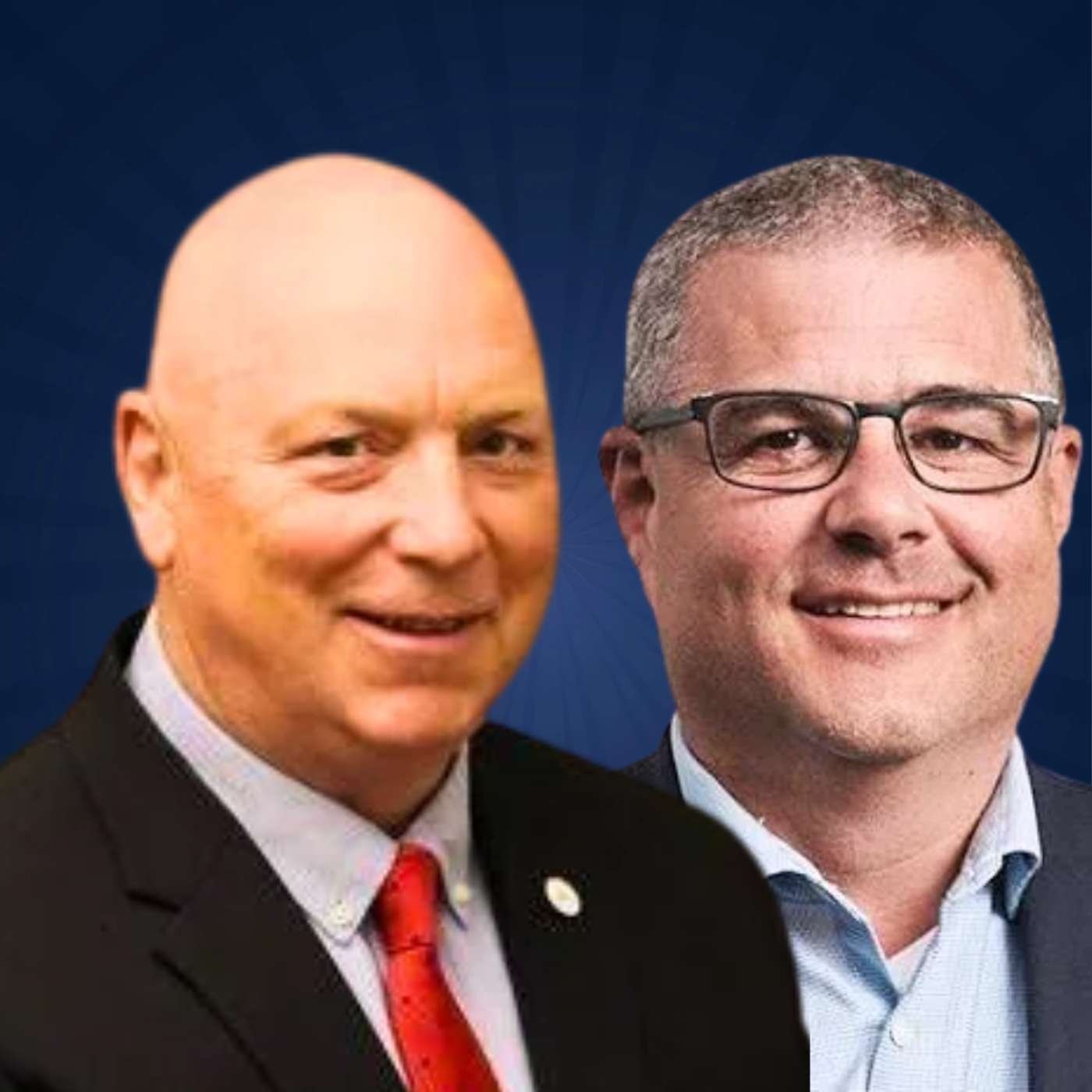
In this episode of the Clean Power Hour, Tim Montague speaks with two utility leaders at TenneSEIA’s Tennessee Valley Solar + Storage Conference in Chattanooga: Doug McGowen, President and CEO of Memphis Light, Gas and Water (MLGW), and Brad Gibson, Chief Operating Officer of Middle Tennessee Electric (MTE).
Doug discusses how AI data centers, including xAI’s Colossus facilities in Memphis, are reshaping electricity demand after years of relatively flat load growth. He explains how MLGW is protecting existing ratepayers through infrastructure cost requirements, interruptible power agreements, and investments in battery storage.
Brad shares how Middle Tennessee Electric is modernizing its distribution grid through smart switching, fiber connectivity, solar, battery storage, and microgrids. He also discusses the growing importance of customer communication, outage restoration, and helping members adopt distributed energy resources.
Together, these conversations offer a look at how Tennessee’s local power companies are balancing rising demand, grid reliability, affordability, and the transition to a more flexible electric grid.
Key Topics Covered
- AI data center growth and its impact on Memphis’s electricity demand
- Protecting ratepayers through interruptible load agreements
- MLGW’s plans for 115 MW of battery storage
- Grid modernization and improved outage reliability
- Middle Tennessee Electric’s 32 MW battery storage deployment
- Smart switching, fiber networks, and faster outage restoration
- Solar, distributed energy resources, and microgrid development
- The evolving relationship between TVA and local power companies
Connect with Our Guests
Doug McGowen LinkedIn: https://www.linkedin.com/in/doug-mcgowen-09223229/
Website: https://www.mlgw.com/
Brad Gibson LinkedIn: https://www.linkedin.com/in/bradleyagibson/
Website: https://mte.com/
#CleanPowerHour #EnergyStorage #DataCenters #GridModernization #SolarEnergy #Microgrids #TVA
Connect with Tim
Clean Power Hour
Clean Power Hour on YouTube
Tim on Twitter
Tim on LinkedIn
Email tim@cleanpowerhour.com
Review Clean Power Hour on Apple Podcasts
The Clean Power Hour is produced by the Clean Power Consulting Group and created by Tim Montague. Contact us by email: CleanPowerHour@gmail.com
Corporate sponsors who share our mission to speed the energy transition are invited to check out https://www.cleanpowerhour.com/support/
The Clean Power Hour is brought to you by CPS America, maker of North America’s number one 3-phase string inverter, with over 6GW shipped in the US. With a focus on commercial and utility-scale solar and energy storage, the company partners with customers to provide unparalleled performance and service. The CPS America product lineup includes 3-phase string inverters from 25kW to 275kW, exceptional data communication and controls, and energy storage solutions designed for seamless integration with CPS America systems. Learn more at http://www.chintpowersystems.com
0:50
We never had to worry about having enough energy, so that is all flipped in just a matter of just a few years here. Where now we need as much generation as we can get, we need as much capacity as we can get, we need to do as much work as we can on the demand side management to ensure that we can bridge the gap between where we are today and the demand that we have and where we need to be in the future.
Brad Gibson:
1:10
If you think about 20 or 30 years ago, the goal was get the lights back on in an outage situation, and it's absolutely we want to get the lights back on in an outage. But the consumer expectation around communication, you know, what caused the outage? Has somebody been dispatched? What's the estimated time of restoration? Those communication pieces have a huge impact on on driving satisfaction.
intro:
1:34
clean energy industry is moving fast. The deals are getting bigger. The technology is evolving, and the stakes have never been higher. Welcome to the Clean Power Hour, the podcast for solar, storage, and microgrid professionals who want to stay ahead of it all. Each week, your host Tim Montague, industry advisor and president of Clean Power Consulting Group, brings you unfiltered conversations with the leaders actually building the energy transition. Now, here's your host Tim Montague.
Tim Montague:
2:08
Quick context for this: this episode pairs two conversations from Tennessee. First, Doug McGowen, president and CEO of Memphis Light, Gas, and Water. Then Brad Gibson, chief operating officer of Middle Tennessee Electric. Both buy wholesale power from TVA. Both run the local grid that delivers it, and both now face something the valley hasn't seen in a decade fast rising demand. All right, we're here with Doug McGowen at the Tennessee Conference 2026 in Chattanooga, and Gil Hough came to me and said, "Tim, you got to grab Doug." So here we are. I really appreciate you making a few minutes for me, Doug. What is going on in Memphis that you're excited about?
Doug McGowen:
2:54
There's a lot going on. We're a three-service utility. We have about 450,000 electric customers. We have a million meters in total between gas, electric, and water. We're seeing increasing demand across the system. Obviously, there is some residential growth, some commercial growth, but mostly we've had the biggest growth we've had has been in the data center area, Colossus. The XAI computer is located in Memphis, Tennessee. It's getting a lot of attention. They have two facilities there. One is about a 300 megawatt load. The other is going to be eventually more than a one gigawatt, up to two gigawatt load that spans the Tennessee Mississippi line. The things that are exciting for me is the dynamic time that we're in. We've came off really a 10-year period of kind of flat load growth to declining energy sales because of all the wonderful energy efficiency, high efficiency appliances, and we didn't really have a ton of population growth. And now suddenly, and we also came out of that period with energy abundance. You know, we never had to worry about having enough energy. So that is all flipped in just a matter of just a few years here. Where now we need as much generation as we can get. We need as much capacities we can get. We need to do as much work as we can on the demand side management to ensure that we can bridge the gap between where we are today and the demand that we have, and where we need to be in the future, with generation of all types to meet the load growth that we're seeing.
Tim Montague:
4:15
Yeah, I mean, I I do like it that Elon talks about bringing your own power. That was how he was able to commission Colossus so quickly, and that is a double edge, though, because there is always there's always trade offs, right? So I don't know if you want to speak to that regarding data centers.
Doug McGowen:
4:35
Well, so it is. It's a double-edged sword. The speed to market meant that he had to generate some own power behind the meter before he could be grid connected because it just takes time to physically build out substations. The thing I'm proudest of of what we've done together with TVA is that before the ratepayer protection pledge came in, we mandated that he pay for all of the infrastructure that was necessary to provide electric power. There, all the transmission distribution. We mandated two substations that they eventually paid for to build, and they're still building the second one now. We demanded they be on a power interruption program, which they are on, and they have successfully executed that power interruption program. So, and now TVA has adopted the ratepayer protection plan. They've put into place the new data center rate. They've put into place the new capacity fee that is going to be applicable to any future data center, which models what we've already done there.
Tim Montague:
5:30
For context, TVA signed the federal ratepayer protection pledge in July 2026. Under the pledge, data centers cover the cost of power and grid upgrades they need. TVA's new data center rate started October 1 and adds a capacity charge for new loads above 5 megawatts.
Doug McGowen:
5:48
So. The behind-the-meter generation became a community flashpoint because it is natural gas turbines, and obviously there is that's a polarizing issue. Number one, they do generate power, but number two, they do have emissions. There's no question. Certainly cleaner than coal and some other sources, but there's no question that that number of turbines do produce some emissions, and temporary or not, it causes the community to be concerned. Now, fortunately for us, those are temporary, and as soon as they're grid connected, the turbines go away. Some of them will stay in places, backup generation, which is good. You know, modern clean aero derivatives are probably the best backup generation you have if you don't have batteries for a longer term. But having them permanently running 24/7 is is what gets the community, and I think rightly so, concerned. So the faster we can get a grid connected, the faster they can have battery backups, and the faster we can can meet the overall energy demand of these data centers without hazarding the availability, reliability, or affordability of power for any existing customers is going to be a welcome day.
Tim Montague:
6:55
Okay, so what are the other challenges that you face in Memphis, and where do batteries, you know, come into the equation? I guess solar and batteries. What's going on there? Well, like everybody
Doug McGowen:
7:06
else, we would like to be able to shave our peak so that we can save money for our ratepayers, and so we have put into place. We put an RFP out for some battery storage. We received response to that RFP. We're pursuing a 15 megawatt battery right now with one of the successful respondents. We also have another program called the Energy Express program. We're doing a partnership with seven states, which is a cooperative GNT that's here in the Tennessee Valley. They're owned by all 150 member local power companies. That Energy Express is a 220 megawatt battery project that's put into place over three different utilities: 100 megawatts at MLGW, then 100 at Nashville Electric Service, and 100 in Bright Ridge in the eastern part of the state. A
Tim Montague:
7:47
quick correction on those numbers: Energy Express splits its 220 megawatts three ways, 100 at MLGW, 100 at Nashville Electric Service, and 20 at Bright Ridge. Seven States Power, which is owned by TVA's 153 local power companies, leads the project with a target of 2028. Add MLGW's separate 15 megawatt battery, and Memphis gets 115 megawatts of storage. The Clean Power Hour is brought to you by CPS America, maker of North America's number one three-phase string inverter, with over 10 gigawatts shipped in the U.S. The CPS product lineup includes string inverters ranging from 25 kW to 350 kW. Their flagship inverter, the CPS 350 kW, is designed to work with solar plants ranging from 2 megawatts to 2 gigawatts. CPS is the world's most bankable inverter brand and is America's number one choice for solar plants. Now offering solutions for commercial, utility, ESS, and balance of system requirements. Go to chintpowersystems.com or call 855-584-7168 to find out more.
Doug McGowen:
9:08
We're about a you know 3500 megawatt peaking system in our in the highest peak year we've ever had, so 115 is a good start. It's certainly not where we want to end up, and we need to be targeting more like 10% of our system. We pair that with the interruptible products that we have. We have subscribed a lot of companies to interruptible products, so we have more than 300 megawatts of interruptible products. Pairing that with 150 megawatts of battery certainly gives us some additional capacity to protect existing customers from increasing demand and supply that might be constrained. So, when
Tim Montague:
9:40
you say interruptible products, what are you referring to?
Doug McGowen:
9:43
So, an interruptible product is, for instance, with XAI, when we agreed to give them 150 megawatts of of power, in addition to building out the entire grid that was necessary to serve them, they also had to agree to be on power interruption program. Meaning, for if there was an economic reason why we needed them to curtail, so in other words, TVA was going to have to go to the market to buy expensive power, we could order XAI to curtail. So we didn't have to do that purchase. If there was a kind of a capacity constraint. We could also order them to curtail, and that has been the case since they stood up and they have complied with all of those curtailment orders, which has protected number one the rates for existing customers and number two the energy availability for existing customers.
Tim Montague:
10:27
Okay, I do see some parallels between what you're doing in Memphis and Chattanooga? Do the is there a lot of communication between the LPCs in the valley?
Doug McGowen:
10:40
Incredible amount. We have an organization here called TVPPA that serves all 153 power companies and is an advocate for the things that are common amongst all the power companies. We have smaller groups of individuals that get together. I'm a part of one that's called the Big Eight. It's actually nine or 10 of the largest power companies because we have things that are of common concern to the larger power companies. We have ostensibly more technical capabilities in dynamic voltage control, advanced distribution management systems than maybe some of the smaller systems do. So we all are rowing in the same direction, but you have the smaller affinity groups that also share information of common concern. You know, if you're larger, you may have more capacity to do some more things. So, but at the end of the day, we all sink or swim together in the Tennessee Valley. So, lots of communication. I will say, TVPPA does a great job of keeping everybody informed and having meetings on a regular basis. TV8 does a good job of getting the local power companies together. For us in the Big Eight, we meet quarterly, all the CEOs, and talk about issues and strategies and things that we might like to advance. And the byproduct of that is really this partnership with seven states to do this Energy Express project, where we said, "Hey, we're going to step up to the plate and try to help deliver this." It came from a USDA grant through the Rural Utility Services section of USDA that subsidized that project. So we want to bring that money and that capacity to the valley, and that's how we were able to do it.
Tim Montague:
12:14
Would you say that reliability concerns are going up or down in the next five years in the TMA
Doug McGowen:
12:23
across the Tennessee Valley? I think people are concerned about an aging infrastructure grid and the ability to to manage an increasingly loaded transmission system. I'll say at the at the local level at Memphis-like gas and water, we had had several decades of declining reliability, largely due to lack of investment because we have rate-making body that's the Memphis City Council, in addition to a board that meets, and they were hesitant to give necessary rate increases that we really needed in order to make investments. So at Memphis Light Gas and Water, we're coming off of some poor performance, and we're increasing that. We've had the ability through tree trimming and replacement of infrastructure and modernizing the grid to reduce customer outage minutes by 60% in the last three years, and we're not done yet. We need to really continue to do that. Writ large, I think we all worry about availability of power. Reliability is probably secondary in people's minds today, given the headlines. But certainly, as a practitioner, you have to worry about the reliability. That's why we're all in on making sure that before we add any new loads, that we're not impacting the reliability of power for any of our existing customers, because we know that if you don't get that right, you can really cause some issues. Doug, how can our listeners find you? Well, you can find me at Memphis Light Gas and Water mlgw.com. We have a website there that you're able to look up, and you'll see all the programs that we have available. We're also on all the social media platforms. If you just type in MLGW, there's only one of us with the largest three-sector municipal utility in the country, serving the electric, gas, and water needs of everybody in Shelby County. It's 936,000 people that count on us to deliver reliably each and every day.
Tim Montague:
14:59
Thank you so much. Thank you. Really appreciate it. Appreciate you. The Clean Power Hour is brought to you by SDE Sinclair Designs and Engineering, fixed tilt and carport racking, design, engineering, permitting, and manufacturing all under one roof in Michigan. No outside vendors, no waiting in someone else's queue, just fast turnaround and steel that ships when you need it. Ask Ag Energy Co in Illinois or Sunrise Solar in the Mid-Atlantic. They'll tell you what it's like to work with the Sinclair team. SDE everything in-house. Visit Sinclair-designs.com. Memphis Light Gas and Water is city-owned and runs electric, gas, and water. Next, a different model inside the same TVA system. Middle Tennessee Electric is a member-owned cooperative, one of the largest in the country, serving about 750,000 Tennesseans. Doug focused on supply and load growth. This next conversation centers on members, service, outage communication, and grid technology. We're here with Brad Gibson at Tennessee at 2026 in Chattanooga. Brad, welcome to the show.
Brad Gibson:
16:12
Thanks for having me, Tim. Good to be here.
Tim Montague:
16:13
Really appreciate it. So, what are the high-level must think about on a daily basis subjects in your world.
Brad Gibson:
16:25
Yeah, there's one that just comes to mind immediately, and that is remaining customer centric, thinking about how we serve our our members at the co-op at world class levels. That's that's the number one driver of the way we need to process everything and the filter we need to put everything through day in and day out.
Tim Montague:
16:43
So translate that into the real world in terms of running the Middle Tennessee Electric. Like, what does that mean?
Brad Gibson:
16:53
So again, kind of four basic pieces that you don't
want to lose sight of:
16:57
the blocking and tackling of affordability, reliability, safety, and then doing that all through that lens of outstanding service,
Tim Montague:
17:06
and it sounds great, right? And the challenge is how do you translate that really right into a day-to-day operation? But how do you maintain good customer service? What is that? What is that in you know in terms of how you're interfacing with your customers,
Brad Gibson:
17:23
yeah. So, and you're right. We have to make sure we're we're listening to their their wants and needs. They're evolving. They're changing, and so we've got to be great listeners, making sure that we have the right program designs, the right products that they want. Of course, they want reliable service, but you know, if you think about 20 or 30 years ago, the goal was get the lights back on in an outage situation, and it's absolutely we want to get the lights back on in an outage. But the consumer expectation around communication, you know, what caused the outage? Has somebody been dispatched? What's the estimated time of restoration? Those communication pieces have a huge impact on on driving satisfaction, and so yes, we have to get the lights back on quickly and safely, like we've always had to do in an outage situation. But making sure we're also lowering in the things that the member expects that we've got to do that better than we've ever done before, and differently than we've done before.
Tim Montague:
18:18
And so there's there's you know new tools like cellular communication, right? The utility can communicate with its consumer in real time now. Is that something you're doing? If there is an outage, are you keeping consumers abreast of when the lights might come back on?
Brad Gibson:
18:34
Yes, absolutely. So we have a mobile app now that's deployed. People can sign up for you know updates, get those those pieces of information through their phone. We push that information out. I think the other piece too is just layering in the technology. I mean, we're first and foremost an electric cooperative delivering electrons to the meter on the side of the house, but we also have a broadband company, and so that fiber infrastructure that's being put in place is connecting more and more devices across that infrastructure, so that we can switch the grid in real time to help keep reliability at world class levels, like we've never seen before. Because again, the consumer expectation is we don't just not want an outage; we want that restoration when it does unfortunately happen to be at lightning speed. And so, those pieces being put together, I think, really help us achieve expectations.
Tim Montague:
19:23
And how are consumer expectations and choices changing? You know, here in 2026, consumers have options. They could install solar. They could install batteries. They could install an electric vehicle charger. What are some of the you know changes that are that are happening with your consumers.
Brad Gibson:
19:45
Yeah, and those are questions that we get asked. And one of the things that we have a DER group now that's there to help enable those things. And so you know, when when we have good engagement with with our members, and they are asking about solar and storage and EVs, we want to have resources, expert resources, on staff that we make available to them to do that the right way, to do it safely, to enable it, to maximize what they're looking for. So I think that's one thing that Middle Tennessee Electric's been able to do successfully over the past handful of years is really have internal resources we make available to our members that want to do those things. When
Tim Montague:
20:22
I think about the TVA, I think about the Tennessee Valley Authority, right? That federal entity, and it is also generating power, mass quantities of power, right? A lot of hydro, a lot of nuclear, and then a variety of other
things:
20:40
gas, coal, some solar now, but and then the the LPCs, the local power companies, are running the the distribution grid, right?
Brad Gibson:
20:53
Yeah, that's right. That's
Tim Montague:
20:54
your business. Yes, you are you're taking that bulk power and getting it to your customers. Do you feel well? Explain that relationship, I guess, because I think that's not necessarily obvious to people in other parts of the country.
Brad Gibson:
21:10
Yeah, so TVA is the wholesale power provider, so they provide the generation and the transmission resources that bring it to our distribution system. So we're buying our power from TVA; they're delivering it to our substations across our distribution footprint. One of the things they've also done, because while they historically have provided all that generation, we also have flexibility now to do a little bit of our generation on our own. So we're pursuing that primarily for Middle Tennessee Electric. That is solar. So we've put solar on the distribution. System, we're also putting larger solar that connects to the TVA transmission system under their flexibility programs.
Tim Montague:
21:50
Yeah, I've heard that the TVA has asked all of the LPCs to be able to shed up to 10% of their load, right, as a way to prevent bigger outages when when there is a storm, right, and and the grid is stressed, or just when the grid is stressed, I guess. So how has Middle Tennessee handled that? And you know, like here in Chattanooga, it's impressive. They now have, I think, in 2026 they're going to have 100 megawatts of batteries. Next year they're going to have 150 megawatts of batteries. They did smart switching back in 2012, so they have a lot of control, a lot of digital control over their grid. What are some of the things that you're doing that are perhaps mirrors of that or different?
Brad Gibson:
22:39
Yeah, so a very similar story actually. And EPB, they're a great leader, such an innovative organization, and so we love to share notes with them because they do such a great job. But yeah, that smart grid piece, a fiber system similar to what you see at EPB, connecting our grid so that we have those smart switching capabilities, is is deployed and being deployed further and further into the system today at Middle Tennessee Electric, and then we too are also adding energy storage. So right now, in the next couple of months, we'll see a tranche of 32 megawatts come onto our system at different sites across the the footprint, and we're already looking at and measuring where would the next set of storage go as well. So I think I think Middle Tennessee Electric was actually the first local power company in the valley to put a one megawatt, two megawatt hour system at one of our substations, probably about 10 years ago now. So you know we've done a lot in storage. We're going to continue to look at microgrid options. We're going to continue to we we put a small micro grid at one of our sites. We put some DC fast chargers in that are coupled with energy storage. We're looking to advance some of those things as well.
Tim Montague:
23:50
I think the future of the grid is a grid of microgrids, truly, at a community scale, and it's not that hard. Like we have the technology, it's mostly about deploying it, and on that note, it's not cheap. Solar batteries and switchgear, smart switchgear, right? It's a it's a perfect combination and super powerful, but it does come at a cost. How do you fund innovation in terms of your infrastructure?
Brad Gibson:
24:18
Yeah, so taking small steps, right? We want to we want to learn about these things, and again, being responsive. One of the reasons we put our microgrid in is because we had customers that were asking questions about microgrids, and we could point them to a white paper, or really smart engineers on our staff could engage in conversation. But we realized this is a time where we need to have one that we can demonstrate, because the term microgrid, in and of itself, we learned we have to ask a lot of questions to make sure that we're meeting the expectation, because some folks say micro grid and what their expectation is UPS level grid connectivity. Well, that means one version of expense and technology and solution. Others may mean well, I want to be able to go out and you know in 30 minutes throw a manual switch and turn on a generator, and I want to be able to island and have a microgrid. And so we learned quickly that our expectation of microgrid may not align, and we may be trying to serve that customer. This allowed us to put something in place we can take them to look at, talk through, use examples of what worked well, where our struggles were, and it's a very practical realization of a microgrid that exists on our system today.
Tim Montague:
25:27
I think that sums it up very well. Hey guys, are you a residential solar installer doing light commercial but wanting to scale into large CNI solar? I'm Tim Montague. I've developed over 150 megawatts of commercial solar, and I've solved the problem that you're having. You don't know what tools and technologies you need in order to successfully close 100 kW to megawatt scale projects. I've developed a commercial solar accelerator to help installers exactly like you. Just go to cleanpowerhour.com, click on strategy and book a call today. It's totally free with no obligation. Thanks for being a listener. I really appreciate you listening to the pod. And I'm Tim Montague. Let's grow solar and storage. Go to Clean Power Hour and click strategy today. Thanks so much. I want to thank Brad Gibson with Middle Tennessee Electric for coming on the show today. Check out all of our content at CleanPowerHour.com. Tell a friend about the show. That's the single best thing you can do to help others find this content. And with that, Brad, how can our listeners find you?
Brad Gibson:
26:35
Yeah, check us out at mte.com. Come and learn about the innovative solutions that we're putting in place, and reach out anytime with. Thanks, Tim.
Tim Montague:
26:43
The Clean Power Hour is brought to you by CPS America, maker of North America's number one three-phase string inverter, with over 10 gigawatts shipped in the U.S. The CPS product lineup includes string inverters ranging from 25 kW to 350 kW. Their flagship inverter, the CPS 350 kW is designed to work with solar plants ranging from two megawatts to two gigawatts. CPS is the world's most bankable inverter brand and is America's number one choice for solar plants. Now offering solutions for commercial, utility, ESS, and balance of system requirements. Go to chintpowersystems.com or call 855-584-7168 to find out more.