The Midwest is emerging as a major growth market for solar and battery storage. But what’s driving that growth, and what does it take to turn policy opportunities into operating projects?
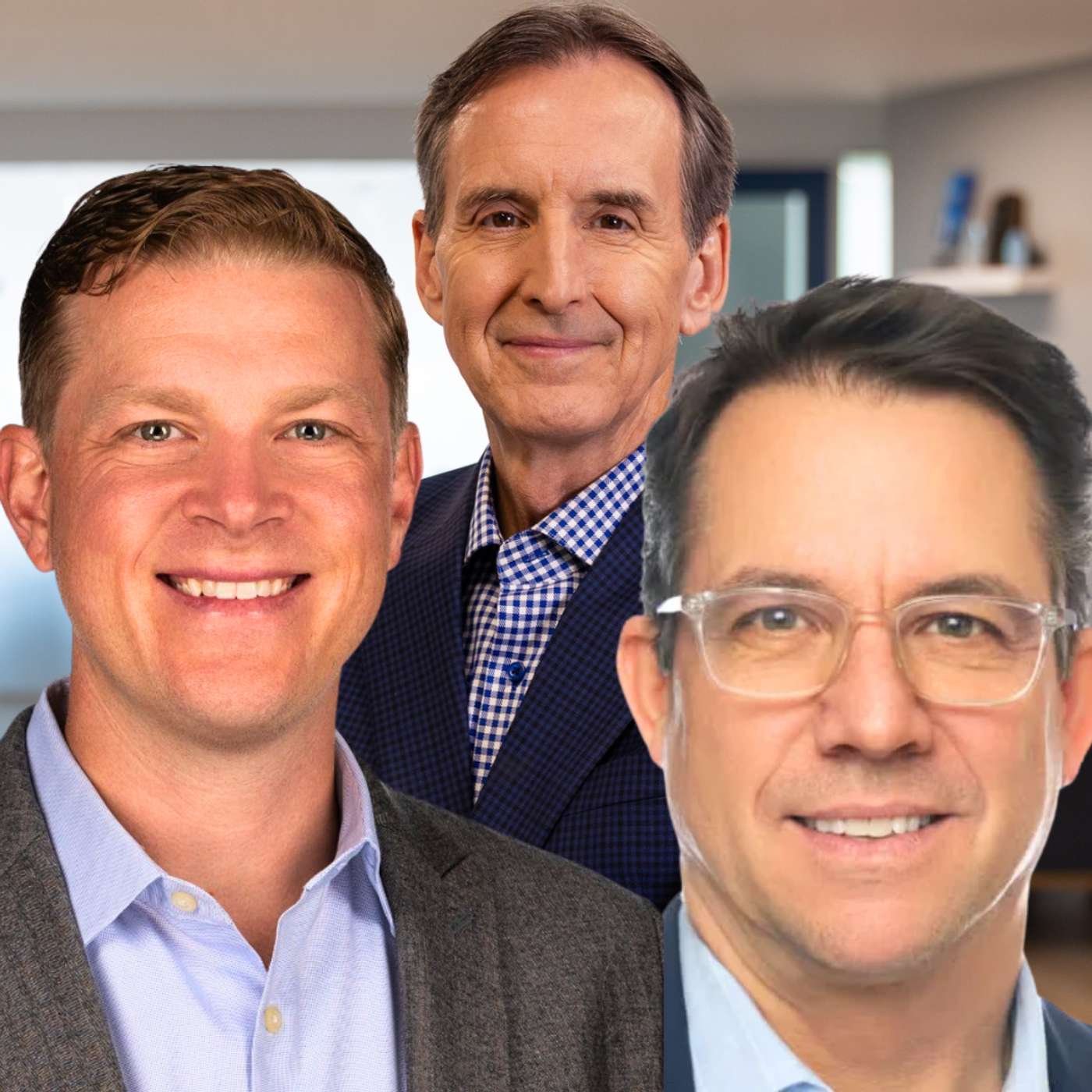
In this episode of the Clean Power Hour, Tim Montague heads to RE+ Midwest in Chicago for conversations with three industry leaders: former Minnesota Governor Tim Pawlenty, President of the Solar Energy Industries Association (SEIA), Chad Farrell, Founder and CEO of Encore Renewable Energy, and Nick Olson, Director of Business Development at Knobelsdorff (KE).
Governor Pawlenty explains why solar and storage are becoming increasingly important to America’s energy future, highlighting affordability, deployment speed, job creation, and the economic benefits for rural communities.
Chad Farrell discusses Encore Renewable Energy’s approach to transforming brownfields and closed landfills into productive solar assets, the growing opportunity for DC-coupled battery storage, and Illinois’ expanding clean energy market.
Nick Olson takes us behind the scenes of community solar construction, explaining how KE manages labor, schedules, and project execution while preparing for larger utility-scale projects and the next wave of battery storage development.
The conversations also explore Illinois’ ambitious solar and storage targets, the role of state policy, and the opportunities emerging across the Midwest.
Topics Covered
- Why solar and storage are gaining momentum across the United States
- The economic benefits of solar development for rural communities
- Illinois’ growing solar market and battery storage targets
- Turning brownfields and landfills into renewable energy projects
- DC-coupled solar and storage opportunities
- Community solar construction, labor management, and project execution
- Scaling EPC operations into larger utility-scale projects
- What’s next for solar and battery storage in the Midwest
Connect with Our Guests
Tim Pawlenty, Solar Energy Industries Association (SEIA)
https://www.seia.org/
Chad Farrell, Encore Renewable Energy
https://encorerenewableenergy.com/
Nick Olson, Knobelsdorff (KE)
https://keway.com/
#SolarEnergy #BatteryStorage #CommunitySolar #CleanEnergy #CleanPowerHour
Connect with Tim
Clean Power Hour
Clean Power Hour on YouTube
Tim on Twitter
Tim on LinkedIn
Email tim@cleanpowerhour.com
Review Clean Power Hour on Apple Podcasts
The Clean Power Hour is produced by the Clean Power Consulting Group and created by Tim Montague. Contact us by email: CleanPowerHour@gmail.com
Corporate sponsors who share our mission to speed the energy transition are invited to check out https://www.cleanpowerhour.com/support/
The Clean Power Hour is brought to you by CPS America, maker of North America’s number one 3-phase string inverter, with over 6GW shipped in the US. With a focus on commercial and utility-scale solar and energy storage, the company partners with customers to provide unparalleled performance and service. The CPS America product lineup includes 3-phase string inverters from 25kW to 275kW, exceptional data communication and controls, and energy storage solutions designed for seamless integration with CPS America systems. Learn more at http://www.chintpowersystems.com
0:50
I mean, who's against clean? So cost-effective, quick, clean, and with storage reliable. That's a tremendously win-win-win package. And so, if you think about it logically or just think about it economically, it's a great argument in favor of solar and storage. And then you add the bonus of it's clean. It's it's a winning package.
Chad Farrell:
1:09
Yeah, I think it's just we're trying to make the sunshine at night, and I think this is the best way to do it as a as a as a combined plant, and really sort of two birds with one stone, trying to deliver energy resiliency and security, allow the the utilities to discharge during times of peak demand. So it really should be a win-win-win.
Nick Olson:
1:32
So it's we don't. There's a lot of people that are that are trying to get in the door into solar market that are inexperienced and they're going to bite off more than they can chew, and they're going to stumble, and that's pain for a developer, right? Like the
intro:
1:45
clean energy industry is moving fast. The deals are getting bigger. The technology is evolving, and the stakes have never been higher. Welcome to the Clean Power Hour, the podcast for solar, storage, and microgrid professionals who want to stay ahead of it all. Each week, your host Tim Montague, industry advisor and president of Clean Power Consulting Group, brings you unfiltered conversations with the leaders actually building the energy transition. Now, here's your host, Tim Montague.
Tim Montague:
2:20
What's driving solar and storage in the Midwest, and what does it take to get projects built? At RE Plus Midwest in Chicago, I sat down with three people working on those questions. Governor Tim Pawlenty, president of Solar Energy Industries Association, Chad Farrell, founder and CEO of Encore Renewable Energy, and Nick Olson, director of business development for Knobelsdorff in Chicago. We'll go from national policy to project development to boots on the ground. First, Governor Pawlenty, we're here at RE Plus Midwest in Chicago with Governor Tim Pawlenty, who's now the president of SEI. Welcome to the Clean Power Hour, Governor.
Tim Pawlenty:
3:05
It's great to be part of the Clean Power Hour. Thanks for having me.
Tim Montague:
3:08
It's it's really an honor, and I'm so grateful for your service to our industry, so as we were saying in the pre-show, you know it's heady days. There's a lot of load growth in the U.S. There's a lot of inflation, and this makes Solar Pencil better. And so it's it's really a great time to be a clean energy professional. Why did you become the president of CEA?
Tim Pawlenty:
3:29
Well, I've had a long-standing interest and passion for renewable energy, particularly renewable energy that makes economic sense. And I also love politics and public policy and trying to solve problems. So, in that intersection of all of those things sits solar and storage, which is a really interesting place for me to lean into policy, lean into politics, lean into problem solving, and hopefully contributing to the American economy through this growing, booming industry,
Tim Montague:
3:55
you say it well. I love clean energy because we're creating a safer, healthier future for humanity, right? We want that. Everybody wants that. It doesn't matter Republican, Democrat. Everybody wants a safer, healthier future, right? We're humans.
Tim Pawlenty:
4:10
Yeah, you think about think about solar and storage. First of all, we are cost-effective, maybe the most cost-effective technology platform for energy right now. We're quick to deploy, which is really important. A lot of the other technologies take five, 710 years to get in the ground. We're also clean. I mean, who's against clean? So cost-effective, quick, clean, and with storage reliable. That's a tremendously win-win-win package. And so, if you think about it logically or just think about it economically, it's a great argument in favor of solar and storage. And then you add the bonus of it's clean. It's it's a winning package.
Tim Montague:
4:45
Yeah. And yet, in rural communities across the United States, there is pushback against solar and wind and batteries. What do you say to rural community stakeholders about solar and batteries?
Tim Pawlenty:
5:01
Well, of course, we want to be sensitive to the important questions that community leaders and people from local communities ask about all kinds of projects, including solar and storage. And that's part of the democratic process, which is to ask questions. They want to make sure that they have their questions answered before they, you know, authorize or allow these things to go forward. But the good news is, solar provides a lot of upside for communities. First of all, there's jobs, there's economic investment, there's also the opportunity for farmers or landowners to make money from the payments for the leases that they get for solar. And by the way, you can use multiple uses in a lot of the solar projects. So you can have a solar project on a parcel of land and still have grazing or still have crops and vegetables. And by the way, if you don't like it, the good news about solar is you could tear it out at the end of the lease in 20 years and reverts back to the original use. So I think there's a lot of upside. You know, to communities embracing solar, but the important thing is also for solar to make an important contribution to those communities, and we do. It
Tim Montague:
6:01
really is a win-win for rural communities. Rural communities in America are struggling. The next generation isn't so keen to stay on the land. It's hard to keep them on the farm, so to speak. Right, I live in Champaign County, a farming community, and clean energy provides jobs. It provides revenue for school districts. Like it is a game changer in those counties that have wind and solar. They are doing better. They're they're experiencing a windfall. No pun intended, from clean energy, and it's real. So, Governor, what should our listeners lean into? Okay, I'm always looking for good messages and good ways to frame the energy transition because my audience is installers, developers, asset owners, who are in the fight every day. What do you say to
Tim Pawlenty:
6:59
them? I say to them is you're working in a great industry that's growing and booming. And first of all, let's look at the statistics because it's important to actually, you know, look at the numbers. Solar is the number one contributor to new energy going on the grid this year, year to date, over 70% of all the new energy going on the grid is coming from solar and storage. Last year it was about 70%. The year before that, over 50%. So we we meaning the solar and storage industry are the main contributor to new electricity going on the grid in the United States of America. Number two, we're in a huge, increasing part of the economy in terms of hundreds of 1000s of jobs in this industry. What that means for communities, what that means for families, what that means for paychecks and people that have a good quality of life. We're also clean, and so we're providing this power in a way that's minimally impactful to the environment, which is you know a positive as well. And then, when it comes to rural communities, to your earlier point, let's put it in context. There's only 0.07 percent, and let me repeat that: not 0.7 percent, 0.07 percent of prime farmland in the U.S. under solar panels currently. So you could triple the amount of land under solar panels in the United States, and you still would be less than one quarter of 1% being under solar panels. So we certainly want to be sensitive and sympathetic to any concerns or questions that people have. But when you look at the numbers, it's a tiny, tiny fraction. It's a fraction of 1% of the land that we're even talking about.
Tim Montague:
8:28
You know, we're we're in a in a political landscape where state levers are ever more important. We're in Illinois today. You know, some of the some of the leading states are Illinois, New York, Massachusetts, New Jersey, California, Texas. Texas doesn't have particularly fancy clean energy legislation, and yet 50% of their grid power comes from solar, wind, and battery snapper, right? It's amazing, simply because ERCOT made it relatively easy to interconnect your project. What states are on your mind as the president of CIA?
Tim Pawlenty:
9:02
Well, when you look at the Midwest, you just name several of them. But in terms of the fastest-growing solar and storage states in the Midwest, it certainly includes Illinois. It includes Indiana, it includes Ohio, but if you look around the country, there's a bunch of not just blue states, but red states leading the way on solar and storage and renewable energy. Texas, Florida, Oklahoma, and others. Carolina is increasingly, and and Nevada, New Mexico, Arizona. The list goes on, and so it's not a red or blue Democrat or Republican dynamic. The country as a whole is really moving towards and embracing solar and storage as an energy source.
Tim Montague:
9:41
I want to thank you for coming on the show.
Tim Pawlenty:
9:43
All right, buddy. The
Tim Montague:
9:44
Clean Power Hour is brought to you by CPS America, maker of North America's number one three-phase string inverter, with over 10 gigawatts shipped in the U.S. The CPS product lineup includes string inverters ranging from 25 kW to 350 kW. Their flagship inverter, the CPS 350 kW, is designed to work with solar plants ranging from 2 megawatts to 2 gigawatts. CPS is the world's most bankable inverter brand and is America's number one choice for solar plants. Now offering solutions for commercial, utility, ESS, and balance of system requirements. Go to chintpowersystems.com or call 855-584-7168 to find out more. Let's bring that national picture back to Illinois. You'll hear both of my next guests mention SERGA, the Clean and Reliable Grid Affordability Act. It sets a target of three gigawatts of battery storage by 2030. For Chad Farrell and. His team at Encore Renewable Energy. That's an opportunity to pair solar with storage, and give places like closed landfills a second act. We're here at RE Plus Midwest with Chad Farrell. He is the CEO and founder of Encore Renewable Energy. Encore. Yep. Encore Renewables, and I love the name, but Chad, what is Encore, and why did you start the company?
Chad Farrell:
11:17
Well, we are a a developer IPP and now asset owner based out of Burlington, Vermont. As our name suggests, we like to think that we are providing energy second act by delivering clean electrons to the grid to satisfy increasing electrical demand throughout the country. We're active throughout the Northeast, down in the Mid-Atlantic, out into the Midwest here, and yeah, I mean, I founded Encore back in. We have a clean energy focus that began in 2009 out of our home state of Vermont, which was a great place to launch a business. Very entrepreneurial community up there, and a lot of interest in clean energy early days. So we benefited from some legislation that we helped craft. Some of that legislation included another specialty of ours, which is brownfields to brightfields. I was here at RE Plus Midwest yesterday, speaking about the advantage of brownfield sites for clean energy deployment, both solar and storage. And so we say we like to give these properties a second act or an encore, turning otherwise undevelopable, Vacant property into
Tim Montague:
12:35
there's not much we can do with a closed landfill.
Chad Farrell:
12:37
That's right.
Tim Montague:
12:37
Except turn it into a solar field.
Chad Farrell:
12:39
Sometimes we we we heard about dog parks and things like that, but they're not quite. They're not going to quite generate the the level of local property tax revenue, and and it's just not that's not the highest, best use of even the landfills. Yeah,
Tim Montague:
12:53
and so what percentage of your development work is brownfield?
Chad Farrell:
12:57
It's probably about 10, 15% at this point. You know, we I think we also learned early days that while these brownfield sites are tremendous opportunities for deployment of clean energy, we need a lot more land, and we need to leverage other properties as well. So we've done rooftops, we've done carports, and we we've recently been doing a lot of work with our friends in the agricultural community, working in our home state, all dual use. Yeah, 2020, we signed a commitment to deliver all of our projects with some form of agrovoltaic vegetative maintenance, so yes, dual use. Generally, we're deploying sheep on on our on our assets throughout the Northeast and out here in the Midwest.
Tim Montague:
13:43
Right on. Yeah. So your footprint geographically is what states?
Chad Farrell:
13:48
All throughout New England, down into the Mid-Atlantic, Virginia. We've got a number of things in Pennsylvania. Looking at a few things in Delaware and Maryland, and and then out here into the Midwest. Obviously, Illinois with the Surja legislation is a very attractive market at this point, and that's that's one of the reasons we're here. But we're also here to kind of understand, you know what other states out here in this region are going to be the next Illinois? Because I think we're seeing a lot of activity out here, and I think the utilities are learning a lot how to interconnect this distributed generation. And I think there's there's there's a tremendous market here that needs to be emulated. Yeah,
Tim Montague:
14:30
yeah. That's one of the things that frustrates me about the U.S. is we're kind of reinventing the wheel 50 times over, and and you know here in Illinois we did learn from what was going on in New York and New Jersey and Massachusetts the block program the adjustable block program that was designed in into Fiji back in 2016 2017. So now you mentioned Sergia, which is major storage legislation. How do you see battery storage?
Chad Farrell:
15:00
We we are doing a number of battery storage projects. We've actually got a number of DC coupled projects here in in Illinois that we're advancing through the development process. We have done a number of standalone storage projects back in our home state of Vermont. We have a few projects moving forward in the development process in Colorado, but we're excited again about the Illinois market and the Surja, and the opportunity to add storage to our existing solar assets, co-located, not DC coupled, and then we're really excited about the DC coupled opportunities out here.
Tim Montague:
15:35
DC coupled. Tell us about that. Why DC coupled? You know, you can have DC or AC coupled. Yep. Very few manufacturers actually have a DC coupled solution. Yep. So it's a it's a little more exotic. Yep. Some markets require it. Yep. Largely Massachusetts, I think. Yep. But talk about that.
Chad Farrell:
15:55
Yeah, I think it's just we're trying to make the sun shine at night, and I think this is the best way to do it as a as a as a combined plant, and really sort of two birds with one stone, trying to deliver energy resiliency and security, allow the the the utilities to discharge during times of peak demand, so it really should be a win-win-win, and yeah. But DC
Tim Montague:
17:12
versus AC, like let's geek out on that for just a second. DC theoretically is more efficient, right? Because the solar is generated. I mean, if it's coupled with solar,
Chad Farrell:
17:22
yeah, less losses for sure.
Tim Montague:
17:24
DC solar to DC battery that makes sense, but like I said, it's somewhat exotic on the equipment side. Yeah, I think that
Chad Farrell:
17:33
the market is moving in this direction, so we're we're sort of following the market there. You know, like you said, Massachusetts. There's a number of example projects there that we, as an industry, are learning from, and we at Encore are learning from. So exciting, exciting times. But yeah, we need to need to continue to deploy.
Tim Montague:
17:51
In our last minute or two together, what else should our listeners know about Encore?
Chad Farrell:
17:56
Well, we're a we're a B Corp. Became a benefit corporation in 2016. Just following our values of trying to give back, triple bottom line. Again, coming out of the Vermont market, very entrepreneurial. Have been sort of mentored and guided along the way by folks that believe in the power of business as a force for good. So we're we're we're proud of the of the business that we've created, the folks that work for and with us, super motivated, mission driven, purpose driven, and yeah, we're we're. How
Tim Montague:
18:34
big is the portfolio today? The
Chad Farrell:
18:36
portfolio today is several 100. Well, we have about 100 megawatts will be in operations by the end of this year, we transitioned to a. We were a development-focused shop until raising some capital in 2023 from an equity sponsor that transitioned began the transition for us to a owner-operator IPP model that was completed with the closing of some debt financing in 2024, so we are you know we're in a growth stage, looking to optimize the track record that we have behind us, looking to work with good developer partners out there for acquisition opportunities as trusted partners, and really just looking forward to, you know, moving forward. We've got some committed capital. There'll be some announcements in the next several weeks about about some new capital opportunities that we have, and we're just we're we're thrilled to be part of this ecosystem delivering energy second act.
Tim Montague:
19:39
Any predictions about what states in the Midwest are going to be the next Illinois?
Chad Farrell:
19:45
Boy, I asked a lot of questions yesterday. I did the speed dating at the lunch tables. Sat at sat with folks from Wisconsin, Iowa, Ohio. I don't know. It's a tough bet to make. Ohio seems to be sort of interesting. Yeah, a lot of a lot of
Tim Montague:
20:05
bets on Ohio. A lot
Chad Farrell:
20:06
of bets on Ohio. I would say. Yeah.
Tim Montague:
20:08
But of course, we we want all the Midwest to be a good solar market, and eventually they will be. It's just a matter of time. Yeah. It's not if, but when. All right. Well, that's right. Chad Farrell, I want to thank you so much for coming on the show. And with that, Chad, how can our listeners find you?
Chad Farrell:
20:23
You can find us at encorerenewableenergy.com and all throughout the social channels as well. Just look for us on LinkedIn at encore renewable energy. Thanks, Tim.
Tim Montague:
20:34
Thank you.
Chad Farrell:
20:35
All right. The
Tim Montague:
20:36
Clean Power Hour is brought to you by SDE Sinclair Designs and Engineering, fixed tilt and carport racking, design, engineering, permitting, and manufacturing all under one roof in Michigan. No outside vendors, no waiting in someone else's queue. Just fast turnaround and steel that ships when you need it. Ask Ag Energy Co. in Illinois or Sunrise Solar in the Mid-Atlantic. They'll tell you what it's like to work with the Sinclair team. SDE everything in house. Visit Sinclair-designs.com. Developing a project is one thing; getting it built takes people. Nick Olson of Minnesota-based Knobelsdorff, otherwise known as KE, joins me next to talk about the crews building Illinois Community Solar and where battery storage fits into the company's future. We're at RE Plus Midwest in Chicago, and I'm with Nick Olson, Director of Business Development for Noblesdorf, a very large contractor out of Minnesota, but now with a presence in Illinois because. We're a hot market in solar, right, Nick?
Nick Olson:
21:45
Yes. Yeah, we're gonna go where the work is. It's Knobelsdorf.
Tim Montague:
21:49
Knobelsdorf. Oh my goodness. That's even worse. Yep. People just call you KE, right? Because they can't say Knobelsdorf.
Nick Olson:
21:58
Hard to say, easy to love is the slogan around the office. That's on the mouse. I love it. That's great. That's great.
Tim Montague:
22:04
And you and I have a company in common, Continental Energy Solutions. I cut my teeth on the industry. Shout out to Brian Hough and Company at Continental. Great company. My son Finn is now working there. I'm so proud of him. But Nick, paint us a picture. What's going on in Illinois? What is KE doing? And why is Illinois such a hot market?
Nick Olson:
22:25
Yeah, I mean, I think it's obviously the stacking of the state on top of federal program incentives for the community solar. You know what we're doing primarily is the DG type projects, those two to 10 megawatt DC, and you know it started KE cut their teeth in the Minnesota community solar market, doing them one megawatt at a time, and so you know that's where they got into solar, and then saw recognized Illinois was a place where developers were looking for us to come and build, so brought those crews here, found success you know building the community solar sites in Illinois. We see that as a strong pipeline into the future. Several years, you know, for sure that our customers want to keep us around here and keep us busy. And we, yeah, there's there's a lot of work here, and you know, I think we're very good at it. We're the largest CPC installing these types of projects in Illinois, and you know, we're we're trying to get better as as we learn, and you know there's the other hurdles that come along with it. But yeah, for for now we're.
Tim Montague:
23:31
So here's the numbers. I saw I saw the slide they had up on the Illinois panel this morning. We have 8.3 gigawatts of solar in Illinois today, and we're headed to 22 in the next five years or something like that, so it's it's really we're still growing very fast, headed to 22 gigawatts. Yeah, absolutely. So year over year now we're installing more than a gigawatt. We're we're on a two gigawatt clip, and it's a combination utility, community, and rooftop solar, but it's so cool that KE you know got into that community solar market in Minnesota. Minnesota was the first community solar market in the Midwest, and then because of FEJA, the Future Energy Jobs Act, Illinois eclipsed Minnesota, and and you know the Minnesota market has ebbed and flowed, and it's it's in a growth mode again. I think. Yep. Yeah,
Nick Olson:
24:27
we're seeing it come back. So yeah, we expect to have you know cruise business. But I don't
Tim Montague:
24:30
think they're going to catch Illinois. No offense, Minnesota, but it's just happening. I'd love.
Nick Olson:
24:36
Yeah, let's just keep going back and forth. We want to see that. Yeah. Yeah,
Tim Montague:
24:40
and you know I'm I'm curious though. You're you've been here at RE Plus for a day and a half now. What is top of mind for you? You know we have we have very strong labor standards in Illinois. It's not easy, right? There's a lot of training requirements, training requirements. Right. How do you guys navigate the market?
Nick Olson:
25:02
We control our labor, so the biggest thing is we're not subcontracting work out. We're self-performing everything on site. You know we work with some civil partners. There's a few scopes, landscaping, fencing that we'll have subcontractors. You know help us with. Otherwise, as far as the installation of the system, we're doing that all with our own people, and that's what gives us that control over schedule and quality, right? Safety, schedule, quality, as far as the manpower in the field, because that's what makes the whole thing run. And so that's really, you know, a big focus of ours. It's not by accident what we got where we are, and it's not easy either.
Tim Montague:
25:36
And when you say full scope, though, you're doing mechanical and electrical.
Nick Olson:
25:41
Correct. Okay. Yep. All the way up through medium voltage, so we'll do the POI ourselves. We're getting into some smaller, you know, what you would call utility scale 40, 50 megawatt sites that are transmission interconnections. So they're going to have a substation there. You know, that's something that we can also subcontract. You know, that piece of work, and then even the testing and commissioning services we can do internally. So a lot of that control and ability to to really be a full wrap EPC for a developer. Yeah, and
Tim Montague:
26:12
so being an EPC is not easy. Like it's there's there's a science and an art. There's a lot of logistics. There's a lot of safety, there's a lot of training, there's a you know, but paint us a picture. What is what is the the recipe for success as a construction solar contractor?
Nick Olson:
26:38
Yeah, I mean, I'll give it to you from my perspective, which was primarily in the pre-construction. Side of things, I haven't been as closely associated to the operations teams at KE since joining a little less than two years ago. But for me, it's making sure that I'm proactively planning to avoid problems on site, so that those people aren't looking for a detail that's missing or a piece of equipment that didn't arrive on time to meet schedule, right? We we have a very condensed construction schedule, and so it's making sure that we have a project that is designed, procured, and permitted, ready for them to go smoothly front to back, right? We're not re you know mobilizing on site to come back and and land a transformer because it wasn't ready when we were there, and so that's really just making sure that we're efficient, and that's going to lend itself to safety as well, right? Like if we're not doing rework, and we can you know move things through as scheduled, that's the best thing for our crews, both for productivity and safety. It goes hand in hand.
Tim Montague:
27:38
Yeah, how many people are involved in a community solar, say a five megawatt community solar project. What does a typical crew look like?
Nick Olson:
27:47
I mean, we would have 10 to 12 people on a mechanical crew, and then another 10 to 12 on an electrical crew. There's another group that's going to come out and do any underground work. There's another group that's going to come out and do the medium voltage work. So, I mean, you're talking about 50 people, you know, associated unique individuals as different parts. Now, on site at any one time, you're probably around that you know dozen to 20 people. You know, and that's not really factoring in the civil subcontractor fencing. You know, some of those people that are there for just a week or so.
Tim Montague:
28:19
Yeah, it seems like projects always come to a head in the fall for some reason, but what? How many projects do you have under construction now in 2026, and what does 2027 look like for you guys?
Nick Olson:
28:36
Yeah, I mean we are, you know, probably building 40 to 50 community solar projects this year. You know that will hopefully have PTO. You know, at the end of the year, like
Tim Montague:
28:45
all Illinois or combination Illinois, Minnesota.
Nick Olson:
28:49
Not as many Minnesota projects this year. Next year, we're seeing that as is coming back on as a stronger market. We're building in Colorado, so that's another place where we've had yeah some success. So I think this year those are the sites where we're at, and then starting like I said to do some of those smaller utility scale, 40, 50 megawatt sites, and so you know that'll bring our total installed system probably about 400 megawatts for 26. So we'll see where it kind of lands at the end.
Tim Montague:
29:24
And what about 27?
Nick Olson:
29:26
27. I think we are happy with where we're at on the distributed generation side of things. So it's really trying to refine and and keep that running at that rate. So I think you know we we probably stick with you know around 200 megawatts of community solar next year, but then growing on the the utility side. Yeah, right on, right on.
Tim Montague:
29:51
And do you tackle, or are you guys thinking about tackling even larger projects? Because there's a fair number of large utility projects happening across the Midwest now. I'm just
curious:
30:01
is that is that a segment you dabble in or think about?
Nick Olson:
30:05
Sure, 100 plus megawatt. Yeah, I think we do. It's just being thoughtful with how we scale and take on that growth. Right? It's it's similar work to what we're doing, and we're good at it, but it's at a larger scale. Right? So higher risk, higher reward. But certainly, it's an obvious next transition for us. So, having those conversations, trying to decide what is the right fit for us, size-wise, scaling. You know, what do we want to take on? But you know, our customers would love us to move more into that market, and I think that we're seeing there's opportunity there. So,
Tim Montague:
30:42
when you're talking to developers, what is it that differentiates KE from other contractors?
Nick Olson:
30:49
I would say our level of service that they just understand that they can trust us with their projects, that we're going to deliver a quality that they won't see anywhere else, and I can confidently tell my customers that you know the work that you award to us, you're gonna you're gonna wish you could give it all to us because of the level of quality and service that you're gonna see. Speed is another thing, you know, just what we can offer, how quickly we're building things, turning them online, and the experience that we bring. Right, so it's we don't. There's a lot of people that are that are trying to get in the door into solar market that are inexperienced and they're going to bite off more than they can chew, and they're going to stumble, and that's pain for a developer, right? Like they see maybe a attractive bid and they say, okay, yeah, like unproven, right? But like we'll figure it out, and then it's like you've spent six months on a project that's basically built trying to drag it across the finish line because you can't. Achieve a milestone, you know, with your mechanical completion, and so having somebody that you can trust to deliver, right? We have a proven track record. You can look at the Solar Power World rankings, you know, and see that we're the largest installer of these projects in this state, and you know that speaks for itself.
Tim Montague:
31:59
Yeah. What should our listeners know about Illinois that they may not know.
Nick Olson:
32:05
Ooh, that's a good question. I mean, I wish my crystal ball was clear. It's going to be interesting. You know, I think what we're really looking forward to is storage coming in. It's it's been the talk of these conferences for years, and I'm I'm looking for those projects to really hit the road, right? Where it's like, okay, when and I, I understand that solar with the ITC sunsetting, you know, developers are focused on those projects, and so we're positioning ourselves to be ready for what we perceive to be a a big push of storage coming along, storage paired with solar as well as just standalone, and so I'm going to be interested to see the way that that'll actually play out.
Tim Montague:
32:47
Yeah, I'm really glad you mentioned storage. Illinois' first storage procurement secured contracts for 600 megawatts of capacity. That's part of the state's 3,000 megawatt target for 2030, with more procurement rounds planned for 2027. Surja also provides for virtual power plants, bringing smaller systems together to support the grid. Hey guys, are you a residential solar installer doing light commercial but wanting to scale into large CNI solar? I'm Tim Montague. I've developed over 150 megawatts of commercial solar, and I've solved the problem that you're having. You don't know what tools and technologies you need in order to successfully close 100 kW to megawatt scale projects. I've developed a commercial solar accelerator to help installers exactly like you. Just go to cleanpowerhour.com, click on strategy, and book a call today. It's totally free with no obligation. Thanks for being a listener. I really appreciate you listening to the pod. And I'm Tim Montague. Let's grow solar and storage. Go to clean power hour and click strategy today. Thanks so much. There's like a fleet of five megawatt, 20 megawatt hour projects that are being developed. These are standalone batteries near substations, near population centers. So it's a it's it's a really good augmentation of the solar market. Everybody needs every grid operator needs storage. It's truly the bee's knees. It's super powerful, and the value stack is amazing. But you have to have the right legislative or policy framework, right? It doesn't just happen. So I would say that is a major differentiator for for Illinois. Now we have a very good storage policy known as Surja. All right, anything else we should we should know about KE in our last couple minutes together?
Nick Olson:
34:48
I mean, the only other thing is that with the growth in this industry, there's a big need for talent, right? Both in the field and you know in our offices. And so, for people that are interested, we'd love to have chats with individuals, you know, that
Tim Montague:
35:01
yeah. What specifically are you looking for
Nick Olson:
35:03
all across the board? Yeah, I mean we have needs for operations folks, project managers, people that want to be out in the field. You know, both installing, working on site supervision, quality, safety. You know, you name it. We have needs everywhere. So go to the website keway.com, and yeah, we look forward to speaking with you.
Tim Montague:
35:25
Thanks for coming on the show, Nick.
Nick Olson:
35:26
Thank you.
Tim Montague:
35:27
I'm Tim Montague. Tell a friend about the show. CleanPowerHour.com is our website, but tell a friend about the show. That's the best thing you can do to help others find this content. And with that, I'll say let's grow solar and storage. The Clean Power Hour is brought to you by CPS America, maker of North America's number one three-phase string inverter, with over 10 gigawatts shipped in the U.S. The CPS product lineup includes string inverters ranging from 25 kW to 350 kW. Their flagship inverter, the CPS 350 kW, is designed to work with solar plants ranging from two megawatts to two gigawatts. CPS is the world's most bankable inverter brand and is America's number one choice for solar plants. Now offering solutions for commercial, utility, ESS, and balance of system requirements. Go to chintpowersystems.com or call 855-584-7168 to find out more.