America’s electric grid wasn’t built for AI, electric vehicles, battery storage, or the rapid growth of renewable energy.
So how do we modernize a system that was built and started in the late 1800s and early 1900s, more than a century ago?
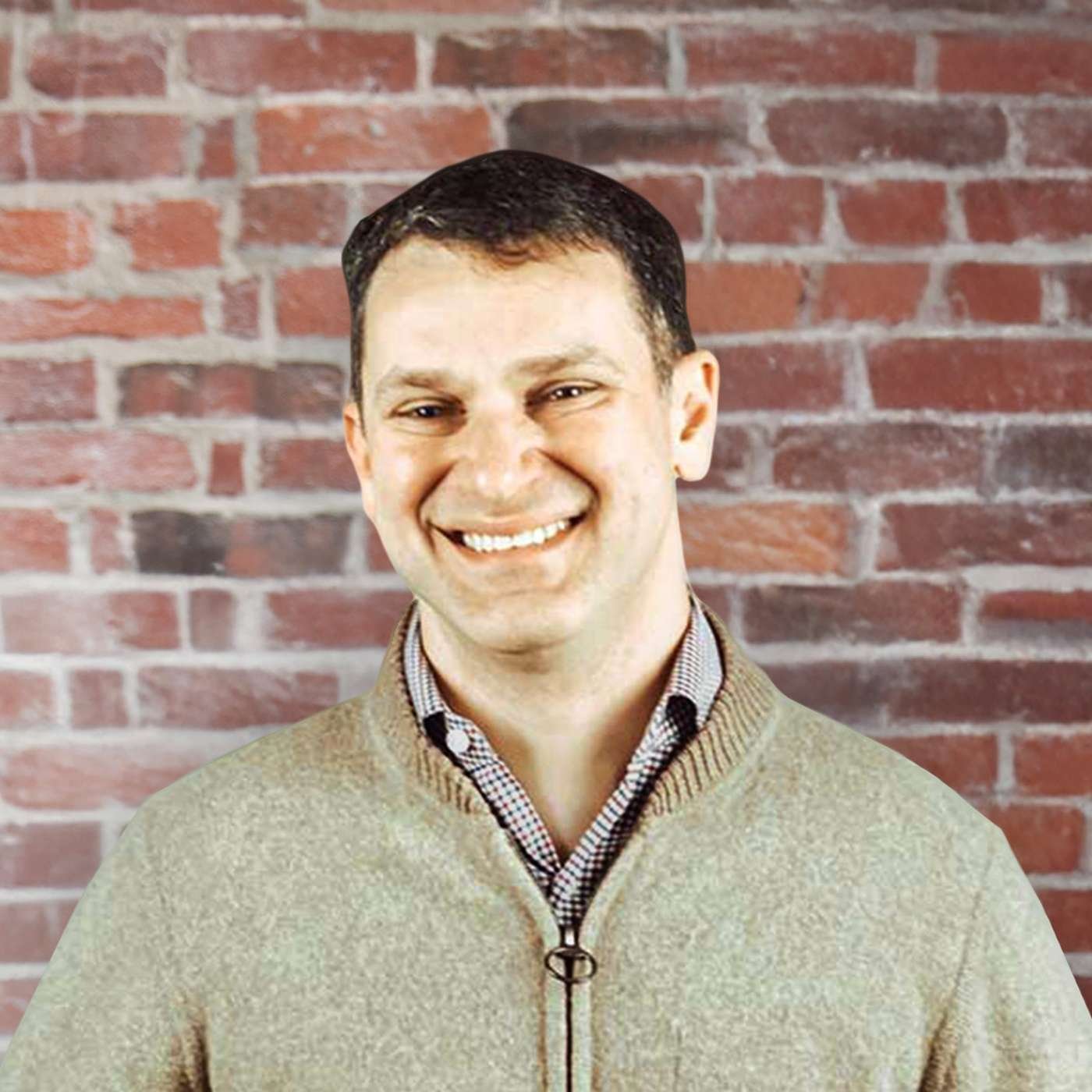
In this episode of Clean Power Hour, Tim Montague sits down with Zaid Ashai, CEO of Nexamp, the nation’s largest community solar developer, to discuss community solar, battery storage, grid modernization, and why policy certainty is essential to building a cleaner, more reliable, and more affordable energy system.
Nexamp operates across 19 states and has become one of the leading developers of community solar, distributed generation, utility-scale solar, and battery storage. The conversation centers on the Clean and Reliable Grid Affordability Act, Illinois’ new storage law that targets 3,000 megawatts of storage by the end of 2030, with the first procurement round set for August 2026 and two more rounds to follow in 2027 and 2028. Ashai lays out why
In this episode, you’ll learn:
- Why America’s electric grid needs modernization
- How community solar benefits homeowners, renters, businesses, and utilities
- Why the Clean and Reliable Grid Affordability Act uses an indexed storage credit contract instead of a merchant revenue model
- How storage unlocks additional generation capacity without new transmission and distribution buildout
- What a Massachusetts ISO study found about grid size when storage is left out of the equation
- Why Illinois requires 14 percent of a participating project’s workforce to be equity eligible
- How Nexamp’s renewable energy fellowship with City Colleges of Chicago grew from 20 students toward a projected 80 by year-end
- Why affordable clean energy starts with predictable regulation
- How flexible interconnection and curtailment could unlock more capacity on the existing grid
- Which states Nexamp is watching next for community solar and storage growth, including Ohio, Michigan, Virginia, Maryland, and Pennsylvania
If you work in solar, battery storage, utilities, project development, energy policy, grid modernization, or renewable energy investing, this episode offers practical insights into where the industry is headed next.
The first Clean and Reliable Grid Affordability Act (CRGA) procurement round opens in August 2026, with two more rounds following in 2027 and 2028, so the pricing structure Ashai describes will shape Illinois storage economics for years.
Illinois already holds the only B grade on the Institute for Local Self-Reliance Community Power Scorecard, ahead of New York, Massachusetts, and California, at a moment when federal support for clean energy programs is pulling back. For developers and investors watching how states balance affordability, reliability, and equity, Illinois is currently the clearest test case in the country.
About Zaid Ashai
Zaid Ashai is the CEO of Nexamp, the largest community solar developer in the United States. Under his leadership, Nexamp has expanded into battery storage, utility-scale solar, and integrated clean energy solutions across 19 states. He is passionate about building an affordable, reliable, and equitable clean energy future through innovation, smart policy, and grid modernization.
Connect with Zaid Ashai
Zaid Ashai LinkedIn: https://www.linkedin.com/in/zaid-ahmad-ashai-aa1683/
Nexamp Website: https://www.nexamp.com/
Connect with Tim
Clean Power Hour
Clean Power Hour on YouTube
Tim on Twitter
Tim on LinkedIn
Email tim@cleanpowerhour.com
Review Clean Power Hour on Apple Podcasts
The Clean Power Hour is produced by the Clean Power Consulting Group and created by Tim Montague. Contact us by email: CleanPowerHour@gmail.com
Corporate sponsors who share our mission to speed the energy transition are invited to check out https://www.cleanpowerhour.com/support/
The Clean Power Hour is brought to you by CPS America, maker of North America’s number one 3-phase string inverter, with over 6GW shipped in the US. With a focus on commercial and utility-scale solar and energy storage, the company partners with customers to provide unparalleled performance and service. The CPS America product lineup includes 3-phase string inverters from 25kW to 275kW, exceptional data communication and controls, and energy storage solutions designed for seamless integration with CPS America systems. Learn more at http://www.chintpowersystems.com
0:51
The grid that was built and started in the late 1800s and early 1900s is no longer the grid that we need.
Tim Montague:
1:01
Late 1800s, early 1900s-that's when we built the grid in this country. It's also when they started pulling coal out of the Colchester Seam underneath Woodford County, Illinois, they worked that mine for about 75 years. Last month, on that same reclaimed mine land, 16,950 solar panels went into service. 9.8 megawatts, 650 subscribers, 200 of them low-income households, two anchor off-takers, Rush University Medical Center, and the College of DuPage. The company that built it owns it and will operate it for the next 25 years. Is my guest today. This is the Clean Power Hour. I'm Tim Montague.
intro:
1:49
The clean energy industry is moving fast. The deals are getting bigger. The technology is evolving, and the stakes have never been higher. Welcome to the Clean Power Hour, the podcast for solar, storage, and microgrid professionals who want to stay ahead of it all. Each week, your host Tim Montague, industry advisor and president of Clean Power Consulting Group brings you unfiltered conversations with the leaders actually building the energy transition. Now, here's your host, Tim Montague.
Tim Montague:
2:23
Zaid Ashai is the CEO of Nexamp, the largest community solar developer in the country, active in 19 states, and increasingly a battery company and a utility scale company too. But I want to tell you why I wanted him on the show right now in this particular month. A decade ago, Illinois had roughly 80 megawatts of solar energized. Today, it's more than 6013 gigawatts of wind and solar developed under our renewable portfolio standard, and with the Commerce Commission's latest approvals, the pipeline is pushing towards 14 and a half. And on the Institute for Local Self-Reliance Community Power Scorecard, Illinois is the only state in America to earn a B, ahead of New York, ahead of Massachusetts, ahead of California, nobody has an A yet. Somebody has to go first. So the question I brought to Zaid is not whether we can build this stuff; it's whether we can build it fast, build it cheap, and build it equitably, all at the same time, because most people in this business will tell you to pick two. Here's Adishai.
Zaid Ashai:
3:40
You know, a little background about myself. Both my parents were immigrants to this country early on. I grew up in the state of Maryland. You know, was focused on as a young person was very passionate about the environment, and later in sort of the mid part of my career when as investor, I was fortunate enough to pivot into investing in clean energy, and for me it was the holy grail because it allowed me to do something entrepreneurial, but also really serve a broader purpose. I'm a big believer that all that matters for our generation, the next generations, to some extent, is climate. If we don't figure out how to produce energy sustainably and in a way that can preserve our current ecosystems. So much of the social and economic order that has underpinned our society is going to fall apart. So that was kind of my foray into it. 2013 I joined Nextamp. Nextamp was a company I was fortunate to invest in. Nextamp was a early stage company here in Massachusetts. Two of her founders had returned from service abroad in Iraq and Afghanistan, and they had created Nextamp as an idea to really create clean energy solutions for commercial, industrial, and residential customers. and And back then, Nextamp was doing multi technologies. We were doing solar, wind, geothermal, energy efficiency. Both the founders had were driven by a sense of purpose. They'd worked with the military to do distributed energy systems when they were deployed, and part of their motivation was like, look, we shouldn't be fighting wars abroad for energy resources. We have to become energy independent and in a way that's sustainable. So that message resonated with me. I was fortunate to join the team in 2013, and that's how that was my sort of roundabout. Path of sort of getting into clean energy here at NextSamp,
Tim Montague:
5:56
and if you're in Illinois, Nexamp is a household name because we regularly get mail from NextSamp saying, "Hey, you as a utility customer could sign up for Community Solar with Nexamp,
Zaid Ashai:
6:12
yeah,
Tim Montague:
6:12
and you are one of the largest, if not the largest, community solar developers. Are you the largest community solar developer now in the country?
Zaid Ashai:
6:21
Yeah, we are the largest developer that's focused on community solar and front of the meter. So, you know, I'm not sure what the leadership board means, you know, for me, our cohort are our friends in many ways. We still have a lot of work to do as a ecosystem to get to the point where we want to be.
Tim Montague:
6:44
Yeah, and of course, community solar. If you're not familiar, you build a central array, and then the electricity from that array is subscribed to by residents and business owners in a certain geography. In Illinois, we divide it by IOU. In Northern Illinois, that's ComEd. In central and southern, that's Amherin. And then, so Nexamp entered the Illinois market when we had our first really good legislation, the Future Energy Jobs Act, which was fueling around something like 250 megawatts of community solar a year, and I think now we're on a little bit of a steeper clip. But you're not just a community solar developer and asset owner. You're a battery storage developer. You have also expanded into utility scale solar. There's a lot going on there. So, get paint us a picture of of where the company is going and and the relative import of of these three puzzle
pieces:
7:54
community batteries and utility solar.
Zaid Ashai:
8:00
Yeah, absolutely. So you know, I think part of it is really what our vision of our company is, and sort of how we think we can contribute to the energy transition across the country, and what solution sets we provide. So, as you mentioned, development is what is is part of what we do, and it's an important part of what we do. But it isn't the totality. So I sort of veer people off. We're not we're not just a developer. We're something much broader, and you know we're basically a consumer led company that is focused on a vertically integrated solution as an IPP, and and what I mean by that is we we want to create solution sets internally and externally that reduce costs for customers that allow customers to become clean energy customers for their lifetimes, hopefully, and that also creates value for landowners and rooftop owners, etc. And we believe that sort of where we sit uniquely in the market is we're somewhat technology agnostic to a certain extent. We're big believers in DG utility scale, both from a solar and storage standpoint, you know we do not do wind or geothermal just because those technologies are so radically different than what we can provide. But for us, whether you're a large customer like that's in our portfolio, like a Walmart or T-Mobile or a Microsoft, or you're a residential customer, a homeowner, a renter. Our goal is to make sure that we're building an ecosystem that everyone can participate in in a manner that strengthens the grid. It creates lower utility bills, and it creates really sustainable economic development, and that's that's our vision, right? We're not, as you probably see, when you have these markets. There's so many different types of companies that try to create solution sets. Many of them, as you mentioned, tend to be developers. Some of them are long-term owners. Some of them are not. We believe we're in these communities for at least 20-five to 40 years, providing these benefits, so that really kind of drives how we think about markets. You know, as you mentioned, when Nexam started, we were primarily a Massachusetts company for the first couple years. We're active now in 19 states across the country, some is community solar, some is just DG front of the meter, some of it's utility scale. It's really driven by the best land use, the best capacity that's on the utility. You know, same thing with solar and storage. It's driven by what's going to create the most value. For the grid and the end customers, and and the hope is that companies like Nexamp-it's not just 19 states where it's couple, you know, it's on the coast and a little bit of the central U.S. driven and led by Illinois-that it is as close to 50 states as possible. Because the compelling thing about what our industry has to offer across our customer sets is we're the fastest power to deploy, full stop, and we're in most areas the cheapest power to deploy, and that compares to gas and other forms of thermal energy. The challenge happens to be that solar and storage, to a certain extent, is disruptive to how the grid has operated for the past century, and that really is kind of for me the friction point that, as a country, we have to get over. The grid that was built and started in the late 1800s and early 1900s is no longer the grid that we need, and the excitement for me is that solar and storage can provide a very compelling solution to this, and do it in a manner that controls costs and ensures energy availability.
Tim Montague:
12:06
All right, so hold that thought about the grid being the constraint, because in January Governor Pritzker signed the Clean and Reliable Grid Affordability Act (SRGA) It took effect June 1st. 3,000 megawatts of storage by the end of 2030. First procurement this August, then rounds in 2027 and 2028. The first one uses an index storage credit contract, which is conceptually close to what New York does, and that word"indexed" is the whole thing. Listen for what Zaid says next about financing.
Zaid Ashai:
12:41
And and the challenge historically with storage has been that it's really expensive to finance revenue streams that are merchant and and that are not fixed. So if you're creating a storage program where you're asking the asset owner that your revenues are going to be completely unhedged, what unfortunately happens is your cost of capital goes way up. The cost of storage being installed in the grid goes significantly up, and those are kind of some of the variables. You know, we we've had interesting case studies. You know, in states like New York, where there's been some good public-private cooperation on storage. New York, we worked with National Grid in doing a storage development where it actually unlocked capacity for more new generation, and basically, the utility was faced with a couple choices. One is stop sort of connecting more renewable generation for about like three to six years, and the costs were pretty exorbitant because I'd have to build new infrastructure, or can use storage to manage the existing grid, and I think what's in front of us, and and this was interesting here in our state in Massachusetts, they did an ISO study with like looked at offshore wind and solar, geothermal, all the new forms of generation, and they kind of looked at if you didn't really use storage, how how much would you have to increase the size of the grid? And it was about a five to 6x increase on the size of the grid, which candidly, like we can't finance that as a state, and and this is why storage is so compelling. Is like this is finally a way to optimize a very valuable commodity and making sure that generators can generate with more reasonable interconnection costs. It unlocks capacity in the existing grid, and you know this is the only way we're going to be able to manage our our demand for electricity, but also manage doing this in an environmentally sustainable manner.
Tim Montague:
15:43
The basic thesis, I think, is: Hey, utilities. Yes, you have a business model that incentivizes the buildout of transmission and distribution, but there is a better way, and that includes installing batteries. Then you can you can afford to install less pipes and wires, right? And or wires and poles. And wires and poles are expensive. They're also quite unreliable. They they you know we have things like automobiles that run into power poles or windstorms that run into power poles, and batteries are just going to be more resilient and provide resilience in ways that more of traditional grid infrastructure is just not going to do. So let's let's do a little bit of a deep. Dive into Serja, the Clean, Reliable Grid Affordability Act, which recently passed in Illinois, and let's compare and contrast Illinois to New York and Massachusetts, the two other states that really have analogous battery programs. Where do you see the opportunity in Illinois for battery storage, and how does that compare to what you've been already working with in New York and Massachusetts?
Zaid Ashai:
17:18
Yeah, no, I mean, I'm I'm super excited from an Illinois standpoint, so I think a couple things that the Illinois policy making process got right. One is you know Serge built on sort of existing policy on CJ, so this was not something that you know was something that was radically different, and and the reason this is important is when you're policymakers and you create these programs and you bring it bring in infrastructure investment, predictability is really important. So when programs evolve rather than get torn up and and start from something radically new, it allows capital to keep flowing, and also capital hopefully to get cheaper and cheaper, so that those benefits accrue to the ratepayers and to sort of the residents of Illinois. So I think one thing that Illinois did well, and and candidly, New York and Massachusetts followed a similar trajectory, is build on a foundation that you have. Illinois, I think, led in many manners more than New York and probably even Massachusetts. It looked at sort of what are the big things from a policy standpoint. It's affordability, number one. It's clean energy and reliability. And what I appreciate about Sergia is they they have looked at that and they've said, can you make policy that can do those three things not at loggerheads against each other, but together, and that is really critical. And I compare that to New York, where unfortunately, you know, you've had Governor Hochul who stepped back from sort of climate goals, which to me is really unfortunate. You know, New York had a very well established New York Sun program, and you know they were building sort of the infrastructure for more solar, and then unfortunately, offshore wind has been caught up in a bit of a federal tangle with the current federal administration, but Governor Hochul, unlike Governor Pritzker, kind of backed away, and I think unfortunately fed into some of the narrative that clean energy is at a friction point with affordability, which it's not. Clean energy is a long-term investment to reduce inflation and to keep things affordable. Period. Thermal will not do that because you have a volatile commodity by nature, and I think your your state has been fortunate where you have a chief executive that is willing to make a long-term investment, bring in stakeholders together: labor, utilities, infrastructure players like Nexamp, among others, and create thoughtful policy that one is predictable, two is a long runway, because the other thing that policymakers have gotten wrong in states like Massachusetts and New York in the past is they create very narrow programmatic caps on deployment. Which kind of do they fill fast, and and then you're kind of waiting. And it's much better to sort of have a longer runway. And for us, what's exciting about Surges now it's like not only does this allow us to continue to invest in community solar, but now these assets are going to start looking more and more different. They're going to have more storage attached to them, either with generation or be standalone storage, and that is just going to create a lot more value to the grid. It creates more resiliency, as you can imagine. Creates more affordability. It probably is going to bring in tighter coordination between utilities and private infrastructure players like ourselves to think about how we can sort of reduce costs on the grid. And there's kind of this moment in time, and I think you alluded this earlier. Is like you sort of have the utility mindset. You go if you are in their boardroom. You know they are the old utility model was focused on building transmission distribution, rate basing it, and that's how you get your profits historically. And obviously, I'm being somewhat reductive on that. Now all of a sudden, utilities. You know. Talking to some of the leadership at ComEd, the queue for data centers is just-it's like three exercises of the grid. So let's imagine that there's even a fraction of that's going to be built. You can't just build transmission distribution to dig yourself out of this. You can't. And you sort of-you're also coupling this with coal plant retirements, where these plants are just expensive and running inefficiently, so there's this like unique political window, which Illinois policymakers seized, which I think I contrast that to New York that they haven't seized that, and that you know I appreciate it because this this is going to be a and I think hopefully most of the policymakers in Illinois, this this can be an economic driver. This will build a grid where the next generation, the generation after that, can rely on and live off on in a cost-effective manner.
Tim Montague:
22:38
He's making a point that gets lost in the affordability fight. So let me put a finer point on it. Audrey Steinbach runs energy storage at the Illinois Power Agency. She said something at the next AMP Chicago event that stuck with me. Policy certainly is not a nice to have. It is the legislative mandate that lets the agency work at all. That is the mechanism. Certainty makes capital cheap. Cheap capital makes the project pencil, and the project penciling is what makes your bill smaller. When a state walks it back, it does not just lose megawatts; it raises the price of every megawatt that comes after. The Clean Power Hour is brought to you by CPS America, maker of North America's number one three-phase string inverter, with over 10 gigawatts shipped in the U.S. The CPS product lineup includes string inverters ranging from 25 kW to 350 kW. Their flagship inverter, the CPS 350 kW, is designed to work with solar plants ranging from 2 megawatts to 2 gigawatts. CPS is the world's most bankable inverter brand and is America's number one choice for solar plants. Now offering solutions for commercial, utility, ESS, and balance of system requirements. Go to chintpowersystems.com or call 855-584-7168 to find out more. One more thing, and for my money, this is the part that actually separates Illinois from everyone else. Our minimum equity standard requires that 14% of a participating project's workforce, be equity eligible, graduates of job training programs, formerly incarcerated individuals, foster care alumni, residents of environmental justice communities. That is not a corporate value statement. That is state law. And NickSamp is running a renewable energy fellowship with City Colleges of Chicago, out of all of Harvey College on the South Side, it started with about 20 students. It's on track for 80 by year end. These are not unpaid interns; they are part-time paid employees doing real work in project management, grid integration, operations, policy, and. and procurement. Chancellor Juan Saldago, whose system serves 73,000 students, called for a Chicago moonshot: 500 paid apprenticeships a year within five years. Here's ad on why his company does this when the federal wind is blowing the other direction, I
Zaid Ashai:
25:26
think a couple things to note for us that I'm proud about the company workforce development, the work that we do in diversity, equity, inclusion is not a fad. It's not driven by surja or in the past by CJA. This has been something that has been core to sort of how we think about building a business, and core to our philosophy is when we're bringing energy, our workforce needs to look like the communities we're in. And unfortunately, if you look at most of the renewable energy landscape, I think we fall short of that. Unfortunately, we we don't share that diversity that we're in those of those communities that we're in, typically. So you know, I think that has been sort of a problem statement that we're trying to solve internally. Eight years ago, we actually started a program here in Massachusetts, and now it's existed in Chicago as well, called Solar Sunrise. And in the past, we've looked at non-traditional applicants, applicants whose resumes did not translate well into the workforce, and. And have really focused on sort of can we bring those people into sort of a sort of clean energy career paths. So a few areas where we started in Massachusetts is with veterans, with people coming out of the justice system and working to bring them out and out of incarceration and into employment, and the way we typically did it is we did a rotational program, and for two years brought them based on their skill sets and tried to sort of career map them, and and that worked out really well. We're a small organization, so we started with the modest sort of start. Fortunately, then in Illinois, where you have strong policy support for this endeavor, which is refreshing, we have started now working with city colleges. We have a program with Microsoft called the Microsoft Fellows, where we're bringing students out of high school, junior colleges, to think about career pathing, and we've been fortunate that we've been using that Chicago headquarter space to think about making a learning laboratory. We we want young individuals or people who are changing career paths or people who have been displaced from career paths that no longer are as vibrant, or people who have had sort of life events happen to them, whether it's going through the justice system or incarceration, we believe we have to include those, and I think those those are fundamentally like very important to our core. We're not going to shy from it. I think sometimes you have federal wins where it's a little bit less in vogue to talk about DEI and some of the efforts. So yeah, this is court of war. We're not going to change based on what the federal environment is. And fortunately, in Illinois, there's been a lot of stakeholder support, supporting and making sure we do it, and then if you don't care about the social imperative, the economic imperative is important. We don't have enough people in the trades and in the clean energy workforce to build the grid that we're going to require to sort of sustain our lives. Period. So that that is so you know Tim. We we try to appeal to whether it's the social and moral imperative or the economic imperative, and fortunately, the all three go together.
Tim Montague:
29:13
Yeah, I would agree that it is it is a strength of the Illinois programs that we are very careful to include equity carve outs and funding for training and requirements that individuals who are going through these programs are part of projects of a certain scale in order to achieve other incentives. It's a positive feedback loop. We, you know, the bottom dollar is we need more workers who know how to build stuff in the built environment, like clean power plants, and so why not include the full array of society in that process? Zaid, in our last couple of minutes together, what are the emerging markets? You know, it takes time to develop energy projects. You have to look several years out. What is on Nexamp's radar? Say two, three years into the future. When I was at Intersolar. Some of the states here in the Midwest that I hear about are Ohio and Michigan. I'm hungry to see Wisconsin follow in their footsteps, but it seems like Ohio and Michigan are the next. Like Illinois and Minnesota have been the clear leaders, and I would love to see Ohio and Michigan play catch up on the DG side. But what's on your radar, and you can address you know the whole country.
Zaid Ashai:
30:54
Yeah, no, absolutely. So I agree with the Buckeye State, Michigan, hopefully Wisconsin. I share that optimism as well, and then on the East Coast, you know, I think you're going to have some markets such as Virginia, Maryland, Pennsylvania, just because of the dynamics of PJM, where there's a lot of sort of data center growth, especially in a state like Virginia, and you're just going to sort of be hard pressed for getting more generation. My hope is then also some of the more mature markets can find their mojo again by developing more storage, which then can open up another wave of unlocking more renewable generation. That would be states like New York and Massachusetts. I you. The way I think about these new opportunities, they fall in several buckets. Ones with low distributed penetration states like Ohio and Michigan, they're going to have relatively low interconnection costs, etc. So a program is going to look a certain way. Programs that have more maturity, states like Illinois and Massachusetts, New York, policy making is going to be required on two fronts, not just only in storage, but also on interconnection, and a big area. And I think this is more of a global comment because for me, I'm partly interested in geographies, but I'm also interested in new program models. And one thing I've been trying to, with limited success to some degree, but I think we're all getting there as an industry. Is how do we rethink interconnection? Interconnect. I think fundamentally, if we can rethink programmatic design around interconnection, we can unlock existing markets and grow them substantially. Illinois being one of them, and and I think what I mean by that is how do you use curtailment, how do you use demand response, and sort of how do you not overbuild interconnection? Because unfortunately, the way historically we've built interconnection, it's just not very dynamic or very smart. It's literally building pipes to existing grid infrastructure, assuming a certain energy model and no curtailment, which is probably not the right way to do it. There are transmission territories like ERCOT, where it's kind of like the Wild Wild West in Texas. I'm not sure where we'd want to go there to that extent, but there are ways to think about how to sort of almost performance engineer interconnection to drive the most value for the grid, which is a missed opportunity, and I think the only way to do that is to really incentivize the utilities to think that way, incentivize them to build the toolkits with with AI and etc. I think is much more feasible than it may have been a few years ago. And then the reality is, you like layer that on with some new business models, like you're alluding to with virtual power plants and demand response. Flexible interconnection to me will sort of unlock a significant amount of capacity and much more reasonable interconnection costs.
Tim Montague:
34:11
Here's where I think this conversation gets genuinely important, and it's not about panels and batteries at all. It's about interconnection. We still build interconnection like it is 1920. Size for the worst hour of the worst day, pour the concrete, string the wire, and hand somebody a bill that kills the project. Now go back to Monong for a second. Those two solar farms on the old coal mine. They are among the first projects on ComEd system running DERMS, a distributed energy resource management system. The utility can see those arrays and manage them in real time. That is not a white paper. That is flexible interconnection in a cornfield in Woodford County, delivering power to 650 subscribers right now. So when Zaid talks about performance engineering the interconnection, instead of overbuilding it, understand that the proof already exists, and it is 50 miles from where I'm sitting.
Zaid Ashai:
35:15
Absolutely right, and and there's ways when you build that size facility and you work with whichever utility, you'd be like, hey, if that interconnection is prohibitively expensive, let's just reduce that size of interconnection, and let's you know we'll dribble that power over 24 hours in the day using a battery, using a smart inverter, and the challenge. And I appreciate this. Utilities are designed to think about reliability and safety; they're not designed to think about environmental impact necessarily, unless it's policy driven, and they're not necessarily driven to think about costs that cannot be rate based, right? And and that's the tension to your point is like, okay, if that interconnection is too expensive because the the state of the grid is this, and as you know, Tim, the grid's going to change over the next 10 years. So you may be forced to curtail and use that battery to kind of spread those electrons over 24 hours at a much lower rate of discharge. But if the grid changes, as you mentioned, we have smart inverters. We have software that sits on top of these storage devices, we can be dynamic, but we're kind of need the policymakers to give the utilities that cover, and that mandate, and that remit to do that.
Tim Montague:
36:38
Hey guys, are you a residential solar installer doing light commercial? But wanting to scale into large CNI solar, Tim Montague. I've developed over 150 megawatts of commercial solar, and I've solved the problem that you're having. You don't know what tools and technologies you need in order to successfully close 100 kW to megawatt scale projects. I've developed a commercial solar accelerator to help installers exactly like you. Just go to cleanpowerhour.com, click on strategy, and book a call today. It's totally free with no obligation. Thanks for being a listener. I really appreciate you listening to the pod. And I'm Tim Montague. Let's grow solar and storage. Go to Clean Power Hour and click Strategy today. Thanks so much. Since Zaid and I recorded this, two things happened: Nextamp and Turning Point cut the ribbon on those Monong projects, and the residential virtual power plant opened up for ComEd and Amarin customers. It means homeowners with batteries in Illinois now get paid for what those batteries do for the grid, and down near Carbondale, a church in an environmental justice community went solar through Illinois Solar for All. The savings let them keep a free Sunday breakfast running. That will never show up on a spreadsheet. It shows up in a room full of people eating, an old coal mine, a grid built when Edison was still alive, an estate that decided the transition off of both should reach the people the old energy economy left behind, a procurement schedule, a workforce portal, a paid fellowship on the south side-that is what an equitable transition actually looks like. Washington can make this harder; it cannot stop it. My thanks to Zaid Ashai and the team at Nexam. Find the full show notes, the Monong numbers, and my PV magazine piece on all of this at CleanPowerHour.com. Tim Montague. Let's grow solar and storage.