What happens when a utility faces rising electricity demand, growing customer expectations, and pressure to keep power affordable?
In 2022, Winter Storm Elliott forced rolling blackouts across the Tennessee Valley. For Knoxville Utilities Board (KUB), the experience reinforced the importance of grid reliability, resilience, and local accountability.
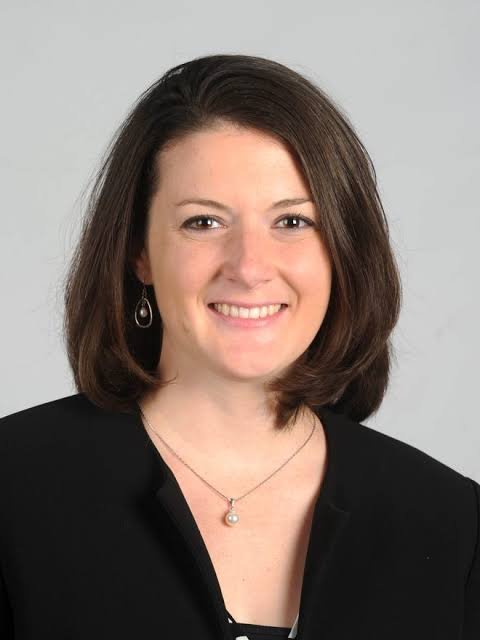
In this episode of the Clean Power Hour, host Tim Montague sits down with Erin Gill, Vice President of Communications and External Relations at Knoxville Utilities Board, during the Tennessee Solar Energy Industries Association (TenneSEIA) conference in Chattanooga.
Erin explains how KUB is responding to rising electricity demand and population growth while investing in solar, battery energy storage, and new approaches to managing the grid.
KUB is working toward a portfolio of 400 MW of solar by 2040 and plans to deploy 22 MW of battery storage, primarily at substations. Through TVA’s Generation Flexibility program, KUB has also saved customers approximately $4.7 million since January 2025.
The conversation explores how municipal utilities can use renewable energy, peak shaving, demand flexibility, and partnerships to improve reliability without placing unnecessary financial pressure on customers.
Key Highlights
- Winter Storm Elliott and grid resilience: How the 2022 rolling blackouts changed KUB’s approach to reliability and reinforced the responsibility of local power companies to their customers.
- Rising electricity demand: Why AI-driven data centers, population growth, and expanding infrastructure needs are creating new challenges for TVA and its local power companies.
- Knoxville’s growth: How KUB is keeping utility infrastructure ahead of residential and commercial development, including the shift toward multifamily housing.
- 400 MW solar goal: KUB’s plan to build a portfolio of 400 MW of solar by 2040, including participation in TVA’s Green Invest program.
- $4.7 million in customer savings: How KUB is using TVA’s Generation Flexibility program to source part of its electricity from solar and biomass, reducing costs for customers.
- 22 MW of battery storage: KUB’s plans to install modular battery energy storage systems primarily at distribution substations.
- Peak shaving and grid optimization: How batteries, demand management, and flexible loads can reduce peak electricity demand and make better use of existing infrastructure.
- Customer affordability: Why Erin believes utilities must pursue innovation and coordination rather than relying solely on expensive infrastructure expansion.
- The future of public power: How municipal utilities can support the energy transition while keeping customer needs at the center of their decisions.
Connect with Erin Gill
LinkedIn: https://www.linkedin.com/in/erin-gill-25a43510/
Knoxville Utilities Board: https://www.kub.org/
Tennessee Valley Authority: https://www.tva.com/
American Public Power Association: https://www.publicpower.org/
Connect with Tim
Clean Power Hour
Clean Power Hour on YouTube
Tim on Twitter
Tim on LinkedIn
Email tim@cleanpowerhour.com
Review Clean Power Hour on Apple Podcasts
The Clean Power Hour is produced by the Clean Power Consulting Group and created by Tim Montague. Contact us by email: CleanPowerHour@gmail.com
Corporate sponsors who share our mission to speed the energy transition are invited to check out https://www.cleanpowerhour.com/support/
The Clean Power Hour is brought to you by CPS America, maker of North America’s number one 3-phase string inverter, with over 6GW shipped in the US. With a focus on commercial and utility-scale solar and energy storage, the company partners with customers to provide unparalleled performance and service. The CPS America product lineup includes 3-phase string inverters from 25kW to 275kW, exceptional data communication and controls, and energy storage solutions designed for seamless integration with CPS America systems. Learn more at http://www.chintpowersystems.com
0:50
It was KUB acting on TV as direction, but it was KUB that turned off the lights, and that was one of those moments that again reiterates that local power companies, the distributors, we are the entity that are most accountable and most directly accountable to the people who are paying the bills. But the tolerance of our residents to solve this problem by throwing money at it, I think, is limited. I think this idea of innovation and a very acute sense of protecting affordability has got to be part of the solution set because we can, you know, again, you can solve a problem if you throw money at it, but I don't think that that's the right answer for the moment that we're in,
intro:
1:33
the clean energy industry is moving fast. The deals are getting bigger. The technology is evolving, and the stakes have never been higher. Welcome to the Clean Power Hour, the podcast for solar, storage, and microgrid professionals who want to stay ahead of it all. Each week, your host Tim Montague, industry advisor and president of Clean Power Consulting Group, brings you unfiltered conversations with the leaders actually building the energy transition. Now, here's your host Tim Montague.
Tim Montague:
2:07
Welcome to the Clean Power Hour. We're here at Tennessee in Chattanooga, talking with Aaron at KUB, the Knoxville Utilities Board. In 2022, during winter storm Elliott, TVA ordered rolling blackouts, and the utility that had to turn off the lights in Knoxville was KUB. Since then, KUB has been adding solar, installing its first batteries, and working to protect customer bills while the region keeps growing, Erin Gill walks us through how.
Erin Gill:
2:40
So I'm Erin Gill. I'm the vice president of communications and external relations at Knoxville Utilities Board. So Knoxville Utilities Board is a five-service
provider:
2:49
electric, gas, wastewater, and fiber. We are municipal utility, so we are wholly owned technically by the city of Knoxville. But our service area extends far beyond the city limits into Knox County and part of seven total seven counties. So we are a regional utility provider, and again, all of our service territories for the different utilities that we offer don't always align, but we are really proud to serve about 525,000 customers in East Tennessee.
Tim Montague:
3:19
You were saying in in the pre-interview that you've worked with Gil for for a while. Tell me about that history, and was that also when you were with the city?
Erin Gill:
3:29
Yes. So I spent the first part of my career working at the city of Knoxville, I started up their sustainability initiatives. Ultimately, leading our sustainability office under Mayors Rojero and then Mayor Kincannon. So I'm rooted in that local government space. And so Gil and I go way back to trying to get solar off the ground in Knoxville and thinking about the tools within government that government needed to be able to code and permit and inspect solar installations, but also thinking about community education and engagement, letting people know what the opportunities were and how the landscape had changed and continues to change. I mean, even through today, that landscape is not the same as it was in the 70s. It wasn't the same in 2008, and I think we're continuing to see that trajectory evolve in real time.
Tim Montague:
4:17
Aaron, why did you go to KUB?
Erin Gill:
4:20
Great question. So I mentioned KUB is a municipal utility. So we worked closely together throughout my entire career and leading the sustainability initiatives at the city of Knoxville, KUB was one of our most integral partners. And when I look at some of the progress that the city has been able to make in terms of reducing its emissions at the municipal and the community scale, our partnership with KUB was always part of that. So I got to know that team really well, and in seeing the energy landscape, my background in the energy space in particular was really excited to get an opportunity to join the the leadership team over at KUB to take on this next step of leading energy initiatives that can bring new energy solutions, scale energy solutions, and be part of that transition for the community as a whole.
Tim Montague:
5:07
And so, in your tenure, both at the city and now at KUB, how have you seen the Knoxville utility evolve?
Erin Gill:
5:16
Yeah, great question. So you know, first I think I want to preface by saying that you know KUB as an entity has always evolved to meet the needs of our community. And you look across our over 85 years of history. You know, we started with electric and water. We then took on gas in the 40s as that technology was becoming more prevalent. In the 80s, we helped the city by taking over their wastewater system. Used to be a city department. We took it over into the independent utilities board, and in 2021, KUB got into the fiber game, recognizing post-pandemic. That fiber to the home, high-speed internet, broadband was such a critical part of life, and that much like our other utilities, that fiber really was the new municipal service that was needed for our community. So KUB, I think, has always shown that it is willing to adapt and to evolve and to grow and to change to meet the needs of our customers and our community, and so seeing that evolution in the sustainability landscape and in the clean energy landscape, I think is just a natural extension. KUB is always thinking about what different customer groups need. Some of them, we've heard examples the Tennessee discussion today. Commercial customers, for example, thinking about their supply chains and how they might need to meet evolving supply standards through green energy purchases, RECs, renewable energy certificates. We think about one of the partnerships we we worked on long with the city and the KUB partnership was around energy efficiency for low-income customers and the unique needs of meeting folks who are really struggling in real time with their utility bills and live in homes that across the city of Knoxville were very aging. You know, housing infrastructure. So these homes were not well insulated. All of the history of that partnership and and the commitment to working with these different groups to find solutions that really can only come from partnerships that ultimately yield to be more than the sum of their parts is really just what is exciting. So, but you know, this idea of KUB always being at the forefront of finding solutions for our customers is is really what drives a lot of what we think about today and how we're thinking about the evolving needs and meeting those evolving needs in real time.
Tim Montague:
7:34
The Clean Power Hour is brought to you by SDE Sinclair Designs and Engineering, fixed tilt and carport racking, design, engineering, permitting, and manufacturing all under one roof in Michigan. No outside vendors, no waiting in someone else's queue, just fast turn around and steal that ships when you need it. Ask Ag Energy Co. in Illinois or Sunrise Solar in the Mid-Atlantic; they'll tell you what it's like to work with the Sinclair team. SDE, everything in-house. Visit Sinclair-designs.com. Quick context for listeners outside of the Tennessee Valley. TVA generates and transmits the power. It sells that power wholesale to 153 local power companies called LPCs, and KUB is one of them. The LPCs deliver it to homes and businesses, that split matters for everything. Aaron explains next. Yeah, you know we heard from Janet, EPB's senior CEO, this morning, and and obviously there is a nexus of IT, you know, fiber, information technology, and bandwidth, energy, and the the grid is changing. The grid is super important for the economy, for safety, for health, et cetera. Right? We need both. We need a good grid, and we need good bandwidth. And now, they're kind of attached at the hip as far as load growth goes, right? With the advent of data centers, not that data centers are anything new, but there's a wave of data centers now happening across the country, right? Because of the explosion of AI, you're faced with load growth and the TVA saying we want you to be able to shed 10% of your load because we are tapped out, and so there are times when to avoid. Well, there were rolling blackouts. I think in 2022. Yeah, and so to avoid rolling blackouts, the the LPCs are now charged with being able to provide some resiliency in the face of that order or whatever. So explain that situation. How do you? How does the KUB see that circumstance?
Erin Gill:
10:12
So I'll maybe zoom out a little bit first to explain to your listeners some of that reliability obligation. And this is not unique to TVA. I think any of the NERC regulated utilities and their distributors would be subject to similar reliability standards. So TVA uses what's called the emergency load curtailment program, and that's a prescribed set of steps that their distribution companies like KUB are aware of that we partner with them on and that we practice, and that is about grid stability. At the end of the day, that is to prevent these types of grid failure events that can come when you have a. Mismatch between supply and demand. So TVA is always balancing that, and for you know over 90 years they have done an impeccable job. But the one time they don't, and I think this is true for any utility, that's the thing that people remember. That's the moment that changes the trajectory of the conversation. And so when we when we saw winter storm Elliot and all as the valley kind of collectively went through that pain of of messing up that track record, and and living through some of the conversations and and hard questions that were asked among all of us, I think we recognized that this was as clear a signal as you could ask for that distribution utilities, whether it was our choice or not, we're going to be in the front line of that hard reality for our customers. It was KUB acting on TV as direction, but it was KUB that turned off the lights, and that was one of those moments that again reiterates that local power companies, the distributors, we are the entity that are most accountable and most directly accountable to the people who are paying the bills, and to our ratepayers, and so that idea of resilience being the imperative responsibility that we all have, the reason why we exist, we had to, I think, again begin to look closely at what are those solution sets that maybe we had not looked as closely at before that could help preserve that reliability, even in these moments when you might see that ELCP emergency load curtailment trigger come into effect again. So it's exciting because we haven't had to do that ever since. You know, that's that was again a one-time event in 2022. Knock on wood, we won't we won't see it because TVA has been very intentional about hardening their system, preventing some of the unique issues that arose during that winter storm. But as you mentioned, we do have load growth. We do have a growing state. Tennessee is immensely, you know, growing and quickly growing, and that's true in Knoxville as well.
Tim Montague:
12:51
Tell us about that. How has Knoxville grown in the last 10 years, for example?
Erin Gill:
12:56
Yeah, so we outpace the nation and have for the last five years. Again, kind of a post-COVID phenomenon, if you will, as folks found the flexibility of remote work and found a great home in Knoxville. By 2040, we expect to have about another 75,000 new residents. If I read that last data point, so the growth is not stopped. That is continuing. So we're again a metro area of approaching about a million people now, and that is an area where you know you've seen different types of infrastructure not keep up with some of that growth. We've seen housing prices go way up in our region because we didn't have the housing stock to absorb all these newcomers. We've seen traffic jams, you know, emerge, and you know the daily frustration of just getting home and going on your commute because the road infrastructure hasn't been able to keep up. I think what is great is that when you look at the utilities that KUB provides, we have kept up. We pride ourselves on our ability of being able to keep up. We've made the investments. We've seen that growth coming, and we've done the things that needed to be done from both a operational standpoint, but a capital infrastructure standpoint to make sure that our utilities don't become a reason why someone can't get a home built, can't open a business, or that we see that our customers are suffering reliability or affordability issues because of that. So we pride ourselves because we've tried to stay ahead of it, and I think as a utility, we've we've been able to do that in a way that our customers can appreciate because again, those utilities have stayed strong.
Tim Montague:
14:30
For a sense of that growth, census figures put the Knoxville Metro at about 838,000 people in 2010. By 2024, the estimate was nearly 958,000. That's about 128,000 new residents in 14 years.
Erin Gill:
14:48
But the customer count is one of our best metrics to show how across the board our service territory is growing. So again, we brought on fiber customers, but at the same time, we're seeing new electric customers, new water customers. And what's interesting is you look about these, you know, urban areas, especially in the valley, is that whereas before that growth was predominantly on the fringes of our system, so you're thinking about system extensions, largely driven by single-family homes. For example, what we've now seen is a return to some of those urban core areas. So we've we've I think for the first time in recent years crested to where there are more multifamily properties being built than single-family properties. So that's a whole different approach to the engineering and the infrastructure services that are needed. So that is really thinking about infrastructure expansion and having to do quite a lot within a very tight space, and the ways that as you're accommodating that new development, for example, in the heart of a city. On a very tight streaked grid, you might be impacting other customers around, and so being mindful of that has been an exciting challenge, but one that we've navigated again in recent years to a very high degree of complexity that we're navigating.
Tim Montague:
16:05
So, you know, my listeners are for the most part energy professionals, solar installers, developers, asset owners, service providers, and so we're always curious: what is going on with solar and batteries in the TVA in the Tennessee Valley? There's a lot going on, but specifically in Knoxville, what are you guys up to?
Erin Gill:
16:31
Yeah, so let me talk first about kind of KUB, and then maybe we can get into some of the broader macro ideas. So just to put a pinpoint on it, KUB is working toward a portfolio of 400 megawatts of solar by 2040. So we've set that kind of line in the sand. We want to cross it, and the two biggest tools that we have are first TVA's Green Invest program, which is really the biggest piece of that that pie. So TVA's Green Invest is a program wherein folks who are looking to build or to access green energy can be part of large arrays that are very economical, and so it's a way of bringing on green power to the valley for a very very economical amount of money. And so KUB was an early investor in that, an early partner, and so we are able to in process. And some of those arrays are already online, but working toward about a little over 300 megawatts of solar that's going to come in to KUB's service territory specifically for our customers, so that's really exciting. The other big part of that, and the one that is really the economic driver of this, all to the benefit of our customers, is a generation flexibility program. And you've heard a lot about that at the conference. That is the first time program that TVA offered to local power companies that allowed 5% of our local load to be sourced from non-TVA sources, and so in KUB's case, we are 100% utilizing that 5% right now. We're doing that through a portion of solar and a portion of biomass. The biomass is fabulous because it's here right now, but it's also able to scale down as these longer-term solar projects that we've invested in are coming online. So we've got one solar project already online kicking electrons to the grid, and then we are in flight with several others. And so all told, that will add about 80 megawatts of solar by the time it's all said and done in real time. Again, since January of 2025, when these programs or projects went live for us, that has saved our customers about 4.7 million dollars. So again, real money that's returning real value to our electric system as a result of our investment in renewable energy.
Tim Montague:
18:48
So that 300 megawatts that you referenced is that solar assets that the KUB is going to own, or some other third party.
Erin Gill:
18:57
That is, for the most part, other third parties. So that's a partnership with TVA. Again, I have to actually ask them the ownership structure, but they arrange for all that. They build them on behalf of the Green Invest Partners, of which we are one. And in certain cases, several folks are partners on an array, and in other cases, it may just be one or two off-takers. So could be companies,
Tim Montague:
19:19
could be companies like Silicon Ranch, which is an IPP, an independent power producer, but it could also be the TVA, which is a big utility operator. Right, they're owning and operating all kinds of power plants, it
Erin Gill:
19:33
could go either way, and it's really up to TVA how they would like to structure that ownership.
Tim Montague:
19:37
Right. Okay.
Erin Gill:
19:38
More about taker.
Tim Montague:
19:39
What about batteries?
Erin Gill:
19:40
Yeah. So batteries are really interesting. We've we've talked a bit about what we're doing at different panels here at Tennessee, but we are in flight right now and on a plan to bring 22 megawatts of storage to our distribution grid, predominantly located at substations. So again, we consider it utility scale. It's certainly not the really big multiple hundreds of megawatt sites. These are modular storage packages that we are putting in at our distribution sites, and all of that is is really around this idea of how can we get more out of the grid that we've already built. How can we shave peak? How can we make sure that we're leveraging on and off peak energy differentials to bring value to our customers while at the same time providing a measure of this resilience? And so we're excited to dip our toe into that water. We've taken delivery of the first one, and we'll have it online hopefully in the next few months. But that is really you know quite a big step in being able to keep up with these technology trends and seeing the potential that batteries have.
Tim Montague:
20:39
So that's definitely a pattern with the LPCs, the local power companies, that you're installing batteries at substations, and that gives you. The ability to do a couple of things, as I understand it, you can load shed, right? You can stop relying as much on the TVA at the push of a button, basically, as if the battery is charged up, and then, but batteries, you know, there is a stack, right? You can attack demand charges or capacity charges. You can provide resiliency in the case of an outage. How do you how do you think about that value stack? I guess and prioritize how you're planning to build out Your infrastructure, you know, I think it it it kind of became clear for EPB that they needed 150 megawatts of batteries to do what they wanted to do, and then they're just doing that in a staged rollout. Is that kind of the journey you're on, or something else?
Erin Gill:
21:50
Well, I think it's iterative. One of the nice things about the number that we've put on paper with this 22 megawatts is that that aligns neatly with what we would call our peak shave potential over a two-hour window. I think there's tremendous opportunity in the technologies that are out there and the new ways that we can interact with our customers and potentially with TVA as well to do far more than peaking at that two-hour peak load, you know, window, and that is, I think, one of the areas of tremendous opportunity. But it's really required. I mean, you can't you can't do that without partnerships. Partnerships are going to be integral to that. And so when you look at what KUB by itself is going to optimize for that peak load window is is certainly one. Then you add the reliability benefit, as you've mentioned, the arbitrage benefit, resiliency benefits. But to me, when I look across that landscape, if you can go downstream to customers and think about how can you bring resilience to the customer level at the customer level, and maybe bring particular investments from the customer side that they might otherwise be investing. For example, in a Generac off-the-shelf generator, how can we provide that service? And then thinking upstream at TVA, what are they seeing needs on the system at the macro level, at the G and T level, and how can their investments and coordination help you know maximize and optimize the distribution of of when we're deploying different assets, and all of that has to coordinate too. I mean, again, storage and peak load management doesn't get utilized in a vacuum. You have a lot of other technologies. So, at the utility side, you might be thinking about demand voltage reduction, and on the customer side, you might think about smart thermostats. So, all of those things are going to have an impact on that peak load and being able to dispatch the right tools at the right time for the right durations, in order to do for the grid what it needs done, while at the same time maximizing for financial benefit and for those ancillary benefits to customers and to the grid is is all part of the dance.
Tim Montague:
24:56
For sure, the Clean Power Hour is brought to you by CPS America, maker of North America's number one three-phase string inverter with over 10 gigawatts shipped in the U.S. The CPS product lineup includes string inverters ranging from 25 kW to 350 kW. Their flagship inverter, the CPS 350 kW, is designed to work with solar plants ranging from 2 megawatts to 2 gigawatts. CPS is the world's most bankable inverter brand and is America's number one choice for solar plants. Now offering solutions for commercial, utility, ESS, and balance of system requirements. Go to chintpowersystems.com or call 847168 to find out more. So, in our last few minutes together, what are you most excited about, and what keeps you up at night?
Erin Gill:
25:55
So, what I'm most excited about is, I think, the opportunity for local power companies to be partners in new ways to our customers and to TVA. I think the local power community is ready to meet the needs of the moment. We are a tool that can be leveraged to address and surpass some of these constraints that TVA might be experiencing, that our customers might be feeling, and when we can work together in a coordinated way, I think we can really solve some of those pain points. It's not going to be easy. It's going to take some new tools, some different ways of looking at numbers and technologies and partnerships and coordination. But I'm really optimistic. We can meet the moment and get through this next pinch point of energy load growth and supply constraints without the impact that we felt maybe in 2022. So that's exciting. What keeps me up at night is a bit around the urgency of protecting affordability, and I think that customers are feeling this energy supply crunch in their wallets, and it's not as bad in the Tennessee Valley as it is in other parts of the country. But the tolerance of our residents to solve this problem by throwing money at it, I think, is limited. I think this idea of innovation and a very acute sense of protecting affordability has got to be part of the solution set because we can, you know, again, you can solve a problem if you throw money at it, but I don't think that that's the right answer for the moment that we're in. Our customers are too important, finances are too important, and that is money that you know. If we can be more creative with the solution sets that we're offering, that we can put to different use, that maybe helps preserve some of that goodwill toward what the utilities are doing to preserve quality of life.
Tim Montague:
27:59
And so, in today's world, how is the TVA and the LPCs protecting consumers from inflation? What are what are the things that are being used today to prevent that pain point?
Erin Gill:
28:16
Yeah, so I'll talk again about flexibility and the$4.7 million that we've been able to save because we are purchasing and leveraging that 5% flexibility. So that's one example. Managing the wholesale power costs by using peak load management, as we've discussed. And I think if we can tap into that coordination and think about how load flexibility and load shaping can allow us to get more out of the grid we've already built and paid for, then ideally that prevents us from having to upgrade our grid more than otherwise that we might need to. There's always going to be grid investments. We're at a moment where I don't think we can avoid the need to build, but at the same time, when we build what we've built, we've got to make sure we're using it to the fullest extent, and that is a optimization problem. It's a coordination problem, but I think it's one that we should be allowed to solve, and it's one that we can solve with the right people looking at it with all the right ways.
Tim Montague:
29:14
Is there anything else you would like the bigger world to know about what's going on in Knoxville?
Erin Gill:
29:21
Knoxville is a great place, and KUB has been a part of making it a community that has been able to thrive and to grow and to do new things and be an evolving city that keeps up with the times. So we're proud of that. We're proud of our 85 plus year history of providing great services. And to me, all of this work in thinking about the future of energy is just a natural and extension of who we are.
Tim Montague:
29:46
I want to thank Aaron Gill, Vice President of Communications and External Relations with KUB, for coming on the show. Aaron, how can our listeners find you?
Erin Gill:
29:55
Yeah, so we are at www.kub.org, and we'd love for you to follow us on Facebook and Instagram. That's where we tell a lot of the amazing stories that our employees are doing to bring great services to our customers across our region.
Tim Montague:
30:08
TVA is the only place where I've had a lot of contact with utilities. In my world, it's more about IOUs, investor-owned utilities. We have plenty of co-ops and muni's, but they don't they don't participate, I guess, as much in the energy transition yet in Illinois, as far as I can tell.
Erin Gill:
30:33
I'll make a plug for another network. You should go check out conferences for the American Public Power Association because that's where a lot of the muni's are hanging out and swapping.
Tim Montague:
30:41
American Public power association.
Erin Gill:
30:43
Yeah, and amazing things are happening in public power, and I would say that in no way, shape, or form are those entities left behind in the energy transition. But I think we're doing it quietly, and we're doing it with a customer focus, and it's really all about how do we protect our customers and bring the right types of services to our communities. So another great another great network you should check out.
Tim Montague:
31:02
Yeah, and when and where does that organization meet?
Erin Gill:
31:06
They usually have an annual conference in the summer, so they were in Boston in July, and you'd have to look up where they're going next. But it's a great network, and again, the the power of public power in the valley, I think, is a really important story to tell. Yeah. So I'm glad you're getting to hear that today,
Tim Montague:
31:23
I agree. A
Erin Gill:
31:24
national conference, and it brings in utilities again, public power utilities from across the country of all sizes, big, small, everywhere in between. Some of them are multiple utilities, like we have. Some of them are electric only, but it's a really dynamic group, and there's some amazing work happening across those. LPCs, or they're not LPCs there, but power companies, and and really thinking about again that intersection of how to serve your community,
Tim Montague:
31:49
yeah,
Erin Gill:
31:50
because that is who we are.
Tim Montague:
31:52
Thank you. Yeah, that was Aaron Gill of Knoxville Utilities Board. Three numbers to remember: a goal of 400 megawatts of new renewable energy, 22 megawatts of storage at substations, and 4.7 million dollars saved through TVA's Generation Flexibility Program. Find every episode at CleanPowerHour.com, and tell a friend about the show. That's the single best way to help others find this content. I'm Tim Montague. Let's grow solar and storage.