The U.S. is facing a major energy challenge. AI data centers are driving electricity demand higher, grid infrastructure takes years and billions of dollars to expand, and communities need reliable power. Could microgrids and distributed energy resources help bridge the gap?
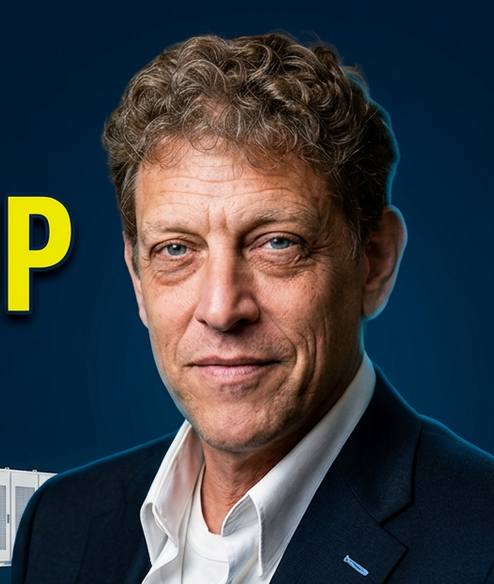
In this episode of The Clean Power Hour, host Tim Montague speaks with Lester Crafton of Ovanova about the evolution of solar, battery storage, and microgrids, and why he believes homes and businesses could play a much bigger role in America’s energy future.
Lester shares the story behind Ovanova’s unconventional beginnings, from a solar marketing model built around supporting schools and community organizations to deploying integrated energy systems designed for resilience and grid support.
The conversation explores Ovanova’s microgrid project at the Isha Institute of Inner Sciences in Tennessee, where limited grid capacity threatened to delay a major community development. Lester explains how a combination of battery storage, solar generation, and dispatchable backup power can help address that challenge while reducing dependence on costly grid upgrades.
Tim and Lester also discuss a bigger question: As data centers and AI increase electricity demand, should homes and businesses remain passive electricity consumers, or could they become local power plants that help support the grid?
In this episode, you’ll learn:
• How Ovanova evolved from residential solar into integrated microgrid and energy resilience projects.
• Why Lester believes solar and battery storage should be designed to work together.
• How a buffer battery can help a community develop when the local grid cannot initially supply enough power.
• What the Isha Institute microgrid project reveals about the challenges of developing new infrastructure.
• How distributed energy resources could help utilities access reliable, dispatchable power.
• Why cybersecurity and communications reliability matter as more distributed energy assets connect to the grid.
• How homeowners and businesses could potentially earn revenue by supplying power during periods of peak demand.
• Why data center developers could help finance distributed energy infrastructure in the communities they affect.
• What it will take to scale microgrids, battery storage, and local energy resilience across the United States.
Connect with Lester Crafton, Ovanova
Website: https://ovanova.co/
LinkedIn: https://www.linkedin.com/in/lestercrafton/
Connect with Tim
Clean Power Hour
Clean Power Hour on YouTube
Tim on Twitter
Tim on LinkedIn
Email tim@cleanpowerhour.com
Review Clean Power Hour on Apple Podcasts
The Clean Power Hour is produced by the Clean Power Consulting Group and created by Tim Montague. Contact us by email: CleanPowerHour@gmail.com
Corporate sponsors who share our mission to speed the energy transition are invited to check out https://www.cleanpowerhour.com/support/
The Clean Power Hour is brought to you by CPS America, maker of North America’s number one 3-phase string inverter, with over 6GW shipped in the US. With a focus on commercial and utility-scale solar and energy storage, the company partners with customers to provide unparalleled performance and service. The CPS America product lineup includes 3-phase string inverters from 25kW to 275kW, exceptional data communication and controls, and energy storage solutions designed for seamless integration with CPS America systems. Learn more at http://www.chintpowersystems.com
0:50
We just wanted to give money away to help people learn about solar, but if you look at one Louisiana data center for Meta is five gigawatts. Yeah, do you think they're not going to want to build 100 of those? Okay, well that's 500, and assuming it runs continuously, then if the average now is four or 500, and then we throw up 500 more, but you only have a tiny little buffer between us and disaster. Unless
intro:
1:20
the clean energy industry is moving fast, the deals are getting bigger, the technology is evolving, and the stakes have never been higher. Welcome to the Clean Power Hour, the podcast for solar, storage, and microgrid professionals who want to stay ahead of it all. Each week, your host Tim Montague, industry advisor and president of Clean Power Consulting Group, brings you unfiltered conversations with the leaders actually building the energy transition. Now, here's your host Tim Montague.
Tim Montague:
1:54
We're here at Tennessee with Lester Crafton of Ovanova, and I really I love this. Once in a while, I step into an interview where I really have no idea what's going to happen. So this is kind of one of those. Lester was very attentive in the microgrid panel yesterday, and ask some good questions. So I think we're going to be talking about microgrids. But Lester, welcome to the Clean Power Hour, and introduce yourself for the audience.
Lester Crafton:
2:21
Thanks, Tim. It was awesome running to you in the hall. I'm glad you managed to find a spot for us to get on and talk. My name is Lester Crafton. I grew up in Somerville, Tennessee. I went to college in North Carolina. I lived in Nashville, New York, Los Angeles, and I've had a very weird path through solar over the last decade. If you want to summarize what we do, and then we can peel this back as far as you'd like to go, is that we design, deploy, and maximize microgrids, and we've done installations in 27 states. We gain policy experience by working with over 60 different utility companies and seeing what their interconnection agreements were and what they actually cared about. Yeah, and basically learning a big distinction, which is energy users want affordable, reliable power, for sure, and energy, and that's what they're willing to pay for. And then energy providers want firm, dispatchable power. So when we started out in 2015, we didn't know any of this stuff. We just wanted to give money away to help people learn about solar. So we were out in Hollywood at the time.
Tim Montague:
3:29
What do you mean, give money away? Nobody gives money away. I mean, you go out of business quickly unless you're Bill Gates. You know the Gates Foundation, right? I'm I'm just curious. I got I got to lean into that a little bit. It is quite
Lester Crafton:
3:41
counterintuitive to start a business by giving money away. But what what happened is when we started knocking on doors in 2014 in California and saw that the market was torched because of the basically lack of integrity from the very beginning of the sales process, and what our philosophy is is that when trust is high, the cost of doing business is low, and when trust is low, the cost of doing business is high, and so we're like, we saw it as a trust issue to solve, and then we're like, well, who do people trust? We're like, well, they trust their little league soccer teams, their little league sports teams, and the cheerleaders, and they trust their schools and their churches, and it's like what all those guys have in common. They're always looking for money. So here's how we did it: we just said, let's take the money that's going to be wasted marketing solar and give it to those good guys in return for them sending people to us to have a conversation about how cool solar is. Yeah, but that
Tim Montague:
4:27
sounds like a B to C play. What you were in the B to C business, or
Lester Crafton:
4:33
we sold directly to residences as a business. So it's that's B to C, yeah. Okay. It was more of a fundraiser. We call it Give First, Tell the Truth marketing. Yeah. Because we didn't we didn't chart. Nobody had to buy anything in order to raise money for the school. They just had to show up and learn at a Zoom webinar. The
Tim Montague:
4:49
Clean Power Hour is brought to you by SDE Sinclair Designs and Engineering, fixed tilt and carport racking, design, engineering, permitting, and manufacturing all under one roof in Michigan. No outside vendors, no waiting in someone else's queue. Just fast turnaround and steel that ships when you need it. Ask Ag Energy Co in Illinois or Sunrise Solar in the Mid-Atlantic. They'll tell you what it's like to work with the Sinclair team. SDE everything in-house. Visit Sinclair-designs.com. Okay. So, but paint a picture for us. What is Ovanova? How old is the company? Where did you get your start? What it sounds like you you started in the residential space, but you're talking about microgrid. So, is that strictly residential or also commercial?
Lester Crafton:
5:44
I'll tell you about some really cool projects we're working on. Great question. We've been in business for 11 years, so we went from giving money away and having open, honest. Conversations about why everybody wasn't using solar already. We were fortunate to have to go to places like Ohio and Tennessee where there weren't these good net metering arrangements, which put us ahead in understanding batteries early. So, when did you first do batteries? Our first battery deployment was around 2020. We were one of the first. We we actually sold batteries at cost for two years, so that we could get ahead in the technology, and so we imported a Lux inverter because a Solar is just a white label day, and EG418K is a it's a Lux. So we found Lux at about the same time EG4 did. They decided to be a distributor. We decided to deploy the equipment and test it, and we're glad we did because the Chinese turned out the lights at my partner's home, where we first deployed the Lux bidirectional hybrid inverter, which became the EG418KPV. We might have been the first solar company in America to stop allowing people to buy solar without batteries. We
started out:
6:47
you can have without batteries, you can have battery ready, which was just having the right inverter, or you could have the whole battery system. We gave people three options, and then we realized we just weren't being courageous enough in acknowledging what was really happening, and so we just said, "No, you can't have solar unless you also have storage because of the grid impact and because you're going to be disappointed either when the rates change down the road and you're not grandfathered in, you know, when you go to get batteries and you realize your only option is an AC coupled system, which doesn't make any sense if you were starting from scratch. You know when you try to participate in DERs and you don't earn as much as you could, like up in Eversource. And so we, because we worked all over the nation, we learned about all these different things and what makes sense, kind of what doesn't. And we saw that batteries were clearly the future, and then we were fortunate to be able to import some technology from China that made it inexpensive enough and made batteries and solar work well together enough that we just got way ahead of the curve there. And so where we are now, to finish up your question, thank you for your patience. Sounds good. Sounds good. I'm ready. Now we're up the road. There is a place called the Isha Institute of Inner Sciences. Have you ever heard of Sadhguru?
Tim Montague:
7:57
Yeah, I have. Okay, I met some of those guys.
Lester Crafton:
8:00
Oh, Sauron, maybe. Yeah, they're building
Tim Montague:
8:02
an intentional community, right?
Lester Crafton:
8:04
Yeah, they are, and they have they have a big like center for meditation and community events. And yeah, I'm
Tim Montague:
8:12
going to go visit. I don't know when, but I'm going to go visit. Some context on Isha: the Isha Institute for Inner Sciences is the North American Center for the Isha Foundation, founded by the yogi Sadhguru. The campus sits on the Cumberland Plateau near McMinnville, Tennessee, and draws 1000s of visitors a year.
Lester Crafton:
8:30
Well, we're the company that has developed their microgrid for them.
Tim Montague:
8:33
Okay,
Lester Crafton:
8:34
and so they're they're a really cool organization. But for their microgrid project, for years they have wanted to further develop their 17,000 acres. They wanted to put a school there and a sportsplex there and a golf course community because these are the type of yogis who golf with really nice, and then like eventually 800 home community. But here's the problem, Tim, is that they are at the very edge of two different local power companies' distribution lines.
Tim Montague:
9:55
Okay.
Lester Crafton:
9:56
So the first problem we solved, or we're fortunate enough to be given the opportunity to help solve, is that Sequatchie Valley and Candy Fort, both great local power companies for the TVA, they could and these numbers are rounded, but they could only combine get about three megawatts of power to Isha.
Tim Montague:
10:15
Okay,
Lester Crafton:
10:16
Isha needed 30.
Tim Montague:
10:18
Whoa!
Lester Crafton:
10:19
So their option, which had stalled them for multiple years, because what I didn't know, and you did you know that if you don't, if you're developing a property, is you can't prove that you can provide power to like an occupied structure, that they won't give you a permit to build it.
Tim Montague:
10:36
Makes sense.
Lester Crafton:
10:37
Yeah, and these numbers are approximate, but the first round of reconductoring or making the lines tatter to get more power through them. It's going to be about $12 million just locally on the distribution side.
Tim Montague:
10:48
Yeah,
Lester Crafton:
10:48
and that was just for phase one of the project. And then they were going to need about a $60 million infrastructure upgrade from the TVA.
Tim Montague:
10:56
Wow. So what's the status of that project? We start we started
Lester Crafton:
11:00
construction a month and a half ago, and how we solved the problem was we called a buffer battery. We just went and talked to local power companies, and we said we understand what you're concerned about. Is that this big this this this community is going to ask for way too much power at once, and your infrastructure can't deliver it, and then it's bad news for you.
Tim Montague:
11:19
Sure.
Lester Crafton:
11:20
So what if we just installed a battery with an inverter, and limited that inverter's draw to whatever you're capable of sending with no infrastructure. Like, well, I don't see any reason why we wouldn't do that. Okay, and then what if on the backside, because the community needs a lot more power, we installed a big solar field,
Tim Montague:
11:41
yeah,
Lester Crafton:
11:42
and. Than generators because the one thing that that that solar industry could really learn is solar is amazing when it's there. We all know that. Why would you not use God's free sunlight falling on your roof to make your electricity? It doesn't make
Tim Montague:
11:57
any sense. Good question. Why not? You know, but it only works during the day for goodness' sake. And so what? So you need batteries, right?
Lester Crafton:
12:05
And and through our weird journey, like we just learned how vital it was. And instead of being a solar company, we became an energy team, like and started thinking about resilience and what the grid needed. And then we're like, okay, in these homes, they could all have little micro grids on them, and then the whole thing can be connected, and they could have load shedding. We had to integrate technology that hadn't been put together before. One of the cool features there's some EOS batteries, and we've never been afraid. Yeah,
Tim Montague:
12:32
they mentioned that.
Lester Crafton:
12:34
Yeah, we've just never. How big a
Tim Montague:
12:35
battery are you? Is the EOS several
Lester Crafton:
12:37
megawatt hours? I think we just dropped a megawatt in yesterday, or a megawatt hour in yesterday. I've got some pictures of it I could send to you, but what it's it's zinc bromide, and it's not lithium iron phosphate.
Tim Montague:
12:48
Yeah, it's it's a zinc air battery, right?
Lester Crafton:
12:50
Yeah, and so my engineers would have to talk to you about all the different characteristics. But what we like about it is made in America, and that means they get a 50% tax credit. I think in
Tim Montague:
12:58
Pennsylvania, right?
Lester Crafton:
13:01
I don't know. I don't know. COS Energy, and I got pictures of a crane dropping it off on the pad that I saw my crew put together last week yesterday. Oh yeah, so that an hour up the road from here. We'll
Tim Montague:
13:12
use photos for this. Great, I will show you some pictures of us giving you. The Clean Power Hour is brought to you by CPS America, maker of North America's number one three-phase string inverter, with over 10 gigawatts shipped in the U.S. The CPS product lineup includes string inverters ranging from 25 kW to 350 kW, their flagship inverter, the CPS 350 kW, is designed to work with solar plants ranging from 2 megawatts to 2 gigawatts. CPS is the world's most bankable inverter brand and is America's number one choice for solar plants. Now offering solutions for commercial, utility, ESS, and balance of system requirements. Go to chintpowersystems.com or call 855-584-7168 to find out more. All right. So, community of 5000 people. The homes are all individual microgrids, nano grids. Let's call them right, with solar and battery. But then there's also a larger, like community scale micro grid with a large solar field and a large battery. Correct. I'm very interested in community scale micro grids, and I have. Well, Craig Lewis has a theory, and and and there's a person that you should also connect with if you're not. Craig is the is the director of the Clean Coalition in California. It's a nonprofit consultancy that does engineering, feasibility studies, and design of community-scale microgrids. Now, California is a special place, right? It's it's it's where things happen generally first in the United States technologically, and they have something called the microgrid incentive program, which is targeting low-income communities and doing pilot projects at megawatt scale, sometimes 10s of megawatts. So these aren't ginormous facilities, but they're they're not nano grids either, right? So they're they're doing. We
Lester Crafton:
15:34
love those. We call them power towns.
Tim Montague:
15:36
Power towns. Yeah. Yeah. Large scale solar and battery, primarily, right? And then you know hospitals, schools, community centers, emergency services, right? Things that you want to have 24/7, 365 power. Critical
Lester Crafton:
15:52
infrastructure.
Tim Montague:
15:52
Critical infrastructure. So here's the the question to you, though, because Craig has a theory, and and I don't, you know, I don't know how it proves out in his world, but traditionally utilities are incentivized to build infrastructure, meaning poles and wires. Just talk distribution grid, right? At a cost plus model, so they make a profit of guaranteed profit of 10%. So they like capital projects because it generates revenue and generates profit. Now, now it may be different in muni's and co-ops. I'm not sure. You know, this this is largely I think in IOU territory, but instead of building transmission and distribution. You build microgrids, right? So you build solar, battery, and switchgear that allows islanding, and thereby you get the capex. You do capex projects. You're just creating resiliency instead of more T and D. So, do you think that holds water in this world, or
Lester Crafton:
17:04
it's my exact vision.
Tim Montague:
17:05
Okay,
Lester Crafton:
17:05
almost. So let me share how I believe we can pull off Craig's vision because what Craig's talking about it takes a heck of a lot of policy and a lot of agreement and all these things, and it's a beautiful vision worth working on. Right now, we are way behind China. We need all the data centers we can get as soon as possible, the infrastructure cannot carry what needs to be carried. I just want to give you one quick example of data centers. I'm going to show you how this ties into microgrids because Craig's exactly right. Is right now max capacity of the U.S. grids 13, 1400 gigawatts or 1.3 terawatts. The max we've experienced recently is still under 800, so there's a lot of buffer by design because that top number isn't like a speed limit where you get a fine. It's like a cliff you walk off, and that's Cyanora Senorita. Yeah. Well, right now the average is only like 500, so we have 1300 capacity. We only use 500, so it seems like there's plenty of space. But if you look at one Louisiana data center for Meta, is five gigawatts. Yeah. Do you think they're not going to want to build 100 of those? Okay. Well, that's 500. And assuming it runs continuously, then if the average now is four or 500, and then we throw up 500 more, but you only have a tiny little buffer between us and disaster. Unless yeah, I think there's something
Tim Montague:
18:32
like 250 gigawatts of data centers in the pipeline in the U.S. Something like that. Well, there you go. It's a big number. That would be
Lester Crafton:
18:39
50 percent of our current normal daily use when that comes online. Right. Like everything that we're using in America now, including all the data centers we already have, and all the things that we do, half of that. And that's like I'm not going to argue about AI. I've used it every day for three years. It has put us so far ahead, and I am grateful for it. And we we need data centers. They have to go to space in Elon's rocket. So be it. But we need them, and we need electricity. So this is my thesis: We need to produce power in a way that does three things. Number one, protects people. So, if you build transmission infrastructure, does that protect people? Kind of from like large-scale blackouts, but it keeps the same game up. But if you put that same resilient energy infrastructure on their property, then they never have to worry about rates increasing again. Number one, because they're producing their own power. I mean, down to the residential level, small business, like all the way, starting with critical infrastructure, but all the way. And then, if you just had 40,025 kilowatt power plants, then that's a gigawatt of freed grid capacity. It is energy resilience on that property, a much more resilient local grid, the and the ability to chip in during peak times by definitely shedding all the loads of the property, and pushing it back to the grid, which is why we realized when our lights got turned out it was a pretty big deal because if this is the future of American energy, where everybody raises their hand as an individual and says, "Sign me up! I want to contribute. My nation needs energy for these data centers. We can't go over that limit, but we can produce ourselves. We can share with our neighbors ourselves. Yeah, and the technology is so advanced now; it just does it automatically. But that's where cybersecurity matters, because at scale, the most dangerous possible thing is an aggregated set of distributed energy resources that are capable of supporting the grid, which means they're capable of attacking the grid. So we worked on that for a year and a half. We could talk about that some other time if you want to, and then you have to think about what energy generation technology do you have on your microgrid? So if you're a utility company and you want firm dispatchable power, it just basically means you want a friend that's going to pick up the phone and then they're going to show up. So the cybersecurity is pick up the phone. That's why we have four communications failovers and edge compute in our gateway that secure the microgrids we we build. That's why they'll soon start coming with load shedding. It's the AC side to give visibility to utilities into the load, so they can't be tricked about what's really coming. And then we're building a device that integrates solar batteries, a EV bidirectionally, and a DC coupled generator, so that the utility company, so that when the utility company calls on our technology,
Tim Montague:
21:27
yeah,
Lester Crafton:
21:27
it will answer, and it will be there. And then you have firm dispatchable power, which is exactly what the TVA said that they wanted. And then this person has reliable, affordable power because there are no price increases. There's none of that stuff.
Tim Montague:
21:41
So how do you pay for?
Lester Crafton:
21:43
Well, like, how do you? That's. I mean, right now, it's the
Tim Montague:
21:47
it's the it's the it's the biggest gorilla in the room. Honestly, Lester, it's it's we have the technology, right? It's how to pay for it and deploy it in a timely manner. Like, we could completely reinvent the grid. We we absolutely must do this, right? We need a grid of microgrids,
Lester Crafton:
22:07
yes,
Tim Montague:
22:08
both nano grids and community scale micro grids. But as soon as
Lester Crafton:
22:12
possible, we need 100 million micro grids in America as soon as possible.
Tim Montague:
22:15
Yeah, I'm with you.
Lester Crafton:
22:16
And so, but how
Tim Montague:
22:17
do we pay for it? Like, what Sad Guru? How how is he paying for all this? And and who's paying for this utility scale battery and solar field?
Lester Crafton:
22:27
Great. Well, it's money that would have gone to the power company, right? Because he's got to pay $70 million for infrastructure upgrades. Yeah. So he just built his own infrastructure.
Tim Montague:
22:36
Okay.
Lester Crafton:
22:37
And so in a world where everybody is competing for infrastructure upgrades, and it's really so these 5000
Tim Montague:
22:42
people are just putting their, they're combining their resources and saying we're going to we're building this as
Lester Crafton:
22:48
it goes. Yeah. So they're like, this needs to be built. This is important for energy resilience.
Tim Montague:
22:53
Back to the money question, Isha avoided roughly$70 million in grid upgrades by building its own power system. Lester's next point goes further. He argues the same math works for homes and businesses near new data center load.
Lester Crafton:
23:09
Like if you start to think of homeowners and businesses as people who sell power to the data centers instead of people who buy power from the electricity company unless they need it.
Tim Montague:
23:17
Yeah,
Lester Crafton:
23:19
and so it's just a flip in the equation. But from a dollars and cents perspective, an example: a local power company here in the TVA, roughly this is all publicly available information, roughly speaking, pays about with the two charges combined about $15 for every kilowatt they use at their hourly peak. So to make that math really simple,
Tim Montague:
23:45
yeah. If
Lester Crafton:
23:47
you have four people that have 25 kilowatt systems that are firm and dispatchable,
Tim Montague:
23:52
okay,
Lester Crafton:
23:53
that's 100. So these four people with these 100 kilowatts that they could send back, 100 times $15 is $1,500 that these little power plants are worth to the local power company by just avoiding TVA's charges, and that transmission distribution company relationship is there everywhere. So the game would be: there's plenty of individual wealth, and there's plenty of loans available to individuals. And as more and more people realize that this is one of the safest loans you can make is for energy resilience infrastructure, and it has so many other benefits. Like after Hurricane Helene, we put in a little microgrid in Marshall, North Carolina, that gave power to a building for 47 days after that storm. You know, so it's maybe a little bit more personal here because our nonprofit did relief work for like a year and a half and rescue people from floods, and it was crazy time, but resilience, it matters. But your real example would be Eversource in Connecticut. We have customers with just your basic Solarks and Luxes up there, or Solarks and EG4s, earning $5,000 a year for letting the utility company say,"Hey, we need some power right now for just a couple hours, like 30 times a year." So it's barely any usage on their batteries, and it pays for itself because that is policy saying you have to recognize the value of this, and but that's all wasted because it's so much policy. When really it's simple as hell. It's like, how much did you send back? How can we know that you sent that back if we're the utility? So you need revenue grade metering. Like you need to be able to communicate with the system. All this, all the things that matter, and then it's just pushing a button and adjusting a bill. But folks don't know how simple it can be, and so that's all we're doing is saying it pays for itself. The answer is the first storm that comes. You realize how valuable it actually is to have energy resilience. When the blackouts start to come from data center deployment, DOE is projecting 100 times more blackouts by 2030. The
Tim Montague:
25:55
projection comes from a Department of Energy report released in July 2025. DOE warned outage risk would rise 100 times by 2030 if 104 gigawatts of firm power plants retire without replacement. Some grid analysts argue the report overstates the risk. The Clean Power Hour is brought to you by SDE Sinclair Designs and Engineering, fixed tilt and carport racking, design, engineering, permitting, and manufacturing all under one roof in Michigan. No outside vendors, no waiting in someone else's queue. Just fast turnaround and steel that ships when you need it. Ask Ag Energy Co in Illinois or Sunrise Solar in the Mid-Atlantic. They'll tell you what it's like to work. With the Sinclair team, SDE everything in house. Visit Sinclair designs.com. And what is your sweet spot? What is it that you really want to do?
Lester Crafton:
26:55
The thing that I would love to do, love to do, is have a conversation with a hyperscaler, and say y'all are moving into a community. That means that there's going to be a grid impact in the community, and it means that you need energy capacity from near this area.
Tim Montague:
27:10
Yeah,
Lester Crafton:
27:10
what if part of your infrastructure investment was to make 40,000 super affordable leases for this equipment possible, or to create a fund where it's a 50-year, no percentage loan for anybody who'd like to raise their hand and have a microgrid on their property, and then you have people in that community who are really happy because their lights never go out, their bill never goes up, their distribution company has a lower demand charge from their transmission company, which keeps wealth in the community. If the people in the community and the data center has extra power without pissing off the people. You kind of
Tim Montague:
27:47
lost me there, though, Lester. You you talk about hyperscalers. Okay, let's say you're planning a large data center. The mantra here is bring your own power, right? So you want to you want to be focused on the. I call this large CNI, right? I mean, we were talking more
Lester Crafton:
28:07
residential. I'm thinking residential and small businesses that we need to keep going to protect people while we guard the grid and accelerate AI. So you said it. You're saying these large hyperscalers should bring their own power, but why can't they put it on people's homes are going to be impacted, so those homes can then contribute to solving the problem. Yeah, now
Tim Montague:
28:27
I'm with you. So if I'm a data center developer or asset owner, I say, okay, I'm going to build a data center, and I'm going to build 10 gigawatts of batteries distributed throughout the local utility area,
Lester Crafton:
28:47
right, and then people that are most likely to go run a bulldozer through their data center are happy because their power never goes out. And if they're and if they're fairly rewarded for using their property for that purpose,
Tim Montague:
28:58
yeah,
Lester Crafton:
28:59
simplest way would be to let them own it. Yeah. So what base power
Tim Montague:
29:03
is base power is effectively the the the kind of from the bottom up approach with this, right? They're building 40 kilowatt hour batteries, or they're they're they're installing 40 kilowatt hour batteries in Texas and now in Illinois, in northern Illinois, in ComEd territory. You can order a base power battery. It's batteries to service.
Lester Crafton:
29:24
I'm very familiar with their model.
Tim Montague:
29:25
Okay,
Lester Crafton:
29:25
and their technology, and it's lacking in resilience. It's a, it's an, it's, it's worth. So anybody that's invested in base, definitely worth the valuation. They're going to make way more money than that, and it's a very interesting problem. And I especially acknowledge their generator integration. But to have an AC coupled solar as the only option, you know, it has to be CT. What that means is, if the batteries ever go to zero, the solar won't black start it. So, and then how do you incentivize solar into into that? And then how do you even incentivize the generator? I don't know. But is is energy arbitrage valuable? It's valuable enough for base to raise $14 billion because this is all they're doing, but they're owning it.
Tim Montague:
30:04
Yeah. Yeah. Well. it's it allows it allows for a wider demographic to get in the game and have resiliency. Well, it's
Lester Crafton:
30:13
going to be everybody
Tim Montague:
30:14
because let's face it, batteries are still relatively expensive. I do like what EG4 is rolling out a 60 kilowatt hour solution for$20,000.
Unknown:
30:23
Yeah,
Tim Montague:
30:24
and their approach is very similar to base, I think. Yeah, but so what are your what is your preferred equipment?
Lester Crafton:
30:32
What in a perfect
Tim Montague:
30:32
world? What who is the manufacturing? We will
Lester Crafton:
30:37
be because after installing 50 different, you're getting
Tim Montague:
30:39
into the battery manufacturing space,
Lester Crafton:
30:41
getting into the power electronics manufacturing space, cyber secure gateway communications, and a thing we call the NERD, which is the National Energy Resilience Device, which allows any type of energy asset somebody might find on their personal property to be fully integrated to provide power that protects them, provide protect people, guard the grid, can instantly be dispatched firm dispatchable energy, what the utilities want, and accelerate AI by reducing loads exactly when it's needed. So who's going to pay for it? I guess the guys are going to take all the jobs and make all the money. Like like why not create a loan fund for anybody who wants to do it? And then you're talking about jobs. These are jobs that can't be outsourced. These are jobs that are all local. These are construction and trades jobs, and they can always get up and do bigger ones. But it's a good place to cut your teeth. It's in your local community. It feels good, and it makes sure that your town's lights just don't go out. And the money's already there to do it. The technology is already there to do it. I we're just real particular. Like I said, we always create edge cases somehow. I work with. An unreasonable small team that cares about the stuff working that we install, and so ultimately, after working with everybody else's stuff, we realized that we could make something better. We found a partnership with the Department of War Engineering firm. I can send you that letter for validation. We validate validated our prototypes, and we're getting ready to make something in America for America, so that everybody in America can participate in energy resilience and solving this moment that we're in right now in our national energy emergency. So, we never meant to do it. We were just trying to give money away to churches and schools to talk to them about how cool solar was.
Tim Montague:
32:23
We came full circle. We're giving money away to green the grid. I love it. I love it. Well, check out all of our content at CleanPowerHour.com. Tell a friend about the show. Do it today. That's the best thing you can do to help others find this content. I'm Tim Montague. Let's grow solar and storage. And Lester, how can our listeners find you? I know I'm on LinkedIn and Facebook and Ovanova O V A N O V a.co. Forgive our website; we don't update it much, but you'll find us LinkedIn. I'm on X and Twitter and all the things. So, and that's just Lester Crafton. It's just my name, and it might be microgrid soon. I requested that handle the other day, we'll see. All right, hey, thank you. That was fun. Yeah,
Lester Crafton:
33:07
it was fun.
Tim Montague:
33:08
I appreciate
Lester Crafton:
33:08
it. Yeah.