Tennessee is experiencing significant growth in electricity demand, and its municipal utilities are facing a difficult balancing act: expanding power infrastructure, improving grid resilience, and keeping electricity affordable.
How are these publicly owned utilities responding, and what role will solar, battery storage, and microgrids play in their future?
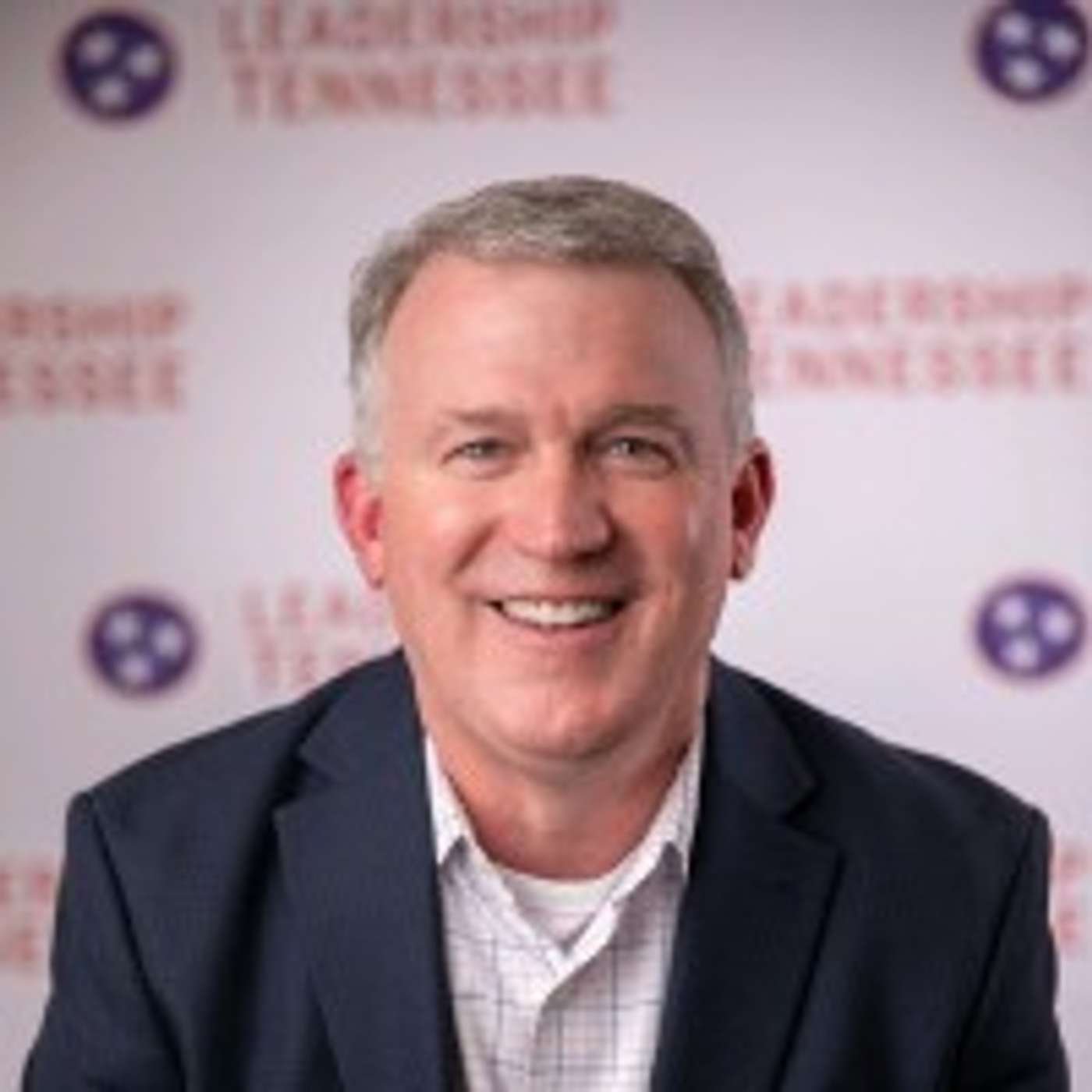
In this episode of the Clean Power Hour, host Tim Montague sits down with Brian Solsbee, CEO of the Tennessee Municipal Electric Power Association (TMEPA), to explore the evolving landscape of public power in the Tennessee Valley.
Representing 60 municipal electric utilities, TMEPA plays an important role in shaping energy policy, advocating for local utilities, and helping its members navigate changes in the power industry.
Brian explains how the Tennessee Valley Authority’s (TVA) Generation Flexibility programs are opening new opportunities for municipal utilities to develop solar projects, including shared projects that extend beyond individual utility territories.
The conversation also examines the growing importance of battery storage and microgrids as utilities respond to extreme weather events, increasing electricity demand, and higher customer expectations for reliability.
From lessons learned during Winter Storm Elliott and Winter Storm Fern to the financial pressures of modernizing aging infrastructure, Brian shares the challenges and opportunities facing Tennessee’s public power sector.
Key Highlights
- Tennessee’s unique public power system: Tennessee ranks second nationally in municipal public power meters, behind California. TMEPA represents 60 municipal utilities serving communities across the state.
- TVA’s Generation Flexibility programs: How TVA’s Flexibility 1.0 program opened the door for local utilities to source up to 5% of their power outside TVA, and how Flexibility 2.0 expanded opportunities for shared solar projects.
- TMEPA’s role in energy policy: How the association advocates for municipal utilities at the state legislature, engages with TVA, and connects utilities with technology providers, consultants, and industry partners.
- Rising customer expectations: Brian compares major Nashville-area ice storms in the 1990s and 2026, explaining how customer expectations for outage restoration and communication have changed.
- The economics of grid modernization: Why Tennessee’s relatively low electricity rates can make the return on investment for solar and battery storage more challenging, even as technology costs improve.
- Growth and infrastructure investment: How rising equipment costs, supply chain challenges, and growing electricity demand are creating financial pressures for municipal utilities.
- How municipal utilities fund operations: Why Tennessee’s municipal electric utilities depend primarily on electricity rates to fund operations and infrastructure investments.
Connect with Brian Solsbee, TMEPA
Brian Solsbee LinkedIn: https://www.linkedin.com/in/brian-solsbee-8085751b/
Website: https://tmepa.org/
Connect with Tim
Clean Power Hour
Clean Power Hour on YouTube
Tim on Twitter
Tim on LinkedIn
Email tim@cleanpowerhour.com
Review Clean Power Hour on Apple Podcasts
The Clean Power Hour is produced by the Clean Power Consulting Group and created by Tim Montague. Contact us by email: CleanPowerHour@gmail.com
Corporate sponsors who share our mission to speed the energy transition are invited to check out https://www.cleanpowerhour.com/support/
The Clean Power Hour is brought to you by CPS America, maker of North America’s number one 3-phase string inverter, with over 6GW shipped in the US. With a focus on commercial and utility-scale solar and energy storage, the company partners with customers to provide unparalleled performance and service. The CPS America product lineup includes 3-phase string inverters from 25kW to 275kW, exceptional data communication and controls, and energy storage solutions designed for seamless integration with CPS America systems. Learn more at http://www.chintpowersystems.com
0:51
1994, there was a huge ice storm that impacted Nashville Electric. Had 130,000 people out. Took them over 14 days to get the power on. Everybody celebrated. You know, 2026 had 230,000 people out. Got the power on in 14 days, and social media was an uproar. Social media has changed everything, and and so you know that I think just challenges the utilities to do better. I mean, and we can always do better.
intro:
1:19
The clean energy industry is moving fast. The deals are getting bigger. The technology is evolving, and the stakes have never been higher. Welcome to the Clean Power Hour, the podcast for solar, storage, and microgrid professionals who want to stay ahead of it all, each week your host Tim Montague, industry advisor and president of Clean Power Consulting Group, brings you unfiltered conversations with the leaders actually building the energy transition. Now, here's your host Tim Montague.
Tim Montague:
1:53
We're here with Brian Solsbee. He is the CEO of TMEPA, the Tennessee Municipal Electric Power Association.
Brian Solsbee:
2:01
That's it. I got it right. It's a mouthful, and it barely fits on a business card.
Tim Montague:
2:06
The acronyms. Oh my goodness, we had a lot of acronyms in the solar industry, but you guys take the cake. I have to say, in Tennessee, there's a lot of acronyms, but I'm really enjoying being here. I have to say, it's like the deeper I go, the more I want to learn, the more I want to know. I I am really excited about what's going on in the Tennessee Valley, and it's kind of like a curtain is being drawn back because in my world we work mostly with IOUs, investor-owned utilities, but here it's all about public power and the TVA, which is a very unique federal entity. It is a combination of a utility and a PUC and an ISO, but Brian, for our listeners, just set the table a little bit. Explain how you got into the power industry and what is TMEPA?
Brian Solsbee:
3:05
Yeah, well, that's there's a lot there. So I've been in the power industry for 20 years, 20 plus years, I've worked at large and small. I worked at Knoxville Utilities Board, and then I was the general manager in my hometown at Etowah Utilities, which is a rural multi-utility system with just over 5,200 electric meters, also with water, waste, and natural gas. And then from there, I moved to TVA, where I manage a portion of the demand response portfolio for them, and so really kind of saw all aspects of of the power side here in the valley, our own little ecosystem, as you referred to, and then had the opportunity to run the statewide association, which the municipal utility statewide association, which is Tennessee Municipal Electric Power Association, TMEPA has 60 municipal utilities. So a little interesting thing that your listeners probably wouldn't think of is when you think of public power as you reference in Tennessee. So where does that rank us with a number of public power meters in the nation? We are number two, the second largest public power state. That's not counting the electric cooperatives. That is just the municipal utilities only, but only behind that of California, which has many IOUs, but does have LA and LA DWP. Of course, is the largest municipal utility in the United States.
Tim Montague:
4:25
Very cool. Very cool. And why the distinction in public power between muni's and co-ops, do you do you know the the roots of that?
Brian Solsbee:
4:38
Yeah, so I mean, you go back to TVA was formed in 1933, and then you know the system. People smarter than me are are just blind luck, I guess. The way they divided up the Tennessee Valley Territory, those that were closer to what were cities at the time, you know, the cities wanted to own the utility. Those became municipals, and the ones that were more rural and and vast and spread out, you know, those became the electric cooperatives. You know, the cooperative is a member owned by the by the consumers, the customers, and municipal utilities are owned by the government entity. The majority are city-owned, but we do actually in Tennessee have three county-owned utilities, which is also kind of unique. Again, another interesting fact with Tennessee and and with TVA and how it was just again divided out in the 30s and into the 40s. You know we have, for example, Etowah Utilities, as I referred to, with 5,200 meters. Well, the population there is about 3,500 people. So we actually served people in three counties. We served the city limits of Etowah, went out into rural McMinn County, which was the home county, and also into the edge of Polk and Monroe County, and so. Many states you don't see the city utility serving out into the county that far, and so, with as results of that, I can go out to West Tennessee. One of our most rural members is Bolivar, which is in Hardeman County. It's two counties east of Memphis, and they have eight customers per mile. So you would never think of quote a Muni with eight customers per mile, and then Benton County Electric has nine customers per mile, so we do have some very rural muni's that would not be considered by anyone looking at from the outside as as you know a traditional municipal utility.
Tim Montague:
6:23
Quick context for listeners outside the Tennessee
Valley:
6:25
TVA generates the power, but it doesn't send you a bill. It sells wholesale power to local power companies, city-owned utilities, and co-ops, and they deliver it to about 10 million people across parts of nine states. Timeepa's members serve about two-thirds of Tennessee's electric customers. The Clean Power Hour is brought to you by CPS America, maker of North America's number one three-phase string inverter with over 10 gigawatts shipped in the U.S. The CPS product lineup includes string inverters ranging from 25 kW to 350 kW. Their flagship inverter, the CPS 350 kW, is designed to work with solar plants ranging from 2 megawatts to 2 gigawatts. CPS is the world's most bankable inverter brand and is America's number one choice for solar plants. Now offering solutions for commercial, utility, ESS, and balance of system requirements. Go to chintpowersystems.com or call 847168 to find out more. What is going on in Timipa? I mean, I have talked with Chattanooga. I've talked with Memphis. I've talked with Knoxville now, and so I get you know some of the flavor of what's going on, and there is a lot of cool stuff with batteries, especially, but also solar. How does how does Timipa see, I guess, the energy transition writ large? Like, what what's on your radar about the energy transition?
Brian Solsbee:
8:10
Yeah, so several years ago, TVA opened up what they called Flexibility 1.0, and you know prior to that, all utilities who buy power from TVA, which are 153 across the seven state region, were in a full requirements contract with TVA, and so this flexibility that you hear talked about here. It was a very huge paradigm shift that then allowed the utility to go get 5% of their power supply elsewhere, which solar was the obvious choice for the majority who did that. The problem is with some of our urban utilities and even some of our small, small, small utilities was they didn't have land that was either affordable in the case of Nashville to build solar within their system boundaries, or in the case of some of the smaller utilities, you know they were just little tight cities that didn't have a lot of land within the city limits, and so then TVA came out with flexibility 2.0, and the 2.0 allowed you to collocate a project with another utility, and so as I was talking about some of those county-owned utilities, Carroll County Electric in West Tennessee, you know they have one of those 2.0 projects, so therefore it is more than their five megawatts, and other utilities from across the valley can subscribe into that, and and then that that puts a larger solar array out there, and so the solar industry has been very kind to us. TVA was also very open and willing to make this a success. And it was if if your solar project doesn't perform, you don't go back to TVA and say, "Oh well, I capped myself at 95%. What does it cost me for the additional 5%?" TVA charges the exact same rate for every kilowatt hour you take, and so therefore you don't have that penalty factor out there if something goes wrong with your project. So it really made it a win-win for the utilities, while also bringing TVA some additional generation. Okay,
Tim Montague:
10:06
a little history on that. TVA launched Generation Flexibility in June 2020, it was the first time since 1933 that local power companies could make some of their own power. Flex 2.0 followed in 2023 and let utilities share one project, even outside their own territory. The first utility-scale deal, Silicon Ranch's 110 megawatt Copeland Solar Farm, signed for Middle Tennessee Electric. The Clean Power Hour is brought to you by SDE Sinclair Designs and Engineering, fixed tilt and carport racking, design, engineering, permitting, and manufacturing all under one roof in Michigan. No outside vendors, no waiting in someone else's queue, just fast turnaround and steel that ships when you need it. Ask Ag Energy Co in Illinois or Sunrise Solar in the Mid-Atlantic; they'll tell you what it's like to work with the Sinclair team. SDE, everything in-house. Visit Sinclair-designs.com. So. one of the things that I'm aware of now is there's a lot of growth going on in Tennessee. A lot of people are moving to Tennessee. You have low taxes. You have no income tax, I believe.
Brian Solsbee:
11:24
Correct.
Tim Montague:
11:24
Right. So a lot of population growth. A lot of Illinoisans, frankly, moved to Illinois. I mean, move to Tennessee when they when they retire. Anyway, the growth okay. There's population growth. There's load growth with industrialization. You know, a lot of manufacturing coming to Tennessee. A lot of data centers coming to Tennessee. That combination of things is, and then of course we have electrification. But from your perspective, how is the the valley and the muni's solving for that kind of confluence?
Brian Solsbee:
12:00
Yeah, I mean, I think you see it here. Obviously, you know, this conference used to be just a solar conference. Now it's solar and storage. I think the storage, obviously, with the current administration in D.C., is more popular, and and so you're seeing a lot more projects there.
Tim Montague:
12:16
Well, what what is your what is your mission?
Brian Solsbee:
12:19
Yeah, so as the statewide association for those 60 utilities, you know we were created for the legislative piece to be a collective voice in the state legislature, state legislature. Okay, and so you know we're out there protecting the interests of the municipal utilities and their customers, and so that is you know first and foremost. Obviously, since all of our utilities collectively buy from TVA, you know we certainly weigh in and engage TVA on on issues, you know such as you know where there I was on the IRP working group, for example, TVA, as was Gil, I believe, right? As Gil, yes, yeah. So it's a great cross section, or even you know, most recently, you know, TVA is making a lot of decisions around nuclear data centers, et cetera, as you referenced, and so you know, we are that collective voice. Also, we try to bring our people together to kind of talk about successes, talk about failures and lessons learned. And so, you know, as you were talking about, you know, me inviting you to join TM EPA, which certainly, you know, I get you're a in a different role, but it is where you know consultants, vendors, utilities come together. I mean, our conferences are quite large, and and do get that opportunity to engage and get that cross section. You know, from from the purchasers and the sellers and everybody in the same room. And so, you know, that's where kind of our role as an association, has has grown over the years, and frankly, I took this role in 2017, and one of the biggest growth areas has been solar and storage vendors coming in because, obviously, as you've referenced earlier, the TVA territory is quite different, and so you know we are a a conduit to help you know streamline that and facilitate those discussions because otherwise you're standing on the outside saying I just don't figure out Tennessee and how all this works and and certainly the state associations are one area that you can come in and engage immediately and get to know the utilities that and understand our industry and how we operate.
Tim Montague:
14:29
Two storms frame this next question: In December 2022, winter storm Elliott forced the TVA to order rolling blackouts for the first time in its 90-year history. Then, in January of 2026, winter storm Fern brought ice and bitter cold to about two dozen states, and Tennessee was among the hardest hit. So, from your perspective, though, you know, working with the legislature, working with the muni's, where is where are we on resiliency?
Brian Solsbee:
15:05
Yeah, I think that you know, battery storage is certainly, you know, the prices are are getting more favorable, you know. TVA's rates are very favorable from a national perspective. So sometimes it makes it hard for the ROI to pencil out. And you know, I think that's getting as the the cost of batteries and solar, you know, paired together has has gotten better. I think that that is an opportunity our utilities are looking at to create that resiliency. Certainly, you know some are looking at microgrids. I know EPB presented here at the conference. They are certainly leaders in that space with the amount of storage that they have. You know others clearly aren't looking at that level, but you know they're evaluating those opportunities and and what that might look like, how they can. Especially those who already have existing storage, is going back to reassess that, and so you know I think resiliency is is very important, and and frankly I think the customer of today versus the customer of 1940, the expectations are so much higher, the demands on the utility are so much higher, you know I like to look at 1990. I think it was 1993 or 1994. There was a huge ice storm that impacted Nashville Electric. Had 130,000 people out. Took them over 14 days to get the power on. Everybody celebrated. You know, 2026 had 230,000 people out. Got the power on in 14 days, and social media was an uproar. Social media has changed everything, and and so you know that I think just challenges the utilities to do better. I mean, and we can always do better and not be satisfied with the status quo. But you got to figure out how to budget that because not only they want it better, but they want it cheaper, right? Or at least don't want to see large rate increases. And so, I think those are the biggest challenges that are facing our utilities as they try to incorporate resiliency, grid modernization, those kind of things, in order to provide that level of service that you know customers have grown to expect, all while providing better communications mechanisms again, you know, you go back 20 years ago, 30 years ago, nobody's getting text messages with updates and those kind of things, but now, you know, we're happy when we get the text that a you know a technician is coming to the house to fix an appliance. You know, used to is like, oh, be there and sit there and don't move for eight hours, and now they're like, oh, we'll be there in this window, and we'll text you 30 minutes out. Much easier to deal with, right? And I think that I think that the whole industry is, you know, moving to adapt to meet those higher expectations that the customers have of us.
Tim Montague:
17:44
For Scale on storage, Chattanooga's EPB now runs more than 45 megawatts of batteries, including microgrids built with Oak Ridge National Laboratory, it aims to reach 100 to 150 megawatts in the next few years. And in September, Seven States Power put out an RFP for 220 megawatts of batteries with Memphis Light, Gas, and Water, Nashville Electric Service, and BrightRidge. Hey guys, are you a residential solar installer doing light commercial but wanting to scale into large CNI solar? I'm Tim Montague. I've developed over 150 megawatts of commercial solar, and I've solved the problem that you're having. You don't know what tools and technologies you need in order to successfully close 100 kW to megawatt scale projects. I've developed a commercial solar accelerator to help installers exactly like you. Just go to cleanpowerhour.com, click on strategy, and book a call today. It's totally free with no obligation. Thanks for being a listener. I really appreciate you listening to the pod, and I'm Tim Montague. Let's grow solar and storage. Go to Clean Power Hour and click Strategy today. Thanks so much. Paint me a picture in our last few minutes together, Brian. How is the fiscal situation in Tennessee in general?
Brian Solsbee:
19:10
It's great. You know, Tennessee as a state, as you as you referenced earlier, doesn't have you know state income taxes, etc. And certainly fiscally has done well. You also referenced that Tennessee has been growing, and and obviously growth is good. Growth is good for the state government and funding there as well as all the way down at the local level, and so certainly our utilities who have grown have enjoyed that. But sometimes it comes with challenges because with the supply chain issues in recent years, going back to COVID and the cost of substation transformers going up exponentially, sometimes that growth, if it's hitting you at the wrong time, it's kind of like you know we want to we want to buy a house low and sell high, but sometimes you end up buying high and have to sell low. And so, I think some people that are experiencing that spike in growth are experiencing some pain points with prices and how they're having to invest now for that for that bit of growth in order to serve.
Tim Montague:
20:07
Where do where does a Muni's budget come from?
Brian Solsbee:
20:11
Yeah, municipal utilities in in Tennessee, 100% of your funds come from your electric rates, and so you know that is the only source, unless you are getting a grant or something out there that might you know help offset that, and and then all of our utilities pay a payment in lieu of taxes back to the city, and and many of our utilities, they are the largest revenue source for the city general fund outside of their sales taxes.
Tim Montague:
20:39
Is there anything else my listeners should know about what's going on in Tennessee or the TVA?
Brian Solsbee:
20:48
Hey, come see it for yourself, right? No, I think Tennessee is great. Tennessee has a lot to offer. Four seasons. Sometimes we don't like them all, but as we're dealing with 100 degree weather today, and and high humidity. But no, Tennessee is a great place. It's shown a lot of growth. Certainly been good to me. I was able to. I was born and raised in Tennessee. Went off to the military and came back and raised my family here, so have a lot of great things to say about it. And you know, our rural communities are very embracing. And so, when you come to Tennessee, you can you can go to a rural community. You can be in the mountains. You can get out there. You referenced sailing. We have lots of rivers and lakes thanks to TVA, which you know was created for flood control. Was was a part of that. You can see pictures if you look around here of Chattanooga underwater, and you know TVA and their dam system has protected the city of Chattanooga. Of course, just passes here is a huge bend in the river, and and and it just wasn't friendly to the city until TVA did that. So I mean, Tennessee is a beautiful state. Very different as you go from east to west. You know, west is all farmland. That's where our solar places, our solar farms are going, and just great people, just great friendly people that are welcoming. But yet, if you want the urban, high growth area, you know, Nashville and and and Memphis and and Knoxville and Chattanooga have so much to offer, and each have their own personality. So yes, Tennessee is a great place, and we always love to see people come and spend money here and and enjoy because sales tax is where we get our money. So come come and visit.
Tim Montague:
22:24
I agree. Come to Tennessee, check it out. It's an amazing place. I I can't wait to come back. I have to go home today, but I will be back, and I want to thank Brian Soulsby for coming on the show. I'm Tim Montague. Check out all of our content at CleanPowerHour.com. Tell a friend about the show. That's the best thing you can do to help others find this content. And with that, I'll say, let's grow solar and storage. Thank you so much.
Brian Solsbee:
22:49
Thank you.
Tim Montague:
22:51
Appreciate it. The Clean Power Hour is brought to you by CPS America, maker of North America's number one three-phase string inverter, with over 10 gigawatts shipped in the U.S. The CPS product lineup includes string inverters ranging from 25 kW to 350 kW, their flagship inverter, the CPS 350 kW, is designed to work with solar plants ranging from two megawatts to two gigawatts. CPS is the world's most bankable inverter brand and is America's number one choice for solar plants. Now offering solutions for commercial, utility, ESS, and balance of system requirements. Go to chintpowersystems.com or call 855-584-7168 to find out more.