Chris Koczaja grew LightWave Solar to 30 million dollars by refusing to chase every deal. This is the discipline that got him there.
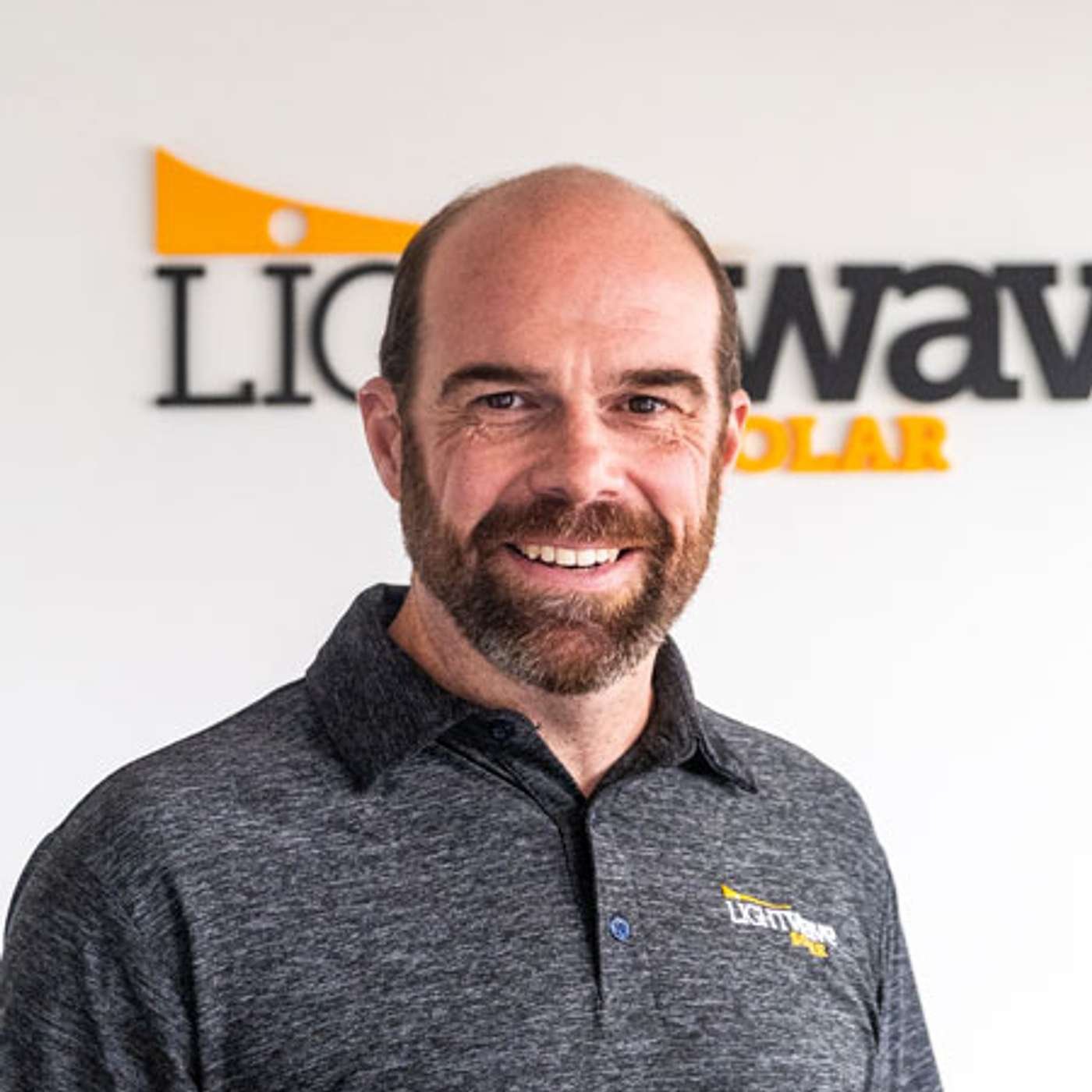
Chris Koczaja is the CEO of LightWave Solar, a residential and commercial solar and storage installer in Nashville, Tennessee, now in its 20th year in business.
In this conversation, Tim Montague asks Koczaja what actually separates a good solar company from a great one: recruiting and retaining strong teams, planning so thoroughly that execution has no surprises, a philosophy Koczaja calls building boring solar, and never betting growth on a single revenue stream, a rule he calls three ways to win. They also cover why LightWave solar refuses to install unproven technology, how residential battery storage is changing the customer conversation, and what’s shifting across the Tennessee Valley as utilities adjust to rising demand and changing federal incentives.
In this episode:
- What separates a good solar company from a great one
- Why LightWave builds boring solar on purpose
- Koczaja’s three ways to win growth framework
- Why LightWave waits to adopt new battery and inverter technology
- How LightWave retains talent, including its boomerang employees
- Building a strong reputation in a market with bad actors
- Residential battery storage, resiliency, and home microgrids
- The Tennessee Valley Authority and the changing grid
- The ITC phase-out and what it means for installers
The residential ITC phased out at the end of last year, and the commercial ITC begins phasing out through 2029, while the storage ITC runs through 2032, a gap Koczaja says is already changing how LightWave pairs solar with storage.
TVA reserve margins are tightening as data center demand grows, pushing local power companies toward flexibility programs and local generation. For installers working with fewer incentives and a tighter grid, this conversation shows a Tennessee Valley strategy built for both.
Chris and Tim will both be at the Tennessee Valley Solar and Storage Conference, September 2 and 3 in Chattanooga, hosted by TenneSEIA.
Connect with Chris Koczaja
Connect with Tim
Clean Power Hour
Clean Power Hour on YouTube
Tim on Twitter
Tim on LinkedIn
Email tim@cleanpowerhour.com
Review Clean Power Hour on Apple Podcasts
The Clean Power Hour is produced by the Clean Power Consulting Group and created by Tim Montague. Contact us by email: CleanPowerHour@gmail.com
Corporate sponsors who share our mission to speed the energy transition are invited to check out https://www.cleanpowerhour.com/support/
The Clean Power Hour is brought to you by CPS America, maker of North America’s number one 3-phase string inverter, with over 6GW shipped in the US. With a focus on commercial and utility-scale solar and energy storage, the company partners with customers to provide unparalleled performance and service. The CPS America product lineup includes 3-phase string inverters from 25kW to 275kW, exceptional data communication and controls, and energy storage solutions designed for seamless integration with CPS America systems. Learn more at http://www.chintpowersystems.com
0:50
The other piece of it, this came from Steve Johnson, our founder, was we're not an R&D company. Lightwave doesn't do R&D, so it's the concept of we'll be first in line to be third. So we let the first two people get all the bumps and bruises with the new technology of figuring it out, and then Gen two or Gen three is when we come and say, okay, yep, we'll install that because now I can see how it works. I don't want to do R and D with our customers, right? It creates, you know, a misalignment with what we're trying to build for their long-term value. The
intro:
1:24
clean energy industry is moving fast. The deals are getting bigger. The technology is evolving, and the stakes have never been higher. Welcome to the Clean Power Hour, the podcast for solar, storage, and microgrid professionals who want to stay ahead of it all. Each week, your host Tim Montague, industry advisor and president of Clean Power Consulting Group, brings you unfiltered conversations with the leaders actually building the energy transition. Now here's your host, Tim Montague.
Tim Montague:
1:58
Today on the Clean Power Hour, what is the difference between a good solar company and a fantastic solar company? I think we're going to find out. My guest today is Chris Koczaja. He is the CEO of Lightwave Solar. Welcome to the show.
Chris Koczaja:
2:13
Great to finally get to talk to you, Tim. I really appreciate you taking some time out to talk today.
Tim Montague:
2:18
I almost got everything out that I wanted to say, but you're based in the Tennessee Valley, and they're in Nashville, Tennessee. I met you at the Tennessee conference last year, and I've been dying to bring you onto the show ever since. Truly, like I was really blown away when I met you, Chris. And I don't say that lightly. I meet a lot of solar geeks, but you stand out, and we're going to learn why today. The Clean Power Hour is brought to you by SDE Sinclair Designs and Engineering, fixed tilt and carport racking, design, engineering, permitting, and manufacturing all under one roof in Michigan. No outside vendors. No waiting in someone else's queue. Just fast turnaround and steel that ships when you need it. Ask Ag Energy Co. in Illinois or Sunrise Solar in the Mid-Atlantic. They'll tell you what it's like to work with the Sinclair Team, SDE everything in house. Visit Sinclair-Designs.com. Chris, tell us a little bit about yourself and how you came to Lightwave.
Chris Koczaja:
3:23
Sure. No. Well, I appreciate it, and likewise, Tim. It's been way too long, but as is always in the solar industry, there's plenty to talk about. So I think we can get through a lot, but give you a little bit of background. I am non-traditional solar advocate, whereas I actually started my life at Caterpillar, the big yellow machine company, and in power generation. So my first big love as a kid was big engines. So I got into you know a company that I could be around big engines and look at that, and through that I kind of evolved kind of the whole energy landscape with looking at diesel, looking at landfill gas and natural gas and distributed generation, and going through all the pieces there, and then got a call from one of the dealers I was working with that said, "Hey, we've got this other company that's going to look at renewable biomass energy and waste energy. Would you like to help us do that? It's pretty cool. I'll I'll take a look at that and help do that. And did that for a period of time as well. So not only had kind of the more traditional fossil-based fuel side of things, but then was getting into what waste energy and renewable energy and all that started to look like from the biomass and waste perspective, and it was in that journey that I saw a solar field being built. At the same time, we were building a waste to energy facility, and it was like, wow, that is really, really simple and easy with no moving parts. It just works, and I'm interested. And you know, fate being what it is, just happened to get a call from a friend of a friend saying, "Hey, Lightwave, Lightwave's founder is looking at transitioning out, retiring. Steve Johnson is a good friend and partner of mine still, but he founded Lightwave at age 55, and you know he was getting in his mid-60s and was ready to find the next person. So he and I got together and said, "Hey, I'd like to to see what I could do with Lightwave, kind of on its next phase of life. And what year did? And so that was that was 20 may 1 of 2017. Okay, I took over majority interest of Lightwave. Steve's always been a partner of mine, but more than that, has been just a great friend and a greater mentor to help kind of articulate what you were talking about earlier on what makes great solar and what makes great company. A lot of it I learned from from Steve and kind of his lessons in how to do it and how not to do it, which is so the company.
Tim Montague:
5:51
The company started in 2006, and you joined in 2017 as they were an 11 year old. I know you as a resi and commercial solar installer. Was it different when you joined?
Chris Koczaja:
6:07
No, it was much the same. And you know what I talk to a lot of of okay, great companies have to have great people, right? And that was our founder Steve Johnson's gift. He was really, really good at attracting and finding great people. And we still have people on the team that have been here 15 plus years at Lightwave, which I think gets into one of the next things is keeping those great people, right? Not only attracting and finding them, but then you're creating an environment where you know they can continue to grow and be part of the team, and and you know continue to to move the path forward. But you know, in that time period, we transitioned greatly from what was a residential and commercial company looking at you know a customer concentration that was pretty high to me coming in and saying hey this is great there's an amazing team amazing brand we need to look at more verticals we need to look at more services here and now we're no longer a startup now we're going into phase two which is more the endurance phase of the company that needs to be more diversified. So we looked at different regions, different O and M and maintenance services. We looked at hey, we can do carports, we can do rooftop, we can do ground mount, we can do all the above, and we can get into energy storage, which we're starting to do earlier than a lot of people, because net metering was on the chopping block earlier in the Tennessee Valley than in a lot of other places. So we were leading a lot of that curve and that transition to energy storage, especially at the residential scale.
Tim Montague:
7:48
Yeah, that stood out for me when we talked last year that the attachment rate was very high. I think it was above 80% for your residential projects, and I think that's honestly the key for residential and now commercial solar to be successful. I think that you solar professionals out there need to become really astute at storage and the value stack, and that means working with partners, whether that's OEMs or third parties like Intelligent Generation, who I talk about a lot, or Alexity or Voltus. There's there's many of these third-party software as a service companies now for commercial storage. You absolutely have to have those partners at the table because it is complicated and every utility is different. But at face value, storage isn't that complicated, and and that's a beautiful thing. It gives us energy 24/7 potentially, which is great because solar only works when the sun shines, and we want power 24/7. So, Chris, let's let's dive into the meat though of a of a great company. You
mentioned two things:
9:03
recruiting and retention, and they're both obviously very important. You got to have the right people on the bus, and make sure everybody's rowing in the same direction. You can have a lot of good people, but if you're not rowing in the same direction, it's going to be somewhat chaotic and not very efficient. And there will be turnover because people will be very frustrated with one another and the overall circumstances. The good news is, like solar is a fascinating industry. It's fast growing. There's a lot of opportunity. It's quite dynamic. It's not rocket science. We're not building nuclear power plants. Thank God because that is super complicated. But what are some of your principles? I guess as a leader that you hope to trickle down into the other leaders among your company members.
Chris Koczaja:
9:56
Well, you know, I'm I have the benefit of being, you know, not the founder, but I'm the second person. And when I came in, you know, solar was new to me. Yeah, I knew all these other types of generation and was very familiar with that. I'm an engineer by training, chemical engineer. So, but I didn't know solar like the tim knew solar, so it made it easy for me to empower them. It's like I don't know what the right answer is. You you've been doing this last 10 years. You tell me. But I think you know one of you know I have many weaknesses as we all do, but one of my strengths is asking questions. Right? What about this? What about that? And helping you know, just get the thought process. I may not completely understand it, but as I'm trying to understand, asking questions that are probing and at least making sure that you know when we're empowering people to do things that we've thought through kind of the overall consequences. And I think that's also what we get into. And I think one of the other pieces. Is that is important in the greatness? Is time? Time is one of our best assets. Time is also one of our biggest enemies. Right? If if we don't prepare and we don't plan, we lose time, and then we don't have the ability to make decisions or to think through things. But if we can upfront plan and make sure that we've thought through this process well enough, we're also afforded the time to be able to think through scenarios. So I hate to say that we try to build boring solar, but that's that's what you try to strive to, right? I don't want a lot of surprises because I've already thought through all that up front. So when we get to the build, we've already got contingency plans, and we can just focus on execution side of that, so that's I think one of the big pieces here with with empowering those people. And again, it's easy when I didn't know, so I just ask questions, stay out of their way, and I think it's neat for them too. Is they get a chance to step up and and now you know they've been doing it for 10 years, but they have more authority to do what it is they need to do. So it's been great, great, and very easy to lead the light wave team. You know they make it easy, but I think the other piece of that that as a leader I struggled with at first is the first couple people you lose that go off and do something else. You know you want to be. Oh man, why are they doing that? I want to be upset, or you know, I want to, you know, why did they do that? Why don't they just stay, kind of thing? And it didn't take but one or two people for me to realize, as I look at my own career and everything I learned with all of my different experiences, like, well, it's about career growth for them too. So we have a number of what we call boomerangs, where people that started with Lightwave have gone and done something else, and then have come back. And it's great because when they come back, they have all kinds of other experience and growth and stuff that they can put back into the system. So you know, it's not that I want to you know celebrate everyone leaving, but when everyone gets another opportunity and it's great, and we've talked about it, and you know, at times it's kind of one of those that, yeah, I think you should go do that. That's great, you know. Let's just you know figure out a nice transition and go do that. It's it's a different thing here that you know a different just environment there that that we try to foster in that. So so paint us large. Go ahead.
Tim Montague:
13:11
Paint us a picture of the organization. How many employees do you have? And and so we're sitting.
Chris Koczaja:
13:19
So it's just just light wave. We're sitting at about 8082 people here. We're about a $30 million company on the top top line. Back in 2017 2018, we were a 10 less than $10 million company, and you know we dipped down to you know the mid 30s in people. So we had you know a number of of hard decisions to make as we did the transition to where solar was was niche. It was becoming more stream mainstream. To now it's become not just left or right. It's just kind of the thing that that more people are looking at, not only customer wise but even utilities. You know the difference in the utility conversation 10 years ago versus now is very different. You've been to our conference at Tennessee. You know I get get up and give the preamble every year, and it's like I don't know another place where you'll have a third of the audience be the utility, a third of it be vendors, and a third of it be the the builders, contractors, right? And we're all trying to row the same direction to your earlier comment. But it's not just the team; it's the whole value stack working together, and it's a pretty pretty special environment that didn't always used to be that way, but I think is the transition that we're seeing as we move forward.
Tim Montague: And break it down:
15:28
office versus field. How does that? How are the numbers there?
Chris Koczaja:
15:34
We're we are fairly heavy on office just because we have a number of more complicated contracts and more, I think, evolved or sophisticated clients that just have more requirement for billing and for documentation. So we're probably a quarter office and quarter to a third office, and the rest of it field.
Tim Montague:
16:01
Okay. So, when it comes to developing people, do you think you have to treat field employees differently than office employees?
Chris Koczaja:
16:20
So we had, you know, like all solar companies, we had you know our day of reckoning, and that was back in 2018, where you know we were I had come in in 2017. We were trying to go into all these different markets. We were trying to figure out you know how are we going to do this? How are we going to do this? How are we going to optimize this system and make this work? But as we looked at it, we we came up with the analogy of of the train. We we all have to be moving at the same speed, the whole company. So we've got engineering, accounting, we've got sales, we've got installation. But the engine of the train is the is the field. It's the installers. They're the ones that are driving really the business. It's not not going to go anywhere if we've we've sold all these projects, engineered all these projects, but we're not installing them. So we really have a focus on the the train, the the machine that's actually giving motive force. Here is the installation teams. So it's for us, the cars behind that, to support them and make sure that they've got the fuel, they've got what they need, the track, and all the the gates are set, so they can go do what they do best there. So it's difficult because we have so many different things that come at us in this industry that that upset that momentum here, or you know drag the the engine back, so to speak. But if if you keep that in mind, I think that is the right thing, at least that worked for us as we went through kind of our trough, and then you know up up to a different plane there. So,
Tim Montague:
17:52
and where does certification come in, like NAPSEP?
Chris Koczaja:
17:59
We've got a bunch of NAPSEP certified people. It's something that you know we we actually you know incentivize people to go get their certifications, celebrate when people get certified, but I think it's also once you have enough of that in the team, it starts to to just breed itself. So you you can kind of get that culture there. You know I think one of the other things that you know, when people say, "Well, what is what is Lightwave? or you know, what is Lightwave all about? One of the things, especially when new employees come in, that I highlight is is our our brand, and I take our brand very, very seriously, hyper seriously. That we have to be proud to put our name on everything we build, and if we don't, we don't need to be building it, or we need to make it right. And I never want to see a customer and have to go,"Oh my gosh, I can't believe they're here! I need to go find. I want to. I want to. I want big hugs. I want celebrations. And that's not to say we've gotten it all right. We we definitely stub our toe on things, but but it's always you know back to the empowering of saying, "Well, guys, what's the right answer here? Let's make it right, right? Let let's do the right thing. Yeah, I know it's going to be expensive, but that doesn't mean that's not the right thing to do. We have to figure out a way to make it right because if we take care of our customers, our customers will take care of us, and it's been what has always kept the light wave machine going. Is just the hyper focused nature of trying to build great solar, so people are happy about it. They tell their friends. They come to us again for repeat projects, and you know continue that that ball down the road.
Tim Montague:
19:37
Yeah. So tell me more about that. Like, how do you get the snowball rolling so that it's organically growing itself, and it's not so hard anymore to stay on a growth trajectory.
Chris Koczaja:
19:57
The the other thing, and this is very different from the founder mindset. And I tell people all the time, I am not a founder. I'm not. I'm not that guy. I'm not the Steve Johnson who founded Lightwave that says at 55 I'm going to go start a solar company in the middle of the Tennessee Valley where you know solar is not even like part of the the vernacular. It's not a term that anyone knows. I'm not that guy, but I'm the other guy, the next guy that comes in or the next person that comes in that says, okay, we have to take this great thing and we have to make it more robust, more resilient. And so, one of the other concepts we have is three ways to win. We don't we don't take bets on, okay, I'm gonna get the ball rolling with just this one thing. It's like, no, we need at least two other balls because I know that not all of them are gonna go or not all of them are gonna start rolling at the same time, so let's have three ways to win, so that you know, depending on timing or the inevitabilities that happen that slow things down, I can rely at least on another couple things to go. So it's tough. It's really, really tough, especially when you're cash strapped and you're in that that trough. But that's part of you know part of like I said I think the longevity resiliency is not having all your eggs in one basket anymore and just building the diversity of the business so that and I think just going back to the hyper focus on customers and as you grow it gets more difficult because you have more people on, and you know the message that resonated and that that 35 people were really around and all knew really well is much harder to get the same level of buy in with everyone at 80 people. So it's something that we've struggled a little bit with is just making sure that we're we're training that in. And instilling that mindset with people from the beginning of wait a minute we're we're different because we're going to do it this way. We don't put you know like on our residential projects we don't put timeframes on them. It's not a you have to install this this and this this week, and then you know Monday you got to install that and Tuesday you got to install this. It's like no, we're we're going. We're building projects, and you leave when it's done. And when it's done right, we're ready to put our name on it. Yes, we have time pressures. Yes, we have things that we need to work on as a business. But if we don't do it right, we won't get the next job. So, if if it's taking longer, then there's something else back in that planning stage that we missed, so we need to start planning better, engineering better, so we can do it in the time frame, so the train can keep flowing. So it's not blaming the train for slowing down; it's looking at the other cars and saying, "Why is this wheel way back here pulling the whole train back? We need to oil this so everything can work work faster. And it's a it's difficult. It's it's obviously you know we got a lot of wheels on this train to keep oiled at any given time, but just a different mindset to try to move. Like I said, move everything forward.
Tim Montague:
22:55
And how do you approach residential versus commercial? Are there are they kind of separate worlds, or there is there crossover in terms of the people that are servicing those two segments?
Chris Koczaja:
23:08
It's I'm sure it is has hurt some of our business because we build our residential like it's commercial. We've got the same standards for building our resi projects that we do commercial. So we do everything in metal, we do everything, you know, as commercial electricians. But it's more of the value piece of saying, "Hey, this isn't a 10-year project or 20-year project. This this could be here for 50 years. You know, yeah, I may do to replace panels, replace inverters, may replace batteries, but the point of interconnection, the wiring, all this is going to be here for a long time. So let's build it like it's going to be here a long time. So I think there's the the piece of it that is the same from somewhat the engineering perspective, where we have a lot of crossover. But I think the customer experience is a little bit different in that residential we try to have more of of light wave people working on those projects, even in the small commercial, versus once we get to the bigger projects, we work more on project management, engineering, site supervision, and we've got a stable of of great partners that we bring in and contract with to help us execute those those projects. So, so there's there's somewhat crossover, especially on the engineering design and how we do things, but it's a little bit different when we're talking customer interface there, just because of the different markets and their drivers.
Tim Montague:
24:34
The Clean Power Hour is brought to you by CPS America, maker of North America's number one three-phase string inverter, with over 10 gigawatts shipped in the U.S. The CPS product lineup includes string inverters ranging from 25 kW to 350 kW. Their flagship inverter, the CPS 350 kW, is designed to work with solar plants ranging from 2 megawatts to 2 gigawatts. CPS is the world's most bankable inverter brand and is America's number one choice for solar plants. Now offering solutions for commercial, utility, ESS, and balance of system requirements. Go to ChintPowerSystems.com or call 855-584-7168 to find out more, I think it's very hard to build a company that really provides excellent customer service. It's it's easy to give lip service to that, but it's very hard in reality. What is the essence in your mind of excellent customer service?
Chris Koczaja:
25:48
And I, I would say, you know, it's, it's, it's an endless march, right? You, you, you never truly are great at customer service because the second you may be there, then you know, you get the one phone call, and I think part of it is most people have my phone number and have a line to me. You know, my I don't know how many 1000s of business cards I've thrown out there, and I don't I don't try to hide behind you know a phone tree or anything like that. Customers can reach me pretty readily, and I hate to get those phone calls. I don't get many of those, but when I do, it's kind of like oh, because you know when you get that one phone call of person who was, you know, upset enough to call me. There's probably five others that were just upset, right? So, so it's it's one of those things where, you know, when when you you do get that, it's it's not just. Taking care of the the surface issue, but it's digging in a little bit and say, okay, we're we didn't just miss it here; we missed it probably down here. So let's let's figure out how we make this this better. And again, as you're growing too, it's difficult because that's one of the things that can fall through the crack. And then, oh by the way, you know we had the whole COVID era that changed communications and everything too. So you know, between work from home and you know different people, you know, coming from different places in the geographies, and as we're pulling them in, it just creates a lot of drivers. That's difficult, but but if I go back around, it's it's one of those things where it has to be from the top. People have to hear it. The team has to hear it from me, and we have a very flat organization. So you know, I empower everyone to take take care of the customer. You know, when we get a five star review on Google, the next employee meeting we have, we read it aloud and we see the whole team that that got that and high fives, gift cards, and you know, celebrate the. This is awesome. This was so awesome that the customer was, you know, felt compelled to go out on Google and give us review. Let's let's try to foster that environment behavior.
Tim Montague:
27:55
Solar is famous for not having a great reputation. What do you think about That and is is there a day in our future when we have a better reputation? And and do you think it is different in the Tennessee Valley than it is in say Southern California, where solar you know is old hat? It is a much higher volume market. It's everywhere. You know it's. Just it's different, but I'm curious what your your thoughts are about that our reputation and and if you have any words of wisdom for people listening to this in other markets.
Chris Koczaja:
28:42
First off, it's build good solar. You know, it's just it's so easy to build bad solar, but it's so exhausting, right? It's just if we focus on the long term value, and I think it's for the customer. There's a lot more resources than there used to be, and there's no reason to be pressured into something, and that's where, you know, we try to be very patient with customers too. Our customer journey is a long one when we sell. It's it's we have to design the best thing for you, our customer. Right? Yes, this was the best thing for me, and I want to sell this today and get that out. Great, but if that's not providing value to you, it's back to putting our name on it, being proud to be that that person's vendor on that, and you know, not building that that momentum. But to your point, it's really really hard when you're trying to do that and trying to be the right person, and then you have the other train just going by. It's like, wow, that is really zipping by fast. But there's also, I think, the the day of reckoning for that too, because you know we've had all of that in the Tennessee Valley market too, and I didn't think it would come here because we didn't have the incentives from the utility. But what we are talking about the
Tim Montague:
29:57
Solar Bros,
Chris Koczaja:
29:58
yeah, the Solar Bro, and I mean it was incredible how much was installed and how much that we're trying to fix right now, and it's just difficult and it is sad. It is really, really sad because there's a bunch of people that had no business buying, you know, some of these systems, and you try to make it as good as you can, and try to go in and say, well, I can't ever make it do what they said it was going to do, but at least we can try to fix it this way. But you know, others it's just tough because some of it was not installed correctly. So, you know, ultimately it's a customer beware, and I hope I hope that there's enough press out there for customers to say that hey, wait a minute, I shouldn't be pressured into something. I need to get a couple quotes, or talk with other people. Two for the industry and for utilities to look at it and say, "Hey, not all of the solar industry is the same. There are the people that are trying to do it right, and we respect that. But even if I put my Tennessee hat on, running the CIA group, it was one of the existential crises or crises we had with, hey, they want to be members, and it's like, well, we can't let people be members if they're not going to extol the virtues and sign the SIA code of ethics, right? This is what the bare minimum. It's not a really high bar, but you got to at least tell the truth, right, and and do things in an ethical way, but it was difficult for us to say, hey, no, we have to be bigger than that because this one voice will nullify the 100 other voices that are legitimate at the table, right? So we have to be very vigilant with our. Credibility there, and I think that goes for whether it's a you know an organization, industry organization, or our companies is just relying on on that and keeping the long term focus on that.
Tim Montague:
31:55
You mentioned Tennessee. You're the president of the board of Tennessee. Thank you for your service. Paint us a picture. What's going on in Tennessee, what are the priorities, and paint us a picture of the market that you are working in?
Chris Koczaja:
32:11
Very interesting. Tell people all the time that the Tennessee Valley is different. We don't have a public utility, public service commission that governs it. It's governed by the board that is the board of of the TVA that is appointed by the president and confirmed by Congress. So it is a very different place when you think about all the different political and policy struggles that that are happening in other places. But it's interesting to me because if you just step back a few steps and look at more the free market dynamics there, it doesn't have some of the externalities that are in other markets, and it doesn't have even some of the hostilities that are in other markets between the industry and the utilities. So what I like to say and invite everyone to our conference that's coming up here in September. Is it is really a unique place where you you have everyone at the table trying to row in the same direction. Now, granted, everyone's going to have their own kind of vested interest, or their economics are different. Always going to be the case, but at least everyone's talking, and everyone's talking about okay. Here's storage. Here's solar. Here's what we're working towards. And to your point earlier, I think the earlier that people really, really understand how big storage is going to be for us, and how this much storage is going to enable this much solar because of you know providing more of that power more reliably through the day is going to be the big transition. I think that's one of the bigger things that are exciting here happening in the valley is really starting to embrace what's starting to pop up in VPP and other demand programs and other places. There, granted, the the valley moves a little bit slower just because of the dynamics, but it is I think a good view of of what a more pure organic demand curve looks like because of fewer externalities that are influencing that.
Tim Montague:
34:21
So, in the Tennessee Valley, the majority of grid power comes from hydro and nuclear, and now there is an emerging property of the, for example, municipal and rural co-op utilities facing scenarios where the TVA is saying we want you to load shed because of a weather emergency, you know I I had a great conversation with the Chattanooga utility a couple months ago, and they're getting pretty serious about batteries and to some extent solar, and we now have that technology, the batteries especially, right? We've we've reached a point in the cost adoption curve that that technology is viable at at all scales, from residential up to utility. But how do you see the evolution? Those those you know those big picture priorities are not dramatically changing, right? It's still nuclear is a priority in terms of the big picture build out of of utility scale. There is utility solar happening. Silicon Silicon Ranch is is one of the better-known developers that that works in the TVA quite successfully, but how do you how do you see the TVA you know changing in the next five years?
Chris Koczaja:
35:58
So I think it's to reframe the question: How do we see the valley changing in the next five years because the valley is also comprised of 153 local power companies, in addition to the direct serve customers from the TVA. So, I was also afforded the opportunity to be on the TVA's IRP working group, the Integrated Resource Plan working group, and we worked for multiple years on going through the inputs and looking at how everything's built up as they put together their their IRP. And it's interesting because it's not just okay, what's the TVA going to do? It's a matter of well, I've got the local power companies that have been afforded. A term called flexibility, or a program called flexibility, to generate some of their own power. At the same time, they're also looking at reducing their demand costs there through energy storage. So it's it's that whole machine working in concert to say, well, the local power companies are starting to build this out. The TVA is starting to build that out. How do these all work together? And oh, by the way, I have customers going behind the meter and the customers working it out too. So it creates a really interesting chessboard, making sure that one, you know, we're still unified and going all in the same direction, but also gives us more opportunities to say, well, maybe I can't do this here, but I can do a few things in other places there. So I definitely see the opportunity for a more distributed strategy, especially as we look at transmission becoming a bigger factor in this. It's not a matter of of on a spreadsheet netting it out and saying I generated this much and I had this much demand. That's great, but if I can't get it to everywhere it needs to go, it doesn't matter. So I think that's what you're starting to see as we get more saturation with demand. The data centers coming about is just how do we put the the storage and how do we put the generation in the right places for those right times a day. You know we've blistering hot here the last couple few weeks, and you know credit my friends and colleagues at the the TVA and local power companies with keeping everything going. But it's it's a struggle, right? I mean, it's just really getting into the reserve margins where, gosh, there's just not a lot of room here like there used to be with reserves, and as things get worse weather-wise and/or grow demand-wise, it just eats into that faster than you can add to the grid, other than solar and storage, and trying to spread out those demand curves. So I see a definite shift where there's going to be more distributed opportunities, be it with the local power companies or the customers, and maybe working together in that and shifting some of that demand. At the end of the day, you also have the the residential, you know, still there saying, "Hey, I'm I'm here. I can help. And or you know, I had an ice storm that you know, no fault to anyone. It's just a wicked ice storm that came through, and I'm a remote person. I need to have some more resiliency mindset to myself. So, so all that working together.
Tim Montague:
39:13
There have been some noteworthy storms in the last couple of years, especially in the winter, that have knocked out the power in big cities like Nashville, and I'm curious though if in in your tenure if you've noticed a change in the frequency of customers asking for resiliency or the ability to have backup power in the event of grid outages.
Unknown:
39:39
Yep,
Chris Koczaja:
39:40
absolutely, and I'm a I'm a card-carrying member of. I'm not a prepper, but you know, it's like the the the mentality of you know, no fault of anyone. It's just the world we live in that things can happen, be it weather, be it you know whatever, to knock out power, and we are so reliant on that right now for our well-being, for even our economic well-being at home. You know, just losing the freezers can be 1000s of dollars of of food gone, or or you know, if my pipes freeze, that's you know hundreds of 1000s of dollars potentially if it takes out some of the houses like it did in this past ice storm, because water damage can be as bad as as a fire in some homes, so people have always had the resiliency focus in our market for residential in what we've been selling. So we've really focused on the resiliency side of battery storage of saying, okay, you've got basically two systems. The solar system is the solar array is what you know offsets your energy usage, and that's your you know ROI piece of it. Your batteries are your generator or your resiliency side, and also they kind of help you net meter there. So it's your internal net metering mechanism. So when we you know present you a system, you've got two. There's really resiliency side and the saving side that go together, and it, I think, is a little bit more of an aha moment for people when they see the big sticker shock of those systems are expensive. They are, but you know, installing a generator, installing the transfer switch, installing a disconnect, installing fuel tanks, all that isn't cheap either. So when I start to take those pieces together, it makes for that more resiliency play. So, and I think people are just more interested in it. The products we have in the market today are way different than what we had four or five, six years ago, and pretty exciting as the energy store. Storage and solar is starting to get into at-home demand and management, and you add the EVs to it, and so you can get this really neat little microgrid structure in your own home that you know people like me geek out on, or people that just want resiliency rely on to have that peace of mind. Either way, it's the same same system there. But we've done a number of really fun, interesting, especially residential microgrid projects that have really put all those pieces into play.
Tim Montague:
42:11
And if you're willing, who are some of the equipment manufacturers that you find as go-tos when it comes to building residential microgrids?
Chris Koczaja:
42:22
I mean, we. I think that's back to you know how do you be good or or great is we've never chained our you know wagon to just one train. It's it's I have to take care of the customer right. I have to not say well you know this is the best one because it's the only one I sell. It's like no no no I have all these options, and I think for you this is probably the best option for you. So that's one piece of it, and I'll answer your question a minute before you know get there. The other piece of it, and this came from Steve Johnson, our founder, was we're not an R and D company. Lightwave doesn't do R and D, so it's the concept of we'll be first in line to be third, so we let the first two people get all the bumps and bruises with a new technology of figuring it out, and then Gen two or Gen three is when we come and say, okay, yep, we'll install that because now I can see how it works. I don't want to do R and D with our customers, right? It creates, you know, a misalignment with what we're trying to build for their long-term value. So, but in that, you know, obviously we we sell a lot of power walls. We sell on the residential side, Franklin. We sell Sig. We sell Savant. You know, you name it. We have kind of the full full list there because we try to stay agnostic to that to that technology. So,
Tim Montague:
43:47
what else should we talk about in our last couple minutes together? I really appreciate this. I'm looking forward to seeing you at the Tennessee conference in Chattanooga in just a couple of weeks, and you can find out more about that at the Tennesseea website or at the events page of CleanPowerHour.com, but Chris, what else should our listeners know about building a great solar company? Period.
Chris Koczaja:
44:13
Well, I, I'm still aspiring to be. It's like I said, it's it's a journey, and I think we've we've made it because we've survived. That doesn't necessarily make us great. That makes us survivors. But those go hand in hand sometimes. But I think it's like with with anything. If if you focus on the right things for the right reasons, generally the right outcomes happen. And I think if you keep that in mind, it gets a lot easier as you either run a company or you're choosing companies. Just do the right things for the right reasons, and the outcome generally takes care of itself, right? So we kind of keep that in mind as, is like I said, our mantra. But then the other side of it is start learning because it is really, really exciting! Everything that we can do, and when I I talk to customers about, yeah, you know, we've been in our house. It's not you know a particularly you know efficient home, but we've been off grid for a month before just because we can, right? And you know just the the whole concept of okay, well, how do you do that? And we did that with, you know, we all drive EVs, so we did that with EV charging and all that, just by managing things more. And I think the more that people start to understand not just where energy comes from, but how I consume it, and how I can change my habits and I can make things better for everything or for myself through you know changing when I do, I when I turn on the dryer, I don't have to turn on right now. If I wait six hours, it'll be much less impactful. It can change the whole conversation as we get more educated, but it's also exciting. I think as we put more of these tools in people's hands, and they can start to manage their own energy future is is the term we use in that. So exciting time to be here. It's always a struggle in the solar and storage business. There's always another tariff or another, you know, other externality that's trying to affect this. But I've I've seen enough of this to know that you can't stop this this train. It has left the station, and this is, you know, left, right, in the middle doesn't matter. This is kind of where the world is going. So the sooner that people really kind of embrace it and understand it, the better we can all be when we get there. The
Tim Montague:
46:36
Clean Power Hour is brought to you by SDE Sinclair Designs and Engineering. Vic still. And carport racking, design, engineering, permitting, and manufacturing all under one roof in Michigan. No outside vendors, no waiting in someone else's queue. Just fast turnaround and steel that ships when you need it. Ask Ag Energy Co. in Illinois or Sunrise Solar in the Mid-Atlantic. They'll tell you what it's like to work with the Sinclair team. SDE everything in house. Visit Sinclair designs.com. One last question: Do you see? Obviously, the the Resi ITC phased out at the end of last year. The commercial ITC is in the process of phasing out, depending on where you are in the in the life cycle. But there's you know a hard stop ultimately at the end of 29 in the next couple of years, and of course it could come back. I'm in in the camp of I don't see that happening. I think we should plan for a ITC free future. But how do you see that the influence of the ITC in general?
Chris Koczaja:
47:54
I share your your sentiment there. the The thing that has been more impactful to our business in the last 10 years is uncertainty. You know, give me the game, give me the rules, and we'll we'll we'll play it. But when we have a rule change, and we don't know the rules for six months, there, it's really hard to manage, right? Well, should I go with this panel or is that panel or is is this storage or that storage? So I am much more on the the camp of of certainty, right? Let let's just know what the rules of the game are, and we can play it. Yes, it's it's added cost to solar, but but at the same time, electricity is getting more expensive at a pretty good clip too. So I think there's also kind of a a path where these things cross. Where okay, the economics of solar two years are now are maybe closer to where they were five years ago with some of the incentives based on you know reduction in costs and you know what was there over time. So much more on that future, and also looking at the storage side of it with storage ITC going through 2032. So on the the commercial side, so there's more opportunities there to really start focusing on the the storage projects and then attaching solar to it. So we've got the point of interconnection, we've got the storage. Now we can start to figure out how can we fill up those batteries with solar. That'll change the economics somewhat as we we look at how those projects worked before that ITC starts to to taper off too. But I, I, very much share, share the the mindset of let's just have the rules and let's play the game the way it's laid out.
Tim Montague:
49:34
If there is one thing that you think installers will take away from attending Tennessee, what is that? The Tennessee Conference.
Chris Koczaja:
49:45
Yeah. What we hope. What we hope is it's it's the nexus of the conversations with the utility, with the the people, the consumers of electricity, and us, the industry, and going and realizing you're having the same conversations, and yes, there's a different perspective, but that's not the wrong perspective just because it's different than mine because it's coming truly from a different place. And that normally, when people walk away, there's a much bigger, I think, respect for the other opinions that are there. Oh, yeah, I get why this is a problem now, or why they can't do that. But you know, if we work together, we could do it this other way, and we could make it work, right? And I think some neat solutions come out that not only, um, you know, are easier to adopt, but have longevity because it's got the buy-in from the total group there. So it's always it's always fun to to talk about the conversations that we had at that conference, and you've been been there, so you maybe can that resonates with you. But I always enjoy what is started in in the panels, but then the conversations that happen in the hallway in that evening with those ideas. So,
Tim Montague:
51:04
all right, we'll leave it there. I really appreciate your time, Chris Koczaja with Lightwave Solar. Look forward to seeing you in a couple weeks in Chattanooga, Chris. Where can our listeners find you?
Chris Koczaja:
51:18
You can find us at lightwavesolar.com.
Tim Montague:
51:21
I'm Tim Montague. Let's grow solar and storage. Check out all of our content at CleanPowerHour.com.
Chris Koczaja:
51:29
Thank you, Tim.