A 100 kW rooftop can be a meaningful source of energy savings—and a difficult project to finance. How do you make solar work for affordable housing, churches, and nonprofits?
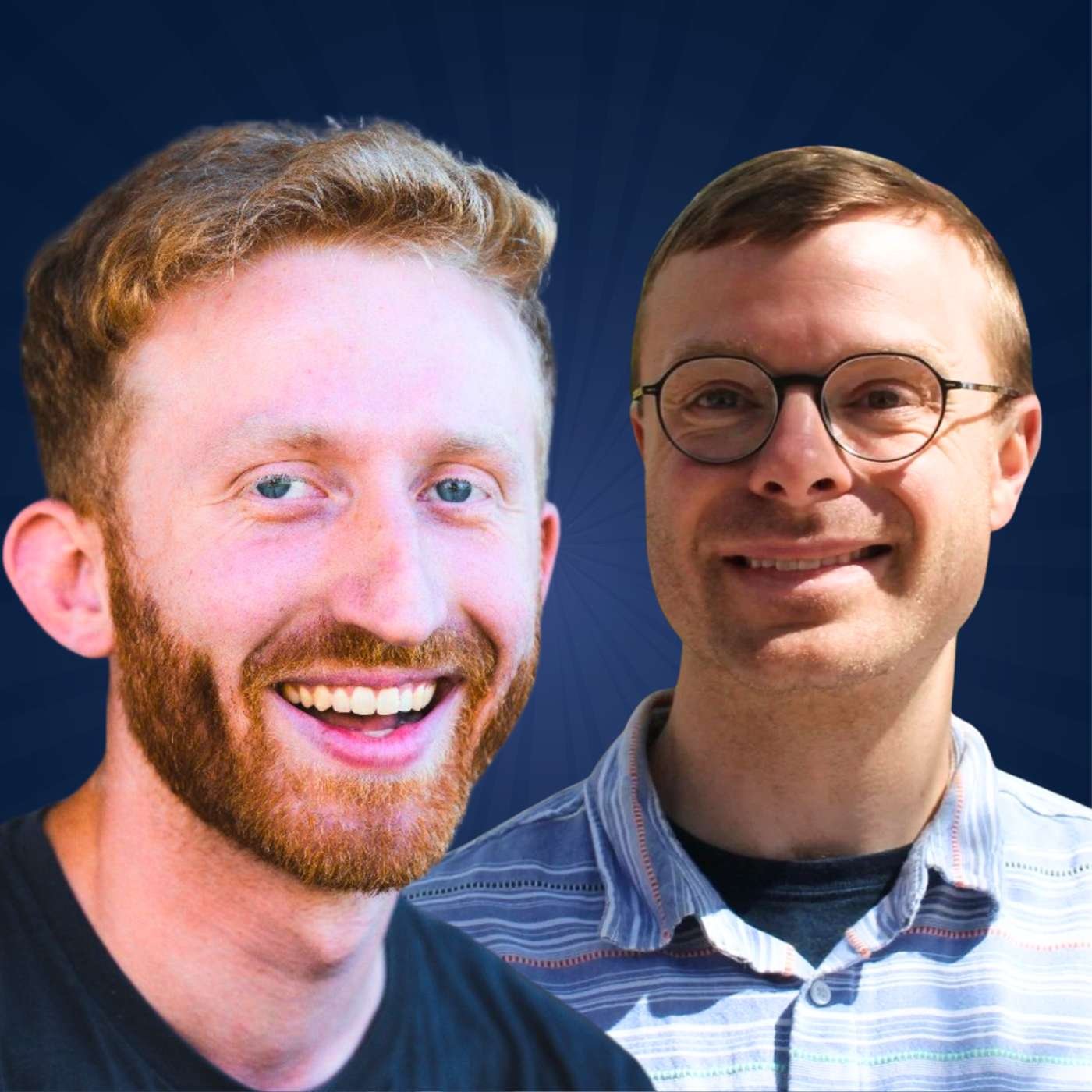
In this episode of the Clean Power Hour, Tim Montague sits down with Ben Underwood and Isaac Baker, founders of Massachusetts-based Resonant Energy, to discuss how they built a solar development business around nonprofits, houses of worship, and low-income multifamily housing.
Ben and Isaac explain how a portfolio approach brings buying power and financing to smaller projects, why their business pivoted toward affordable housing, and what developers and installation partners can learn from that model.
In the interview, Ben puts completed projects at roughly 5 MW, with about 15 MW in the pipeline. Behind those numbers is years of work aligning customer demand, installation partners, capital, and policy.
A central question: do the savings actually reach residents? The conversation distinguishes direct utility-bill benefits from savings that support building operations and improvements, and explores the Connecticut approach described by Isaac. They also discuss changing federal incentives, battery deployment barriers, and the potential of peak-demand compensation.
In this episode, you’ll hear about:
• Why Resonant Energy shifted from anaerobic digestion into community solar and small commercial projects
• How the company used community networks to bring solar to churches, nonprofits, and other organizations that struggled to access conventional project finance
• Why bundling smaller solar projects into portfolios can make them more attractive to investors
• How Resonant Energy moved into affordable multifamily housing after COVID disrupted its faith-based customer base
• The role of Massachusetts’ net metering and SMART incentive programs in making low-income solar projects viable
• How the Inflation Reduction Act helped accelerate Resonant Energy’s growth
• How solar is becoming increasingly important for all-electric affordable housing developments as electricity costs rise
• What a typical 40-unit multifamily solar project looks like, including 75 to 150 kW behind-the-meter systems
• How Connecticut’s affordable housing solar policy creates a direct benefit for residents
• The challenges of deploying batteries on small commercial properties, from local fire codes to federal sourcing requirements
• Why rate design and peak-demand compensation matter as federal solar incentives change
• Why urban and suburban rooftops and parking canopies could play a much larger role in America’s future energy system
For developers, EPCs, and affordable housing owners, the takeaway is practical: smaller projects can become a meaningful market when financing, delivery, and resident benefits are designed together.
Connect with Guests
Connect with Tim
Clean Power Hour
Clean Power Hour on YouTube
Tim on Twitter
Tim on LinkedIn
Email tim@cleanpowerhour.com
Review Clean Power Hour on Apple Podcasts
The Clean Power Hour is produced by the Clean Power Consulting Group and created by Tim Montague. Contact us by email: CleanPowerHour@gmail.com
Corporate sponsors who share our mission to speed the energy transition are invited to check out https://www.cleanpowerhour.com/support/
The Clean Power Hour is brought to you by CPS America, maker of North America’s number one 3-phase string inverter, with over 6GW shipped in the US. With a focus on commercial and utility-scale solar and energy storage, the company partners with customers to provide unparalleled performance and service. The CPS America product lineup includes 3-phase string inverters from 25kW to 275kW, exceptional data communication and controls, and energy storage solutions designed for seamless integration with CPS America systems. Learn more at http://www.chintpowersystems.com
0:50
They're attacking solar energy, which is the the fastest way and and often the most cost effective way to directly reduce customers' electricity bills. The homeless shelter, the the local neighborhood church, the you know the small school, the kindergarten, like those are the places that you know they could really use those energy savings, but it wasn't happening yet. And going to an all-electric building without solar on the roof is incredibly financially painful in Massachusetts, given our energy costs.
Tim Montague:
1:22
Join clean energy leaders from across Illinois at the 2026 Illinois Renewable Energy Conference, October 19 and 20, in Bloomington Normal. Explore the policies, technologies, and partnerships shaping Illinois' energy future, with sessions covering solar storage, grid resiliency, workforce development, and more. I'll be there both days and look forward to connecting with you. Register today at IllinoisRenewableEnergyConference.org.
intro:
1:53
clean energy industry is moving fast. The deals are getting bigger. The technology is evolving, and the stakes have never been higher. Welcome to the Clean Power Hour, the podcast for solar, storage, and microgrid professionals who want to stay ahead of it all. Each week, your host Tim Montague, industry advisor and president of Clean Power Consulting Group, brings you unfiltered conversations with the leaders actually building the energy transition. Now, here's your host Tim Montague.
Tim Montague:
2:29
Today on the Clean Power Hour, low-income multifamily solar. My guests today are Ben Underwood and Isaac Baker, the founders of a company in Massachusetts called Resonant Energy. I'm so keen to do this interview. Welcome to the show, gentlemen.
Ben Underwood:
2:48
Yeah, thanks. Glad to be here, Tim.
Isaac Baker:
2:51
Looking forward to the conversation.
Tim Montague:
2:53
So we always start with a little background on yourselves. How did you get into solar, and why did you start Resonant Energy?
Ben Underwood:
3:02
I yeah, this is Ben. Originally met Isaac while I was working on a Fulbright research grant project in China, and was looking at anaerobic digestion technology there. And we had both gone to school in Vermont, and were introduced by somebody who worked in the Vermont Department of Agriculture, where they do a lot of anaerobic digestion. And we were like the only two people our age he knew who were interested in that, and so that's how we met. And
Tim Montague:
3:42
and why why anaerobic digestion? Like that's a pretty geeky thing. What what drew you to that topic?
Ben Underwood:
3:52
I. I while I was while I was in college, had an opportunity to to join a class with this guy named Bill Scully, who was going around Vermont and working to convert decommissioned mill ponds to micro hydro facilities.
Tim Montague:
4:14
Okay,
Ben Underwood:
4:16
and and it was just really eye opening to me. I think that was the first time that I sort of saw somebody who was actually playing the role of like a project developer, and he was doing it for these very unique projects. But I think until that time, I didn't really know there was a lane for you know work in the renewable energy space or climate space that was organized around solving all of these problems, like policy problems, technical problems, people problems, and so that was what sort of sparked my interest. And and then I started to think about anaerobic digestion as a way that could simultaneously create climate benefits while also doing waste management and and kind of having like a lot of local engagement. But you were
Tim Montague:
5:00
thinking of the dairy industry, or what industry were you going? Oh, there's a good opportunity here for anaerobic digestion. What what's what was the spark there?
Ben Underwood:
5:09
Yeah, well, we started out. We we were looking at using it for food waste, and and yeah, and we actually Isaac and I initially started a company called Ripe that was focused on that. Okay, and and it was kind of through through that work that Isaac and I first first got together, and and then that was how I got looped into separate community shared solar work that he was starting to engage in with a an organization called Co-op Power.
Tim Montague:
5:43
Okay. And Isaac.
Isaac Baker:
5:45
And I'll yeah, I can say for my part, my my. Tana anaerobic digestion was more traditionally through that that sort of dairy lane of I did my undergrad at Middlebury College, and a big part of its sustainability plan hinged on a seven mile natural gas or sort of you know renewable natural gas coming right from a dairy farm that was like a you know a large 700 head dairy farm that was seven miles down the road, Middlebury was going to lay a natural gas pipeline and actually bring you know renewably produced natural gas coming off of that farm actually to the college to then use in its combined heat and power plant on site, and that was going to be a you know a key piece of it. So I came to it from you know in my undergrad experience, I was part of Solar Decathlon and built a net zero home with other students on campus. You know, did many other renewable energy things, but became very interested in that. And I think at that time too, we were just starting to see like food waste bans and like organics diversion, where we had seen you know there was this big gonna be this big market of like new organics that needed to get processed. So it seemed like a potentially exciting opportunity. The
Tim Montague:
7:05
Clean Power Hour is brought to you by SDE Sinclair Designs and Engineering, Fix Tilt and carport racking design, engineering, permitting, and manufacturing all under one roof in Michigan. No outside vendors, no waiting in someone else's queue. Just fast turn around and steal that ships when you need it. Ask Ag Energy Co. in Illinois or Sunrise Solar in the Mid-Atlantic, they'll tell you what it's like to work with the Sinclair team. SDE, everything in-house. Visit Sinclair-Designs.com. Well, fast forward to Resonant Energy. We've got a lot to dive into with Resonant, but what what was the spark for Resonant then?
Ben Underwood:
7:53
Yeah, so we we got started. I think you know as we got deeper into the anaerobic digestion stuff, it became evident that it was kind of too many simultaneous problems to try to solve at one time with the resources that we had. I mean, we were just two recent college grads, between you know waste input supply chain and energy conversion and outputs and interconnection and the technology itself being fickle and and you know involving sort of microbes and all that that was kind of too too much, and we weren't making enough money on it to sustain our work on it, and so we started to. I think, well, I guess actually, yeah, we made a formal switch. We both started working for Co-op Power, which was an energy co-op that was based in Western Massachusetts and was doing all kinds of interesting renewable energy work. The flagship project at the time that we started around 2015, I guess, was actually a large scale or medium scale biodiesel facility. So there was some overlap there with the with the you know bioenergy and and waste to energy conversion. But but what we got brought on to do was to start the community shared solar department of co-op power, and and so that's what we did, and and actually worked on roughly 500 kilowatt system that was going to be co-located with the biodiesel plant, and we worked on it for like a year, and and then ultimately got killed by an interconnection cost that was too high for the project to bear. So I think we learned a lot from that and made a lot of good contacts. and And I think that's kind of what led me, in particular, to to say, could could we apply what we've learned to much smaller projects that have a higher likelihood of succeeding on the interconnection front, and so we started to develop those projects, and that really became the basis for resonant energy. Those projects were different enough, both in terms of size and location, from the community shared solar projects that Co-op Power wanted to focus on, that it became a relatively natural pivot for us to peel off and start to focus on that kind of work exclusively,
Isaac Baker:
10:20
starting with campaigns to get solar for houses of worship. And I think it's worth noting too that you know I think is relevant for this audience where you know there's a lot of focus on the challenges with the grid and interconnection that you know that that formative learning for us of trying to do one of these larger projects and running into a brick wall on the interconnection side really geared us towards the fact that like you know the learning we now have, which is that you got to be willing to for a lot of the the business model of these larger scale. Projects you got to be willing to put in, you know, significant capital resources, and then be able to wait two to four years to see how it goes. And you have some failures and some successes, and it's kind of a, it's almost like a venture capital model of, you know, with that level of failure and success. And as Ben noted, with two recent college grads, where I had, you know, only a liability to my name with student debt, and we weren't coming into this, you know, entrepreneurship lane with a pile of cash ready to to do that. And really, I think found our way to a market niche that matched the values and what we wanted to bring forward, which was making solar accessible to parts of the market that had been kind of excluded and left out as of 2016, where mostly solar was going on suburban middle and upper income households and large big box stores and out in farm fields, but was really not yet happening for the vast majority of the places you'd really think you'd want to see it, which would be the homeless shelter, the the local neighborhood church, the you know the small school, the kindergarten, like those are the places that you know they could really use those energy savings, but it wasn't happening yet. And I think we were excited about that, and that was a scale of problem we could solve because what is required, what it turned out was required to solve that problem, was really just like this kind of unappealing problem of people hours, which is that it didn't-you know-you didn't have to put capital at risk for interconnection to get those projects developed. You had to put your time and your labor at risk to do all the organizing to get all those people together and motivated and excited to do solar, and that was what we had in a bunch. That isn't free.
Tim Montague:
12:33
I mean, so what? Talk about talk about what when you started Resident. What was an ideal customer profile? What was your target? And talk about some early projects that. I mean, it sounds to me like it's a small miracle that you're here today. It's very impressive what you've built. But what tell us about the early days and what what kind of projects were you developing, and and and give us some context too on what was the relative import of legislation in the picture?
Ben Underwood:
13:09
Yeah, yeah, yeah. I mean, I think from the very beginning became acutely aware of the importance of policy to support the work that we were doing, and I think that that sort of gets at I think something that Isaac was alluding to earlier, you know, which is in the absence of capital, that what we really depended on was human capital, and I think that is one thing that I've reflected on about a lot of the communities where we were working initially is that that there is a line that people use about low-income neighborhoods, or environmental justice neighborhoods, or majority black neighborhoods that they're hard to serve compared to wealthier neighborhoods, majority white neighborhoods, and that that's borne out in kind of where residential solar largely has happened, and and what was really interesting is I think what it kind of overlooks is that actually like we deeply benefited from the grace of a lot of people who we worked with along the way, and these very deep networks of people who did want to see these projects happen and and really hadn't been approached in an organized way for how to get projects to actually get financed and built, and so the first group of projects that we worked on was the Boston Interfaith Solar Project, and it was initiated with a project the Second Church in Dorchester, which is you know kind of in the heart of Dorchester in Boston, and had a great roof for solar. But as like a 25 kilowatt project for a church, you know, I guess had never been able to get like a PPA to finance that project. And so, how we got it to work ultimately was by working with all of the faith leaders. And in fact, the pastor of that church had a spreadsheet that had like 350 other churches in the in the area and contact information for the pastors or leadership of all those churches, and so we went to that entire list and ran something akin to a solarized model, you know, with if you're familiar, is is to sort of aggregate enough demand to then bring down the bulk purchasing price, and I think importantly for us, because a lot of these institutions didn't have money sitting around to get the project up to a portfolio size that was large enough for. PPA investment from a third-party financer, and so just to underline the the through line, there is that the only reason that worked really wasn't because of any particular genius on our part, but because we tapped into a really deep pre-existing strong network of people who were motivated to do this and hadn't really had the opportunity to.
Tim Montague:
16:13
So, what was the what was the threshold though? This portfolio, how many kW did you have to reach to offer a good PPA?
Isaac Baker:
16:22
That that first portfolio actually was not of a wild scale, but ended up being I think I think it was three or four churches in total, and I think it came to like 150 kW or something, and it took us like a year to do. So that was the the earliest days, and it was supported on the back end with impact investment. So it was a you know high net worth individuals basically funded. I think both sides of the debt and equity on the back end of that deal through our partner financing.
Tim Montague:
16:56
Let me pause here and lay out the model. Resident Energy is a solar developer based in Massachusetts. Their customers are churches, nonprofits, and affordable housing owners. These are small roofs by commercial standards. One at a time, they are too small for most third-party financiers, so Resident bundles many sites into one portfolio and buys, builds, and finances them as a group. Each customer then picks a path, own the system, or sign a power purchase agreement, and let an investor own the panels. Here's Isaac on the business today.
Isaac Baker:
17:33
In a nutshell, to say what our business is today is like we exist to expand access to clean energy to nonprofits and low-income multifamily housing is our day-to-day. So, like broadly speaking, we're doing our day-to-day of our business is doing 25 to 500 kW, mostly behind the meter systems in Massachusetts, and now we're expanding to Connecticut in the next year. And that is generally the premise of what we were doing before. And largely speaking, trying to aggregate demand so that we can, like any other you know EPC or vendor in the solar marketplace be able to you know access some economies of scale and buying power and you know things like that throughout the whole delivery process.
Tim Montague:
18:19
Right. So there's the economies of scale are important. You're doing some kind of portfolio approach, right, which is effectively like a group buy. What about incentives? What are the what are the incentives in Massachusetts, and has that changed dramatically over the course of your over your whatever 10 years now?
Ben Underwood:
18:46
Yeah, yeah. I think in general we're looking at net energy metering, so net metering credits in Massachusetts. We're looking at electricity value and how that's assessed in so far as like behind the meter energy consumption might be separate from net energy metering. So those are the two aspects of the direct energy value, and then the state solar incentives, effectively a feed-in tariff. The Massachusetts now the Smart Program. When we first got started out, it was the SREC program, and then federal tax credits. So those those three sources: the the energy value, the feed-in tariff, and and the tax credits compose the most important sort of pillars of of incentives that we use to get the projects to work. What we observed, I think, in starting from the very beginning, is that in particular Massachusetts, there you know it's a Democratic supermajority state. A lot of the representatives in the state house are people who represent low-income neighborhoods, black and brown neighborhoods, who had had not generally thought of solar as a priority area for them. So I think one observation was in in doing the first set of projects with houses of worship, we were able to start working with state reps to get them engaged in net metering policy debates that previously they would not have been a part of. And importantly, I think around 2016 2017, this was like Representative Russell Holmes, Senator Sonia Chang Diaz, and at the time there was push to reduce the value of net metering credits for behind the meter projects. That because we had the projects in Dorchester, we were able to do a ribbon cutting, and you know Rep Holmes like wanted to come to the ribbon cutting, and we got advice from one of the pastors of the churches involved with the project, Mariama White Hammond, that like. If he wanted to come to the ribbon cutting, we should ask him to support his net metering legislation first, and to like actually like have him show up to support that and not just get the photo op. And so he he did, and actually he went on to become a customer of ours. I guess what my my point is here in general is to say that there there's a lot of general like intent on the part of policymakers to support projects like this. Like people love to be able to tell the story of this is how we're expanding access to low income solar, and and this is both at the state level and at the federal level. And because of a lack of projects that actually implement and achieve those policy goals. There was a real dearth of feedback between what the actual barriers to building projects like this were and how the policies and incentives were set up. So I think that's another important part of the whole story of our company has been a kind of synthesis of as we build more projects, we can build a coalition of people who benefit from the projects, and then get direct input from those constituents about what their barriers are and how to remove those barriers in a way that's very persuasive to policymakers and has been effective. And for example, removing net metering obstacles for low-income solar projects, increasing the value of smart incentives for low-income customers, creating a carve-out within the smart program for affordable housing in particular to create a minimum amount of value of the program that's going to be allocated to those customers. So every time we get a policy like that pushed through, that then expands the amount of work we can do and deepens the value that we can provide to our customers.
Tim Montague:
23:28
So paint us a picture of your success. Where is the company today? How many projects have you accomplished? How has the annual trajectory changed? I mean, I think you said you had 40 employees now, so there's quite a machine that you've built, but paint us a picture of what success looks like in multifamily and and low income solar development.
Isaac Baker:
23:57
Yeah, I think to give you a little bit of a trajectory, and also to speak to the role of federal legislation, which was really transformative for our business and our work. I think, as Ben mentioned, early days were anywhere from six to 10 full-time staff, probably in the kind of our 2016 to 2019 2020 range, and we're you know salaries are low, benefits are low. Like we're working really hard to figure out how to make these small mission-aligned projects work, and then we hit Green New Deal. We start to hit the kind of to move towards the Biden era, and ultimately the Inflation Reduction Act. And also, interestingly, just for the sake of the history, obviously in 2020 we hit this really big inflection point with COVID, and one of our main market like 70% of our work at that moment was probably with faith-based organizations who were among the hardest hit during COVID, and they were not ready to buy solar of any kind for there's probably a two-year pause from 2020 to 2022 because
Ben Underwood:
25:05
the pews are all empty.
Isaac Baker:
25:06
That's right. Like they're they're all wondering: Are we going out of business? Are we selling the church to consolidate with someone else? Like that like dropped, and we had to do a hard pivot to affordable housing and affordable multifamily, which was something we had kind of tried. And we're like, this would be in our. We want to figure out how to crack the nut. We switch to that, and then by you know another three or four years later, we go from a 10 to 14 person headcount up into the 20s and 30s, and the combination of really finding the right market fit, where there was this huge need and interest, but no one had wanted to figure out all of the annoying paperwork and people and whatever that is involved in understanding federal programs and subsidies and how solar can kind of slot into the affordable housing market. So we were willing to wade through all of those barriers and figured that out. And at the same time, the Inflation Reduction Act coming in, and like you know, I just we got a new inbound lead yesterday. We still got federal tax credits through 2027, and we're offering a 70% tax credit driven product there that's backed by the Inflation Reduction Act. So you can imagine that obviously, if you have 70% federal subsidy on top of you know Massachusetts has among the highest energy and electricity costs in the nation, and on top of a really progressive and well-informed smart incentive policy for a feed-in tariff, you have an unbelievably compelling financial package that we've been offering now since 2022 to affordable housing and mission. Line nonprofits and other groups that we're working with, and that's really what's driven that growth from 14 folks, you know, back in 2020 up now into the 40s, where we're, you know, probably our lifetime total installed capacity is maybe in the like 14 megawatt range, and we're now starting to put together probably like eight to 10 megawatts every year. Like we probably contracted, I think about 60 to $65 million worth of construction just in the last 12 months alone. So we're seeing like a really big exponential growth after having spent a lot, you know, a lot of the first four or five years of the company kind of working really hard to find where was our opening.
Tim Montague:
27:29
That's cool. Yeah, just to
Ben Underwood:
27:32
to qualify that a little bit, I think I think we have completed roughly five megawatts of projects and have about 15 in the pipeline, something like that.
Tim Montague:
27:43
Isaac mentioned a 70% tax credit. Here's how a
number like that stacks:
27:47
the base investment tax credit is 30% Affordable housing projects compete for a 20-point low-income bonus. Domestic content and energy community adders add 10 points each. Nonprofits and housing authorities pay no income tax, so they collect the credit as a cash payment through elective pay. Then Congress passed the One Big Beautiful Bill Act, signed July 4, 2025. Solar projects that missed the July 4, 2026 construction start now have to be in service by the end of 2027 to claim the credit, Ben, how has the new law landed for you?
Ben Underwood:
28:28
It's been infuriating. I think, in particular, in a state like Massachusetts, because so much of the marginal cost of energy, and this is for for electric ratepayers, I guess also for gas ratepayers, is driven by natural gas. The price of natural gas, natural gas infrastructure, so that when we see things like the war in Ukraine, the war in Iraq, I mean Iran, you know another Trump policy, that every time there's a disruption to the natural gas, the the cost of electricity gets ratcheted up more. So so to have all that happen while they're attacking solar energy, which is the the fastest way and and often the most cost effective way to directly reduce customers' electricity bills.
Tim Montague:
29:24
Sure,
Ben Underwood:
29:25
has has created this enormous, you know, policy cognitive dissonance that you know has has been hard hard for us to navigate with the elimination of the the tax credits, but at the same time has been offset By the sharply increasing electricity costs, to the point where if it continues on this trend, a lot of-I mean, not for the 70% tax credit projects, but certainly for the 30% tax credit projects-a significant part of the value that was being granted by the 30% tax credit is going to be offset simply from behind-the-meter electricity cost increases. The
Tim Montague:
30:08
Clean Power Hour is brought to you by CPS America, maker of North America's number one three-phase string inverter, with over 10 gigawatts shipped in the U.S. The CPS product lineup includes string inverters ranging from 25 kW to 350 kW. Their flagship inverter, the CPS 350 kW, is designed to work with solar plants ranging from 2 megawatts to 2 gigawatts. CPS is the world's most bankable inverter brand and is America's number one choice for solar plants. Now offering solutions for commercial, utility, ESS, and balance of system requirements. Go to chintpowersystems.com or call 855-584-7168 to find out more. So the clock is real for solar. The practical deadline is now December 31, 2027. Isaac. What does losing the credit mean for your pipeline?
Isaac Baker:
31:10
So I would give two two pieces to it. So before the Inflation Reduction Act, so you know going back, we were probably offering maybe 60 or 70% PPAs or third party finance to you know these types of projects, and really since the Inflation Reduction Act and we got elective pay, it became much easier for tax-exempt entities to monetize tax credits, et cetera. We started to see every year our pipeline shifted more and more towards ownership to the point where we're almost 8020, like 80% ownership leverage. Grants and loans and other funding, which is really helpful because one of the biggest impacts we're seeing now is that with the law, with the loss of the tax credit, we're we're looking at a tough forecast for we're not anticipating being able to offer a third party financed product once that tax credit goes away right now. So that's going to be the biggest tangible impact on the loss of the tax credit for our pipeline, but we were already about 80% ownership anyway. So it, you know, it's a much less stabilizing. Does it hurt
Tim Montague:
32:14
ownership as well?
Isaac Baker:
32:16
It hurts ownership as well, but more incrementally. And a lot of the folks that we're selling to that are going for ownership, solar is becoming a compliance product, right? Where like we're seeing that like in the affordable multifamily market, like solar is required to meet passive house standards or to meet many of these other building code requirements. There are many cities and towns in Massachusetts that solar is required on new construction. So we're seeing that like, and as Ben was noted, with electricity costs rising, even if it's not required more and more housing developers and more and more of our clients, they're shifting to 100% electricity for their new property. They're using heat pumps or you know central HVAC, and going to an all electric building without solar on the roof is incredibly financially painful in Massachusetts, given our energy costs, and so it's it just becomes one of those things where it's like yes the the impact and the financial return is worse, but it's like now it's a 9% IRR instead of a 13% IRR, it's still good to do, you know. So we're we're we're we're going to see some some hit, but not catastrophic, is what we're anticipating.
Tim Montague:
33:26
And is there is there a standard type of project in multifamily that you could describe for us, or are they all very bespoke?
Isaac Baker:
33:35
Two most common multifamily properties, the sweet spot. So multifamily housing is driven by the low income housing tax credit, which is the single biggest, you know, federal subsidy for low-income housing in the country. Vast majority of those projects are either let's call it a 40 to a 45 unit building, or it's a stack of two of those that are condoized, and then it's 80 units. But basically, those come in either it's a three or a four-story box that's got a flat roof, or, and that's pretty common in the urban areas that have zoning that incentivizes you know sort of larger and taller development, and then in lots of the rural and suburban parts of the state, housing developers have to kind of mesh with the more suburban zoning codes and things like that. So you often see more of a kind of townhouse style. You know, so we we will get like this big long flat roof where you know from the it kind of looks like a motel or something like yeah. And so on a 40
Tim Montague:
34:35
on a 40 unit, let's just say a three story building, how much solar can you put, and how do you how do you do the interconnection and and metering of that?
Isaac Baker:
34:46
The average project there is 100. Let's you know somewhere between 75 150 kW. It's behind the meter. It's offsetting common area load for that multifamily housing property. So that means it's offsetting elevators, common area heating and cooling, common laundry, whatever else they got going on on the kind of owner-paid meter. Tenants are usually individually metered out of that, and then often we're passing some tenant benefits along through the. If it's a federal tax credit project, there are some ways to kind of create tenant benefits on the program, but that's the general structure. We have various net metering policies that kind of allow for monthly netting of any export, and we're usually tying in behind the owner-paid common area meter as the most common pathway.
Tim Montague:
35:37
So, and one
Ben Underwood:
35:38
like sort of you know wonkier part of that that maybe I suppose the audience of your show might appreciate is like in some cases we'll have a portfolio of projects. For example, let's say in Cambridge, where one housing developer will own many properties in Cambridge, including like one or two tall rise buildings that are not really suitable for solar, you know, for cost reasons and so forth. And but they have a lot of other buildings that that have great roofs for solar. And if we had to size the solar projects that we developed for those other buildings to the common area load for that building, we would actually be leaving a lot of the roof space open. And so I think one area we've been able to really create a lot more value there for our customers has been to max out the solar project for that roof, put it behind the common area meter, and then send the excess net metering credits that are produced on a monthly basis to those large high-rise buildings that have extra. Nearly high usage, but no solar, so we can use those effectively as load sinks for the excess net metering credits. And then, because they're all owned by the same entity, the financial value all accrues to the same project owner. And so there's just citing that as an example of ways to kind of creatively set up projects to get them to work where they might not otherwise.
Tim Montague:
37:03
And what what kind of entities are we talking about?
Isaac Baker:
37:08
That the you know the best example that Ben's talking about there is a nonprofit affordable housing developer called Homeowners Rehab Inc. in Cambridge. We've been working with them since 2021. We're now on like I think 55 sites across the city of Cambridge, that we've put solar on with them, and as Ben mentioned, they have a handful of these like larger high-rise properties, and then they have a lot of like three-story, eight to 15-unit walkups that have no elevator, no meaningful common area, you know, owner-paid electricity usage at the property, and so we're you know we're offsetting the very you know minimal electricity usage there and exporting the excess to these larger housing developments that might be one or 200 unit towers that they operate as housing developments as well.
Tim Montague:
37:57
So are the benefits though of solarizing these apartment buildings truly trickling down to the tenants.
Isaac Baker:
38:06
It's a great question. the The first answer is that it depends. So that particular housing developer, we did a pilot with them where one of our phases of the projects, they are actually we are operating a system that we call the solar equity platform, where we are actually having them donate some of their excess electricity to their lowest income residents, and we've actually been spent a lot of time advocating for policy at the state level that incentivized that behavior. So we have some instances where electricity is directly being sent to tenants, and then we have some instances where benefit goes to the tenants indirectly, where the project is leading to not only you know these operating cost reductions for the the landlord, which can help stabilize the building financially and allow them to you know more slowly increase costs over time for residents or support
Ben Underwood:
39:04
the cost of upgrades to the building, or renovations, rehab over time.
Isaac Baker:
39:08
That's right. And then to ben's point, right, that we have had direct contributions to you know some of these other pieces that help the property. So that might be you know the property installs a playground, it gets to replace its roof a little bit earlier, it gets to be more responsive and fixing the bathroom and this or that, and in the affordable housing world, it's complicated because depending on the property, some property types the tenants don't actually even pay their own electricity bill. They might be responsible for it, but they're going to get reimbursed for it through certain programs. And so there are some cases where actually it's not you're not actually creating incremental benefit to the tenant by offsetting their energy bill. So figuring out how to subsidize other aspects of their lifestyle at the property or their kind of living experience there is more impactful than direct, you know, utility bill savings. If some other government program is already paying for the utility bill,
Tim Montague:
40:04
and what has caused you to expand into Connecticut and New York?
Isaac Baker:
40:10
So one thing that we're excited about with Connecticut that's actually related to this: Connecticut, with their a lot of lot of folks coming out of Yale, crafting a lot of great policy down in Connecticut, and they have their affordable housing program, and particularly the Connecticut Green Bank have they've done some great work in starting to pioneer and lay the policy groundwork for how solar could go on affordable housing, and they have an interesting process there that's entirely different from what we do in Massachusetts, where solar on affordable housing exclusively goes on a standalone meter. It qualifies for a 38 cent feed-in tariff for 20 years, and then 20% of that 38 cents has to be allocated to the resident, all the residents of the property every month. And then, crucially, because that's a pain, the policy also requires the utilities like EverSource to deal with that. So you just at the beginning of the project, you name here are all the meters at the property, and specifically the meter numbers because account numbers turn over every time a resident moves in and out of a unit. You give them the meter numbers. The utilities responsible for distributing this 20% benefit, and a lot of these properties that creates that lowers the burden to actually getting this direct benefit out to residents, which we're excited about. So the combination of a really well crafted policy there, along with the financing support from the Connecticut Green Bank, where they're offering 18 year, like six and a half, 7% interest debt. That can be leveraged. That's almost you know similar to CPACE level financing that can be leveraged there. There's great capital sources. There's a great policy program, and it's in a neighboring state. Those were all some of the things we were excited about with Connecticut and New York. Similarly, had you know great affordable housing incentives and programs that were of interest to us.
Tim Montague:
42:03
Let's put Connecticut in dollars. Back home in Illinois, commercial solar often cuts a facility's energy bill by 50 to 75% Connecticut pays affordable housing owners through a feed-in tariff instead. So, say I own an affordable building in Hartford. What's the offer on paper?
Isaac Baker:
42:23
So, under that specific policy program I was talking about, which is called their RRES program, and with the financing backed, and also I should bracket and say these economics I'm going to cite are from the kind of the tax credit era because we we haven't really sort of pivoted yet to the post tax credit economics, so I don't have those kind of offhand. But what we have been offering has been basically either you can buy this system, 80% of the energy value is going to go to offset your electricity bills, and 20% is going to get given away to the tenants, and so that's going to be 10s of 1000s of dollars per year getting equitably distributed by the utility at no hassle to you to your tenants, and then you're going to get the tax credit and 80% of this energy value through the feed-in tariff. And by the way, that 80% of energy value through the feed-in tariff you can either use to offset your electricity bills, or you can take as cash from the utility. So all in all, you're looking at let's say it's a five or$600,000 outlay, and you're looking at you know maybe a three to four year payback, and you know 14% rate of return on investment would be the sort of the ownership economics, and then the lease economics would be the Connecticut Green Bank will operate will own and operate this on your roof for 20 years. You're going to get 20% of the energy value to offset your electricity bills. 20% is going to go to the tenants, and 60% of the energy value is going to go back to the Connecticut Green Bank to pay back their debt service and whatever. So you, so that's the, and and that can work out as you know,$20,000 per year to you as the real estate owner, $20,000 per year to your residents, and no upfront cost. And that would be a kind of a lease offer.
Tim Montague:
44:16
So in our last couple of minutes together, you're a pure play developer, as far as I can tell, but you don't get solar projects done alone, right? You're you're working with contractors, you're working with utilities. I'm just curious, like, what can you tell us about what have you learned in the in the decade that you've been operating Resonant Energy, and what are some of the key takeaways.
Ben Underwood:
44:48
Yeah, yeah. I mean, I think you know. In talking about partnerships, you know, certainly for the early years and the financing partnerships that we set up at that time, a lot of that early work that we did could not have been done without Sun Wealth Power, who financed a lot of these smaller projects, and Isaac mentioned was bringing together investors who are interested in these kinds of projects for for impact financing, and and then I guess for a lot of the work that I do, it depends on really high quality installation partners. You know, I guess we might have said earlier in the interview that Isaac runs the sales and customer acquisition side of the team, and I run the project development and and construction side of the team. And so, working with those installers, I think one one part I'd highlight there is finding installers who are willing to kind of go on the ride with us and take on kind of commercial level of complexity for the installations, even though the projects are not as large as conventional commercial projects. Has been a really important part of it. So we've benefited a lot from you know very technically skilled people amongst the installers we work with, who have been willing to kind of lean in and figure out some of the technical challenges that come with doing like you know step down transformers and more complicated metering arrangements and standalone meters and all this. Yeah,
Tim Montague:
46:17
can you reference some of those EPCs that you're working with?
Ben Underwood:
46:22
Yeah, yeah. The main installation partners who we work with right now include East Coast Solar out of Worcester, KW Management out of Nashua, New Hampshire, and Boston Solar Company based in just yeah Woburn just. North of Boston, and yeah, and then and then there's there's many others also, but those are some of the main ones.
Tim Montague:
46:50
And then Sun Wealth, what tell us about Sun Wealth? What what is their business model?
Isaac Baker:
46:56
So Sun Wealth is a their business model has been kind of they started almost around the same time as us, and their business model was really focused on unlocking the small commercial market from a third-party finance standpoint. So it's offering community solar and PPAs, you know, as their two main financial products. And their goal was they did some work as a project developer themselves, but was mostly to partner with mission-aligned developers like us across the country, you know. So they're probably in 14 states, I'd imagine, and where they were putting together the debt and equity and doing, you know, partnership flip transactions and all the rest, and then partnering with enough folks like us to put together project pools that could get financing for debt and equity, but instead of going to traditional banks like U.S. Bank or any of the you know Wells Fargo, a lot of these folks who do the much larger scale transactions, you know, it's aggregating equity from regional banks, you know, like a Needham Bank or like a you know some of these smaller regional banks, and teaching them to kind of get them in the game of doing tax equity, and then working with instead of a large banking partner for your term debt, you've got the Sierra Club Foundation, or you've got the you know the Rudolf Steiner Foundation, or all of these kind of impact investment groups that are kind of pooling money to help unlock this small commercial market of churches and small businesses and affordable housing and public housing and all these things that they have, and some you know, low-income community solar leases and things like that. So they were an incredibly crucial partner in the early years and have been ongoing for having a like-minded and values-aligned capital kind of aggregator who was doing this kind of thing that worked in lockstep with our development pipeline that really needed a great partner like that.
Tim Montague:
48:48
We haven't talked about batteries at all. Are you doing many battery projects?
Isaac Baker:
48:55
We're doing our first couple batteries for the small commercial market are a huge pain for many reasons, but just basically in Massachusetts, as I'm sure is true elsewhere, you've got building code updates. But it's because it's all new at the local level. We're running into obstacle after obstacle. Every local fire chief, you know, it's their own fiefdom. It's their own interpretation of the code, and you're starting from scratch. It's still early days enough. We're like mostly in Massachusetts, people have seen maybe a larger scale battery has gone in somewhere, and they went and took a tour of it. But mostly, they've just seen Tesla Powerwalls going in at the single family level, and they there's no real kind of precedent for how to do a commercial battery until the first couple people go through it, and it's so it's a pain. It's it's costly as a result of that. And we're also now struggling with the fiat compliance aspect of the battery pipeline, where there's the overlay of anyone who wants to make a battery at all to serve the small commercial market. Plus, it also being fiat compliance is like this really small Venn diagram, so we're trying out some batteries with ELM microgrid and Solarc and their partnership. We're looking into, so we're trying a couple, but are definitely finding that to be challenging. So we're probably in our first five to 10 projects in the pipeline with that right now. Well, that was
Tim Montague:
50:23
that was the whole reason for Fioc. It just creates friction, right? Fioc stands for foreign entities of concern. Under the new law, a battery project loses its entire tax credit if too much of its equipment costs trace back to prohibited foreign suppliers. In 2026, at least 55 percent of manufactured product cost has to come from compliant sources. The bar raises to 75 percent by 2030. Battery cells are the biggest cost in the system, and most are made in China. So small commercial storage gets squeezed from both sides: local fire codes on the one, federal sourcing rules on the other,
Ben Underwood:
51:04
just the infuriating like split channel narrative coming out of the Trump administration, which is like we we want more domestic material to be used for these projects, and we're going to impose these Byzantine rules that I've heard like various tax lawyers say are like of the most complicated set of tax codes that they've ever witnessed, and and at the same time eliminating the production tax credits that would be necessary to actually create that manufacturing capacity in the U.S. Same story with the Section 232 tariff that just came out. Yeah, it's insulting.
Tim Montague:
51:48
Ben mentioned the Section 232 action on august 6. The White House set a 15% tariff on imported solar wafers, cells, and modules. Minimum import prices come with it: 38 cents a watt for modules. Those rules take effect December four. Adfiak and the end of the solar tax credit and costs move the wrong way for small projects. Ben, you've been working on rate design. Where do you see the opening?
Ben Underwood:
52:18
Area focus for some of my recent work has been working with Vogue Solar on improving the. the way that rates are designed in Massachusetts, and the way, in particular, that peak demand reduction is compensated, and I think that's actually for me one of the most exciting areas and one of the most promising areas to get all of this to work and to help offset the loss of the the tax credits because it's fundamentally being driven by an electricity grid where the peak demand is increasing faster than it ever has before, after being flat for the past 20 or 30 years, and where a combination of batteries and solar is now, no matter how you cut it, the cheapest way to cheapest and importantly, also the fastest way to meet that peak energy demand, and I think if we can get the grid investment policy and the way that ratepayer funds are used to meet that peak demand requirement to align with the cheapest and lowest cost way to meet it, then we can actually start to channel this long-term, very low-cost ratepayer capital into solar and battery storage projects, and actually save ratepayers money by doing that.
Tim Montague:
53:38
Massachusetts is dense, so where do the gigawatts go? Look at what rooftops already do. ISO New England counts for more than 8,000 megawatts of behind-the-meter solar across the region. On June 24, 2025, the grid hit its highest demand in over a decade. ISO estimates the peak would have reached about 28,500 megawatts at 3:40 in the afternoon without rooftop solar. Instead, the peak came three hours later and more than 2,000 megawatts lower. Small systems on homes, churches, and apartment buildings made the difference.
Ben Underwood:
54:15
I guess not to toot our own horns too much, but I think like the the work that needs to be done really is around urban and suburban infill and getting the policy right to support behind the meter adoption, where there is enormous potential, but has not been significant build out yet.
Tim Montague:
54:33
Yeah, every
Isaac Baker:
54:35
rooftop, every parking canopy is my answer to that. And like, I want every parking. Yeah, maybe maybe
Tim Montague:
54:40
rooftop and parking canopy is the answer. The Clean Power Hour is brought to you by SDE Sinclair Designs and Engineering, fixed tilt and carport racking design, engineering, permitting, and manufacturing all under one roof in Michigan. No outside vendors, no waiting in someone else's queue, just fast turnaround and steel that ships when you need it. Ask Ag Energy Co. in Illinois or Sunrise Solar in the Mid-Atlantic. They'll tell you what it's like to work with the Sinclair team. SDE Everything in-house. Visit Sinclair-Designs.com. I want to thank Ben and Isaac with Resonant Energy for coming on the show. Check out all of our content at CleanPowerHour.com. Please do two things: tell a friend about the show. That's the best thing you can do to help others find this content. Plain and simple, tell a friend about the show, and reach out to me on LinkedIn. I love hearing from my listeners, and and maybe reach out to me about coming to meeting me in Vegas at RE Plus. So with that, how can our listeners find you, gentlemen?
Isaac Baker:
55:51
You can find us through our website www resonant energy. Best way to reach out to us through the contact us at the website, and we'd be happy to be in touch with other partners in the region, or to share more about our story.
Ben Underwood:
56:05
Yeah, that's right. Yeah, love talking with you, Tim, and and would love to hear from from anybody who is interested in these kinds of things.
Tim Montague:
56:15
Awesome. Well, I'm Tim Montague. Let's grow solar and storage. Thank you so much.