Solar EPCs face growing pressure to deliver projects on time, manage costs, secure financing, and navigate changing energy policies. So how can smaller companies grow while protecting their profitability and reputation?
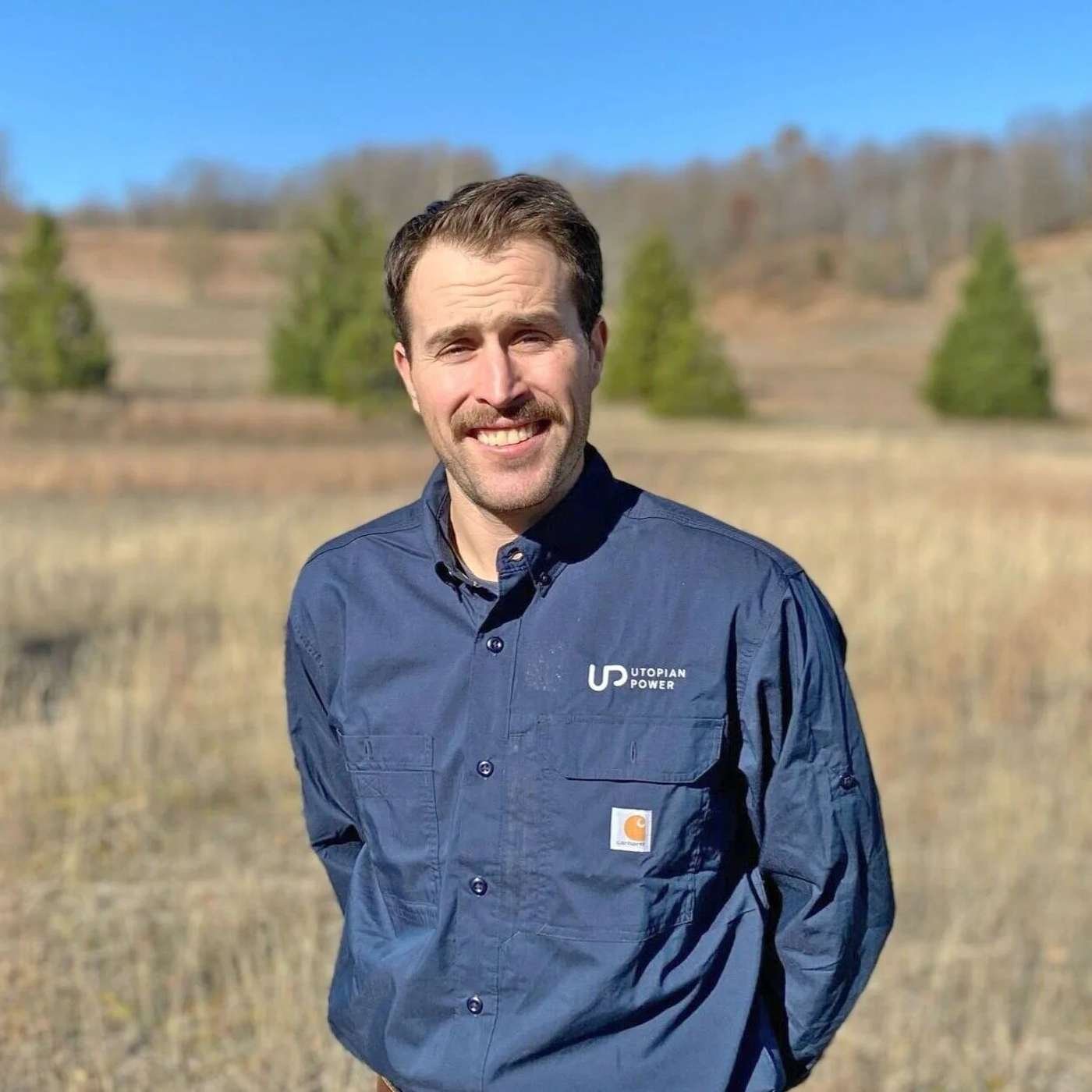
In this episode of the Clean Power Hour, host Tim Montague sits down with Forrest Cohn, co-founder of Utopian Power, to discuss building a reliable solar and battery storage business in a changing market.
Based in Ann Arbor, Michigan, Utopian Power develops renewable energy projects. It provides engineering, procurement, and construction (EPC) services for municipalities, municipally owned utilities, rural electric cooperatives, and other project developers. The company focuses primarily on projects under 10 MW, with experience across the Midwest and other US markets.
Whether you’re a solar developer, EPC contractor, project owner, or clean energy professional, this episode offers practical insights into growing a solar business without compromising on project delivery.
IN THIS EPISODE
• How Utopian Power grew from a startup founded in 2020 into a renewable energy developer and EPC contractor.
• Why municipalities and smaller utilities can create opportunities for solar developers.
• How EPC companies can partner with developers to deliver community solar projects.
• Why bonding capacity matters when pursuing larger construction contracts.
• How financial discipline and responsible project selection help protect profitability.
• How Utopian Power approaches hiring, project pipelines, and business growth amid market uncertainty.
• How tariffs, equipment restrictions, and changing federal tax credit policies affect solar project costs.
• Why state policies and utility programs remain important to commercial solar deployment.
• What solar companies can do to build trust and strengthen the industry’s reputation.
Connect with Forrest Cohn, Utopian Power
Forrest Cohn | LinkedIn
Utopian Power
Connect with Tim
Clean Power Hour
Clean Power Hour on YouTube
Tim on Twitter
Tim on LinkedIn
Email tim@cleanpowerhour.com
Review Clean Power Hour on Apple Podcasts
The Clean Power Hour is produced by the Clean Power Consulting Group and created by Tim Montague. Contact us by email: CleanPowerHour@gmail.com
Corporate sponsors who share our mission to speed the energy transition are invited to check out https://www.cleanpowerhour.com/support/
The Clean Power Hour is brought to you by CPS America, maker of North America’s number one 3-phase string inverter, with over 6GW shipped in the US. With a focus on commercial and utility-scale solar and energy storage, the company partners with customers to provide unparalleled performance and service. The CPS America product lineup includes 3-phase string inverters from 25kW to 275kW, exceptional data communication and controls, and energy storage solutions designed for seamless integration with CPS America systems. Learn more at http://www.chintpowersystems.com
0:50
And we went to the market, and they kind of said, you know, this is not something that you can bond. Period. Instead of taking a shortcut, instead of going to the fastest client or the fastest project, we needed to to be the entity that that could deal with the with the red tape. And yeah, I think it's just doing doing what you say you're going to do. At the end of the day, you know that's in a day-to-day life. If you're going to tell someone you're going to do something, you need to do it. That needs to be true in in your proposals. It needs to be true in in what you're claiming the system will produce. And
Tim Montague:
1:25
join clean energy leaders from across Illinois at the 2026 Illinois Renewable Energy Conference, October 19 and 20 in Bloomington Normal. Explore the policies, technologies, and partnerships shaping Illinois' energy future, with sessions covering solar storage, grid resiliency, workforce development, and more. I'll be there both days and look forward to connecting with you. Register today at IllinoisRenewable Energy Conference.org, the
intro:
1:56
clean energy industry is moving fast. The deals are getting bigger. The technology is evolving, and the stakes have never been higher. Welcome to the Clean Power Hour, the podcast for solar, storage, and microgrid professionals who want to stay ahead of it all. Each week, your host Tim Montague, industry advisor and president of Clean Power Consulting Group, brings you unfiltered conversations with the leaders actually building the energy transition. Now, here's your host Tim Montague.
Tim Montague:
2:30
We're here at Tennessee at 2026 in Chattanooga. The local utility is EPB. You're going to hear be hearing a lot about EPB because it's a very dynamic, very forward-thinking utility. But this is one of my long time in the making interviews. I I really appreciate you being patient with me. We did an interview that failed last year here at at the event that was in Nashville, but Forrest, for our listeners, tell us a little bit about Utopian Power.
Forrest Cohn – Utopian Power:
3:02
Yeah, thanks, Tim. Appreciate you having me on, and happy to be here in Chattanooga today discussing all things solar here in Tennessee and elsewhere. Utopian Power is actually based out of Michigan, Ann Arbor, Michigan, as an entity. Myself and a business partner founded the business in 2020, and we do solar and battery storage. We've we call ourselves a renewable energy developer, and and we do quite a bit of development work in house, but we also do a lot of design build work, and EPC work for for our clientele, which is often municipalities, municipally owned utilities, rural electric cooperatives, and larger developers who are in need of EPC work in the community solar space, and and thereabout in the less than 10 megawatt space is mostly where we operate.
Tim Montague:
3:52
You have your fingers in a lot of a lot of pieces of the pie. I struggle to understand for us, to be honest, how you can tackle so many different subgenres within the solar industry, and and if you would give us a quick trajectory for how you guys got started. Your you and your brother are founders of the company, right?
Forrest Cohn – Utopian Power:
4:17
It's actually my cousin. My cousin and I. Yeah, we have we've since hired some additional folks, and and my brother's working for us now. But oh, he is. Yeah, he is. But I wasn't
Tim Montague:
4:26
wrong about that. But but yeah, we've had we have.
Forrest Cohn – Utopian Power:
4:29
It's a family-owned business. My my cousin and I started the business. We're both from Michigan originally, and that's why we started it there. But when we first started, was during COVID, and we were actually both living out of state, and decided to start the business in Michigan to focus on the Midwest and areas that we were from. Both both educated in public universities in the state of Michigan. I went to Michigan State. He went to Eastern Michigan, and then we had lived elsewhere and gotten master's degrees and additional education in myself, renewable energy, and my business partner in business in real estate development. So those kind of paired well into what it is we're doing now. Right out of the gate in 2020, we got we always focused on commercial work, but we were able to to get contracts directly with the state of Michigan Department of Natural Resources that allowed us and really forced us to get all of our ducks in a row pretty quickly because they were dealing with the state entity and all their insurance requirements and and things that that back and are required by those type of contracts, which is kind of a hurdle to get through out of the gate. But it really did force us to get things teed up quickly. So that was we started in September of 2020, and we're working for the state within, you know, within six weeks of of that point in time. Kind of as we got started, we were signing contracts right out of the gate.
Tim Montague:
5:47
And so CNI is your roots commercial. Industrial solar, and so we're talking you know 100 kW to now multi megawatt. Where are you most active in terms of development and construction today?
Forrest Cohn – Utopian Power:
6:05
Geographically,
Tim Montague:
6:06
yeah,
Forrest Cohn – Utopian Power:
6:07
we are most active right now in the greater Midwest. We're working from Nebraska to New York, right on the coast right now. So we have some activities in Colorado as well, but really it's mostly from the greater Midwest area.
Tim Montague:
6:26
So Michigan, I know you're working in Nebraska, Illinois, yep,
Forrest Cohn – Utopian Power:
6:33
New York, here in Tennessee, we're licensed to work in Indiana, Ohio, Missouri, over in that area.
Tim Montague:
6:41
And you also, so you're self-developing CNI and Community Solar. Explain that piece. How do you work with other developers?
Forrest Cohn – Utopian Power:
6:49
Yeah, to answer the question on on our scope of work within the development space, we had traditionally kind of developed to build projects. So when a utility that wasn't necessarily a public utility would look for projects, whether that would be someone like in Michigan, we're working for Lansing Board of Water and Light, and they put out an all-source RFP within their service territory that they wanted us to people to bring projects forward. Such and to do that, you would need to go procure land, get land control, and submit the projects in with financing. Right, so we have often done that in targeted areas like municipal areas that have smaller utilities, like in Michigan, there's a lot of municipally owned utilities, and the larger developers don't traditionally get land leases in those areas because there's only one or two off takers to take that power. So they're looking at you know working within Consumers Energy or DTE in Michigan compared to necessarily working within one of the small smaller cooperatives, so where those opportunities come up in the past, we have targeted them with land outreach and getting those projects moving forward through those those aspects, and we're doing that right now. And we have projects that are chosen for for award and still working through studies in in in Florida in Tallahassee, which are on the larger side, you know, 40 megawatts with 40 megawatt hour type batteries on them, but working with developers now, as a somewhat smaller organization, we have safe harbor projects where we can.
Tim Montague:
8:32
Here's the safe harbor piece. Under one big beautiful bill, solar projects had to begin construction by July 4, 2026. Miss the date, and the project must be online by the end of 2027, or lose the credit. Projects started in time get about four years to reach service. Treasury also scrapped the 5% spending test for anything above 1.5 megawatts. The big developers bank the most projects.
Forrest Cohn – Utopian Power:
9:00
There's a lot of larger organizations that have safe harbor many more projects than we are capable of doing so, and have multiple years of work that is is really coming to fruition right now for construction, and they're needing you know good EPCs to to do that work, and and we've proven to to our clients over and over that we can do that work, and and we're handling that now with with developers, so we're able to to bond our work, we're able to deliver work in in a timely manner, in a professional manner, and we've always dealt with a lot of sophisticated clients with with the government entities and and working with the with the developers is is similar in some ways to that and we're able to to deliver for them in a professional manner.
Tim Montague:
9:45
I think many EPCs and developers would shy away from working with government entities because of the complications And the frankly the paperwork involved, but how do you how do you describe yourself? You know, in a in a first conversation, what is it that sets Utopian apart?
Forrest Cohn – Utopian Power:
10:06
Well, out of the gate, as an organization, we leaned into that role. So the first experience I had in solar was within kind of small commercial and residential, and and there was a lot of things I saw there immediately that where it might be faster to sailor, faster to installation, the churn of that requirement and the the looseness at which people were delivering those products, products and projects, I didn't really appreciate or enjoy, or I saw value in doing the opposite. Instead of taking a shortcut, instead of going to the fastest client or the fastest project, we needed to to be the entity that that could deal with the with the red tape and and work. With professional level people to to deliver right, so that's what we've always done, and that's what we've leaned into, and we're willing to take the time to do it, and and it's worked out well for
Tim Montague:
11:02
us. You said there was a looseness that you didn't appreciate. What do you mean by that? I'm just curious.
Forrest Cohn – Utopian Power:
11:06
I guess just the you know the churn, the churn required to not necessarily required, but the churn that some people approach the projects with, like, hey, you know, it's all about doing it as cheap as you possibly can, using the cheapest equipment, and getting it up there fast. And and I'm not saying those people are stucking around in business necessarily, but you know, there's a bunch of people my age who who started businesses and took different approaches to it, and I've seen some work out for folks, and some that have not.
Tim Montague:
11:36
So, what is your what is your strategy for for growing a solar company? You know, we're going through a little bit of a boom with the phase out of the ITC, right? There's a there's time pressure now to get projects developed and constructed, and then there's a you know potentially a significant cliff coming, but how do you see this landscape? How are you riding the boom, and you know what is your strategy for having a solid business in five years with the uncertainty of the solar ITC?
Forrest Cohn – Utopian Power:
12:10
Yeah, it's a it's a great question, and it's it's a hard question to really answer from from my seat to some extent. I should be looking at that longer term more closely. But what what we're doing do we are doing to prepare for that is is managing our business responsibly today, and looking at the opportunities that are on our plate, the the opportunities and decisions that we're able to make today, because we know what those are, and things are changing rapidly. and And our business historically, we've always looked at it. Okay, where are we at today? What are opportunities that are available today? Where do we want to get this business? And while we've always kind of wanted to get it to a similar point. The decisions that we were able to make on a daily basis that were really in front of us to make weren't were were always changing. The opportunities that we we saw or we were getting shortlisted for that allowed us to to really to navigate to get to where we wanted to be was was different than we would have necessarily anticipated, right? So while we we didn't have we had the long term plan in place, and we still have that, right? What what we're growing into as an organization, we are not going to get ahead of ourselves on hiring. We're going to hire to the projects that we do have. We're going to be we're going to focus on completing the projects we have under contract and doing them well, while still adding to our pipeline moving forward. And and one thing that's helped us out is is the work with municipalities forced us to get our bonding capacity high. So we have that in our pocket. We have strong bonding capacity. We have professional recommendations from a lot of entities that we've worked with, and it's it's allowing us to to handle a lot of the work that larger developers had capital put into the into the markets and land leases, interconnections, and those projects are coming to fruition now, and they need people to build them, and we're we're standing here ready to do so. So that's what we're doing now. A lot of is is building the projects that we did take that we were able to safe harbor previously, and then and then handling the the immediate needs of of a lot of those around us.
Tim Montague:
15:18
A word on bonding. Public owners require performance and payment bonds on most construction contracts, a surety guarantees the job gets finished and the subs get paid, even if the contractor fails. Sureties judge three things: character, capacity, and capital. Your bond limit sets the biggest job you're allowed to chase. What's the key to growing your bonding capacity, in your opinion, putting money back into your business and and proving that you can do it over and over, you know, bonding was an interesting thing to me because our business is you know we started it and you're kind of hustling and figuring out and and navigating all these different things that you can kind of work your way through. Okay, we can figure this out. We can do this. We can do that. We can just work our way through it and
Forrest Cohn – Utopian Power:
16:12
hustle our way through it. And we came to bond some of these larger jobs for that we got into pretty quickly as an organization. And we went to the market, and they kind of said, you know, this is not something that you can bond. Period. And wouldn't necessarily take that as as the final answer, but we heard that repeatedly from various sureties or or you know bonding individuals. So we did work with certain individuals that said, well, you can bond this. It's going to take you. Six, eight months to get these things ironed out. But if you do X, Y, and Z, you get all of your financials reviewed. You get all of these things really tied up. You get the relationships, and you can prove that you're going to be able to do this for our sureties. Then we're able to to kind of get that program in place. So it it it's not something you can you can hustle your way around because your books have to show that you you have that capability. But we've always been responsive to our clientele being municipalities and government entities, and we treat our relationships in a professional manner elsewhere. And and you know I think it's it's working with folks that who believe in you as an organization, believe in you as as individuals, and are willing to kind of extend that olive branch that allows you to to really add into your bonding capacity quickly.
Tim Montague:
17:34
So to that point of of kind of being able to put money back into your business and being able to operate profitably, you know, there's tremendous downward pressure from certain entities. Sometimes it's the facility owner, sometimes it's the project developer, trying to get a good deal, right? So they're they're pushing down. We want to do this cheaper, or we want to do it faster, and but that's countervalent to your ability, right, as a developer, an EPC to be profitable. How do you walk that line? Is there is there something you've learned or some strategy you've learned? Like the rule of thumb I've learned over the years is you don't want to be the lowest cost provider, and you don't want to necessarily be the highest cost provider when you're dealing with public bids. Though, some you know it often is the low bid that wins the contract, lowest qualified bidder. How do you how do you navigate that?
Forrest Cohn – Utopian Power:
18:40
Yeah, it's a great question, and I think it's it's understanding our markets and understanding the costs that we're signing up for when we sign up for it, and and knowing that as an organization, as a younger organization, as a new organization, you can take some risks, but you can't let that be enough big enough risk that's going to hurt our business. So I think it's, it's not gambling. But if if you're gambling, they say you know don't bet more than you can lose, right? So we are not putting ourselves in a position that that that we're gonna take a project that's going to to put us in a really bad spot. That's always been our our modus operandi is that we're looking for quality over quantity of projects. We're looking for opportunities that that match up well for with our with our size of projects and focus areas, and and now we're able to work repeatedly with the same clients and same partners, and we've got that dialed in pretty good. Where we know where where we can do projects at price wise, we know our our costs of labor and material, and and we're signing up for projects that we can that we can complete profitably. And we are fiscally responsible organization, and that's always we're fiscally conservative, so we're not spending money where we don't need to, and we're we're focusing on delivering projects and and utilizing the money to to do so.
Tim Montague:
20:14
The Clean Power Hour is brought to you by SDE Sinclair Designs and Engineering, fixed tilt and carport racking, design, engineering, permitting, and manufacturing all under one roof in Michigan. No outside vendors, no waiting in someone else's queue. Just fast turn around and steal that ships when you need it. Ask Ag Energy Co. in Illinois or Sunrise Solar in the Mid-Atlantic. They'll tell you what it's like to work with the Sinclair team, SDE everything in house. Visit Sinclair-Designs.com. Look at what hit this year. In late July, the FCC put foreign-made inverters on its covered list, blocking new equipment approvals. On August 6, a Section 232 proclamation set a 15% tariff on imported cells and modules plus price floors. The module floor is 38 cents a watt starting December 4. Add higher oil and freight costs from the Iran War. Forrest, how optimistic are you about the next five years?
Forrest Cohn – Utopian Power:
21:21
We've seen impacts prior to those particular tariffs, we saw a lot of impact on steel pricing earlier in the year for for all of our single-axis tracker projects, kind of to do with foreign wars and war in Iran specifically, and then driving up of fuel prices here in the U.S. and commodity markets. So. That paired with with some of the the tariffs on the on the panel side and inverter bands, it's definitely causing a lot of a lot of rework on our side to make sure that we're that we our designs continue to meet what we're able to build and what we're able to build within certain rules, I think that there's there's obviously some some rationale behind these items that are being changed or being implemented, but you know I would say that the extra hurdles don't provide the U.S. with with any more affordability on the energy side. It's it's driving up pricing on on what we're able to deliver a project at, and therefore drives up the the price that that power is created off that system at. So, what do I see for the next five years? The the world's continuing to build a ton of solar, and and they do that here in the U.S. And I don't exactly know what rules we plan by, but I think that the the larger projects, more than 500 kW, which is small in the in the industry, but the larger projects from there and up will continue to be built, especially if there's if there's state level and and utility by utility level supportive of programs that allow for for appropriate billing and appropriate policies in place to keep those projects penciled.
Tim Montague:
23:18
With the federal tax credit on a clock, state policy now decides which projects pencil? Illinois, New York, New Jersey, and Massachusetts lead with strong programs. Demand adds pressure. EIA data shows residential power prices rose about 18 percent from January 2025 to April 2026, driven by grid spending, data centers, and storms, solar winds on speed. The nuclear power plant in Georgia, known as Vogel Units Three and Four, took about a decade from when the first concrete was poured to full operation. A community solar array gets built in 18 months. So, in our in our last few minutes together, Forrest, what do you say to other energy companies, whether that's EPCs, developers, other you know service providers? What do you say to our industry in terms of being a better and more robust industry, we there is a phenomenon in solar of you know the solar bros and creating a negative public perception because of some of our behavior, right? But in your opinion, what do we need to do to, you know, just continue to grow a stable and vibrant industry?
Forrest Cohn – Utopian Power:
24:52
Yeah, I think it's just doing, doing what you say you're going to do. At the end of the day, you know, that's in a day-to-day life. If you're going to tell someone you're going to do something, you need to do it. That needs to be true in in your proposals. It needs to be true in in what you're claiming the system will produce and and deliver. And it needs to be true in the design of the systems over the long haul, right? So if we're saying these things are going to produce for 25 years and and we're going to do this in a in a quality manner, it needs you need to take place and do that, and and I do understand the the phenomena of people who are either they don't understand what they're what they're selling, and they're selling to someone that they don't that doesn't necessarily understand the product. And there's a lot of there's people want the product and they they're willing to spend money on it. So they there's some opportunity for people to take advantage of folks in that in that situation, but the industry is becoming more more mature. The clientele, at least we're dealing with, is becoming more mature and educated on that, on what they want, how this these assets do impact their their facility or grid, or you know the way they operate, and you know the way of I handle my business, and I think our business looks at it is we're going to to deliver what we said we were going to deliver. It costs us extra money to do that, where we got to put money into the the project to to push it across the finish line, we do that, and I would encourage folks to to you know budget accordingly to to get the project done in a quality manner, and and I think that allows for for long term success for yourself and and for others in the industry. And you know, I try to stay informed on what's going on across the industry. And I, I hear different folks saying, "Well, you know, this is kind of a good thing to rewrite the ship and and kind of take out some of the bad players. And while I see that point, I think that it also, with the changes in the policy at the federal level and elsewhere, it does impact the opportunities in the industry for everyone, and that would kind of shorten the opportunity for each and every one of us. So there's, I don't see it as all positive, but I think there is, it is an opportunity to to show who is who's really in it to to deliver, kind of what they're saying they're going to deliver because it's it's not as easy as it once was, so it makes it a little harder. It makes it a little bit more cumbersome, and folks will will either be willing to do what's right in the long haul, or they won't necessarily last throughout the throughout the maturity industry. So, you know, I'm not in a position of leadership necessarily in the industry. So I try to look around for what other folks are are discussing and and their perspectives on the broader market, and and deliver what we have on our plate and what our what our partners are allowing us to to work on for them and and that's really where I'm focused.
Tim Montague:
27:59
If someone was listening to this, and you would want them to contact you. Who is that? Who are you looking to grow a network with?
Forrest Cohn – Utopian Power:
28:11
Yeah, we're looking for right now. I think we're really looking to connect with more developers and supporting them as an EPC in the community solar space. We're doing that for a handful of folks now, and it's been a great opportunity for us. And then you know, our typical client would have would be a municipality, would be a smaller utility. Those are the first folks we really like working with. And we don't do a lot of business-to-business sales necessarily, and have a sales team. We're more of a delivery entity, I guess that that that works with public entities, and and so those folks aren't going to necessarily reach out. But yeah, developers who are kind of looking to connect with further now.
Tim Montague:
28:55
All right, I'm Tim Montague. Check out all of our content at CleanPowerHour.com. Please tell a friend about the show. That's the best thing you can do to help others find this content, and a quick shout out to Gil Hough and Company at Tennessee for organizing this wonderful event here in Chattanooga. How can our listeners find you, Forrest?
Forrest Cohn – Utopian Power:
29:15
Tim, find me on LinkedIn, Forrest Cone. My email is fcone@utopianpower.com.
Tim Montague:
29:21
All right, thank you so much. The Clean Power Up.