Rising electricity demand and prolonged outages are pushing the Tennessee Valley to rethink how it builds and operates the grid. Where do solar, batteries, and community-scale microgrids fit?
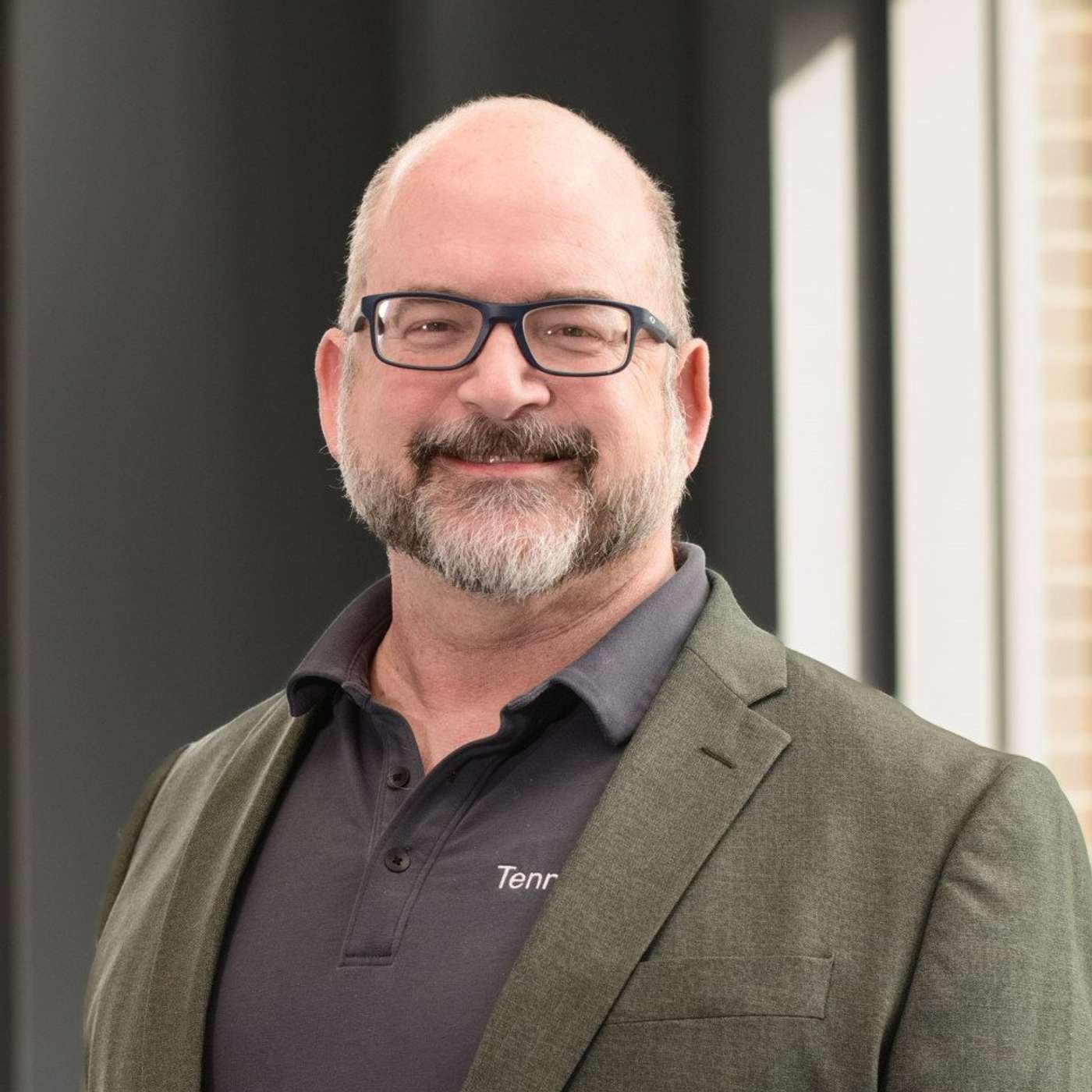
In episode 374 of the Clean Power Hour, Tim Montague welcomes Gil Hough, Executive Director of the Tennessee Solar Energy Industries Association (TenneSEIA), for a conversation following the organization’s 2026 conference.
Gil explains how the Tennessee Valley Authority (TVA) shapes this distinctive public-power market—and why municipal utilities and electric cooperatives are becoming a source of innovation in solar, storage, and distributed energy.
Tim and Gil discuss:
• How TVA’s federal public-power structure shapes opportunities for solar and storage developers
• Why TVA’s new Integrated Resource Plan includes a distributed-energy strategy alongside utility-scale solar, storage, and other generation
• How annual requests for proposals are changing TVA’s approach to large-scale solar and storage procurement
• What the invitation-only Resource Solicitation Cluster means for project selection and interconnection studies
• How generation flexibility gives local power companies room to develop solar, storage, and virtual power plants
• What recent storm outages reveal about the need for local resilience and community-scale microgrids
• How TVA’s decision-making and funding model differs from the investor-owned utility model
• How TenneSEIA’s committees and utility relationships help developers, manufacturers, and local power companies collaborate
For developers and energy professionals, the conversation highlights two routes into the market: TVA’s utility-scale procurement process and partnerships with local power companies pursuing distributed resources.
Gil argues that solar, storage, and better load management can help utilities use their infrastructure more effectively and mitigate cost pressures. Tim explores his vision of a grid of community-scale microgrids, with substations serving as hubs for nearby generation and storage.
Listen for a practical look at how procurement, utility partnerships, economics, and resilience are shaping the next phase of clean energy in the Tennessee Valley.
MEET TIM AT ILREC 2026
Tim Montague will be at the Illinois Renewable Energy Conference (ILREC), October 19-20, 2026, at the Bloomington-Normal Marriott and Conference Center in Normal, Illinois.
ILREC brings together leaders from across Illinois’ renewable energy industry to discuss the policies, technologies, market trends, and business challenges shaping the state’s clean energy future.
Learn more and register at https://illinoisrenewableenergyconference.org/
Connect with Gil Hough
TenneSEIA website: https://tenneseiasolar.com/
Gil Hough LinkedIn: https://www.linkedin.com/in/gilhough
Connect with Tim
Clean Power Hour
Clean Power Hour on YouTube
Tim on Twitter
Tim on LinkedIn
Email tim@cleanpowerhour.com
Review Clean Power Hour on Apple Podcasts
The Clean Power Hour is produced by the Clean Power Consulting Group and created by Tim Montague. Contact us by email: CleanPowerHour@gmail.com
Corporate sponsors who share our mission to speed the energy transition are invited to check out https://www.cleanpowerhour.com/support/
The Clean Power Hour is brought to you by CPS America, maker of North America’s number one 3-phase string inverter, with over 6GW shipped in the US. With a focus on commercial and utility-scale solar and energy storage, the company partners with customers to provide unparalleled performance and service. The CPS America product lineup includes 3-phase string inverters from 25kW to 275kW, exceptional data communication and controls, and energy storage solutions designed for seamless integration with CPS America systems. Learn more at http://www.chintpowersystems.com
0:50
I mean, literally, we have case studies where you know circuits that had enough solar and storage on them did not have to go out where all the other circuits did. You know, I think you're seeing that in Texas with how the grid has become much more stable as solar and storage has come on mode is becoming just critical. In all the you know all the communities and co-ops are equally aware that if they don't have enough generation, what they have to do is be smarter and more resilient with the generation they have.
Tim Montague:
1:21
Join clean energy leaders from across Illinois at the 2026 Illinois Renewable Energy Conference, October 19 and 20, in Bloomington Normal. Explore the policies, technologies, and partnerships shaping Illinois's energy future, with sessions covering solar storage, grid resiliency, workforce development, and more, I'll be there both days and look forward to connecting with you. Register today at IllinoisRenewableEnergyConference.org. The The
intro:
1:53
clean energy industry is moving fast. The deals are getting bigger. The technology is evolving, and the stakes have never been higher. Welcome to the Clean Power Hour, the podcast for solar, storage, and microgrid professionals who want to stay ahead of it all. Each week, your host Tim Montague, industry advisor and president of Clean Power Consulting Group, brings you unfiltered conversations with the leaders actually building the energy transition. Now, here's your host Tim Montague.
Tim Montague:
2:27
Today on the Clean Power Hour, Tennessee, the Tennessee Valley is a very interesting and unique place in the United States, and I'm joined by Gil Hough, the director of Tennessee. It's great to see you back on the show, Gil.
Gil Hough:
2:42
Yeah, Tim, great to be here. Always enjoy engaging with you and talking about the you know rapidly evolving market we have here and everywhere else.
Tim Montague:
2:50
We're on the heels of your 2026 conference, it's a great conference because it's energy professionals, but it's also a lot of utilities. Quick, set the table: What is Tennessee, and and how does the TVA make it so different?
Gil Hough:
3:09
Yeah, no, Tennessee is the main, you know, business association for the solar and storage industry that works in the Tennessee Valley. The market set by TVA. We're national affiliate of National CIA, and you know, TVA is very unique. It is a, it has a couple different, you know, it's a federal agency, you know, so FARC is like a sister agency. DOE is a sister agency to TVA, and it has a very broad mandate set by the federal government. You know, beyond you know generating power and transmitting power, it also has an economic Development mandate, environmental mandate, controls the waters. So as a flooding mandate, it was set up as part of the Great New Deal. So it has a very broad mission, and it makes for you know a fascinating market here. You know, we we operate very differently than anywhere else. The
Tim Montague:
4:14
Clean Power Hour is brought to you by SDE Sinclair Designs and Engineering, fixed tilt and carport racking, design, engineering, permitting, and manufacturing all under one roof in Michigan. No outside vendors, no waiting in someone else's queue, just fast turn around and steal that ships when you need it. Ask Ag Energy Co. in Illinois or Sunrise Solar in the Mid-Atlantic; they'll tell you what it's like to work with the Sinclair team. SDE Everything in-house. Visit Sinclair-Designs.com. I guess let's start with some of the standout talks that you and I witnessed. The opening keynote by Janet Rayberg, the CEO of EPB, which is the Chattanooga Muni, was mind blowing. What were your takeaways?
Gil Hough:
5:11
Yeah, no, I gotta admit, I think it's best keynote we've ever had. She's both a fabulous speaker and a visionary one, and I think she was very eloquent in how she, you know, put out that vision. You know, not just on solar and storage, where they're doing a tremendous amount of innovation, but also on quantum technology and computers and you know communication really visionary leader and you know Janet was a fabulous way to kicking it off you know obviously this you know conference we did have a lot going on compared to past ones on on storage we have a lot of manufacturers. In the valley, and so there's a lot of conversation both with manufacturing, with storage, and a quickly diversifying market. I think you know this is probably the most diverse you know conference we ever had. You know, talking about you know virtual power plants, microgrids. There's a lot of of things happening, and while you know TVA recently passed its integrated resource plan, which does include pretty large amounts of of solar and energy storage on the utility scale side, you know it's basically 12 gigawatts of solar on you know new solar on grid by 2040 and 6 gigawatts of BES, but also you know you saw by a lot of CEOs that were speaking a lot of the muni's in co-ops, both doing a lot of solar and storage projects on their own, and TVA has given increased flexibility for their what what we know here in his valleys, local power companies to lead and to innovate, and you know, I think that I particularly was struck by a lot of the stories, a lot of the innovation happening on the ground with those munis and co-ops that TVA services, yeah, and it's pretty exciting, and it's across the valley that we're seeing that kind of integration. I mean, innovation is Middle Tennessee, Memphis Lake Gas and Water, Huntsville, Alabama. They're all having you know new exciting programs and integrating a host of new technologies. That you know, it's it's the fastest growing market really have. I mean, in addition to like the residential commercial market, utility scale TVA, the amount of of innovation happening with the muni's and co-ops is is probably was the most exciting thing that was being talked about at the conference this year.
Tim Montague:
7:51
Quick context on Gil's numbers: TVA's board approved its new resource plan on august 20 through 2040. The plan calls for three to 12 gigawatts of new solar and one to eight gigawatts of storage. Gas leads with up to 26 gigawatts. So where do developers fit? I asked Gil.
Gil Hough:
8:14
TVA, frankly, had made a lot of mistakes in a lot of its previous attempts to bring on large-scale solar and storage. They, in some cases, were getting too aggressive. They had a five gigawatt RFP a few years ago for all carbon resources, and they are we're not used to and didn't have the processes to to frankly bring on as much as some of their early attempts were. They just weren't built right. They have not since switched to an annual RFP where the numbers are smaller but more digestible, if you will. So yeah, at the start of every year they now have a RFP. The biggest problem the the previous attempt was also is they would have one big attempt where they put out an RFP for very large numbers and they couldn't really manage the study process. The projects all went super slow. Now they get invited into the resource solicitation cluster. It's an invitation only, so they only study projects that when they look at them look like projects they want to contract for. So that means they're studying much fewer projects, and their interconnection staff are moving those much faster than previously, which was a huge problem before. So TBA has gotten a lot better and a lot more improved on their processes. Now they have an annual RFP that comes out first of the year. You get invited by summertime into the RSC, the Resource Solicitation Cluster, to be studied, and if you get invited, it means they like your project. You know, so if there's not any major problems with it, there's a good track. You know, you're going to get contracted for it. So it's not perfect yet. There's still some things, and they've been really good about listening to us as we come up with recommendations and tweaks. And it's an ongoing process, but it's much better than it was even a couple years ago. So for large-scale developers interested in selling to TVA directly, it is the annual RFP that you want to get into.
Tim Montague:
10:34
I got to interview Matt Beasley with Silicon Ranch, one of the best known utility developers that hails from Tennessee. I think they were founded in Nashville. Their founders were former political operations. Is that right?
Gil Hough:
10:53
We have the governor of the state, Redderson, was one of the founders in his economic development chief. Yeah, yeah. So, yep.
Tim Montague:
11:02
And and Silicon Ranch has really made a mark in in the Tennessee Valley and here in the Midwest. They have a very unique business model. They own their real estate. They don't lease their land. They have a long-term stake in keeping the land viable as well as keeping the energy flowing from the solar on the land, and that's very cool. But what when when when you think about 12 gigawatts, that doesn't it doesn't seem likely that a single developer will will will be responsible for all for all of that. And and is it going to be parsed out in like over a 10 year period, or how does that work?
Gil Hough:
11:51
Yeah, I think that what we're seeing it will be a combination of things. I do think the slow and steady is the approach we're working with, so they're not going to alter it at once. Absolutely not. No, Silicon Ranch is kind of the big dog of the valley. I think that's fair to say. They've been the most successful. They've landed a lot of projects here in the Tennessee Valley, but so has a number of other companies that have been very successful here, and you know I'm sure you we will get a mix. I mean a lot of that will be TVA directly. Part of that 12 is also being included in what's known as generation flexibility-that's the ability of the muni's and co-ops to generate their own power up to 5% of their load. So with Nashville and the big cities, that can be over 100 megawatts. A lot of them have done that project through that program. So it is-it's going to be a mix of resources. One of the things I'm most excited about about this new IRP, and I was on the IRP working group, so I have to admit I'm one of the authors of that, of the one of the key stakeholders, I should say, involved in that process, was that one of the three main strategies to integrate it was for the first time a distributed strategy, so that's more you know VPP type technologies. That's more you know a diverse set of technologies. TVA has never had a distributed focus before in how they do generation. So I think one of the things we're most excited about is not just utility scale, which yes, TV is going to continue to do that, but now they're looking more at partnerships, partnerships with LPCs, partnerships with private industries to generate a lot. So I do think that as they go forward, and I think it could end up being more than that, but that's the the goal set for 2026 is it's we're not going to see it anyway. It's going to be a whole much more diverse technologies. That the way those technologies are implemented would be much more diverse than previously.
Tim Montague:
14:04
Gil mentioned generation flexibility. Since 2020, TVA has let local power companies on long term contracts generate to 5% of their load locally, mostly with solar. In Illinois, we build our distributed market through state law. So I ask Gil where distributed energy comes from in the valley.
Gil Hough:
14:25
Well, the DG will be through the local power companies, communities, and the co-ops. TVA doesn't touch residential or commercial customers. Their customers are the muni's and the co-ops. But as we kind of heard, so I, you know, I think we're going to be a mix of those two, if you will. But I think you know where we're seeing the distributive focus is through those meetings and co-ops. We're really interested. TVA does give them the flexibility to do a lot of things because it is a federal agency. We're never going to have state legislation mandating or doing anything. Actually, it's illegal. The state of Tennessee, which is the biggest state in TVA, Cannot enforce energy matters. They can do some taxation and some related things that are important, but they can't tell TVA to do something. So it is self-interest. But I think we're coming to a place, and I think there's a lot of innovation. It's kind of the exciting thing here in the valley, where solar and storage, I think, have come to the place where they can make their own case, and I think you know you can somewhat think of immunity as a commercial client now. They have demand charges, they have savings, and they now see that solar and storage can actually help them in a lot of ways. So that's why we're seeing a lot of those innovations. The, you know, hats off to Lot. I mean, Doug McGowan with Memphis Light Gas and Water was one of the other, you know, presenters. I thought did an amazing case for solar and storage as a technology that both benefits them and then benefits the entire ratepayers. I mean, the projects we're seeing here always push down on the rates because they can do it cheaper than the traditional technologies that is most of what TVA's mix, and it's making the simple penciled out case that you know these technologies bring a real benefit to everybody, and that's you know unsubsidized these days. And so every major muni here is looking at developing VPPs and storage projects and everything, and it all because of pencils. That they're saying it pencils today. So, yeah, I don't think you need state legislation in distributed market long term. We've we've not had net metering here for a long time, but we do have a healthy residential market.
Tim Montague:
17:09
I got to interview Doug McGowan, president of Memphis Light, Gas, and Water, and what stood out was his driving emphasis on customer service. He is clearly on a mission to provide excellent customer service, and of course, one of those services is 24-seven, three-65 power when you want it right. Consumers fully expect the lights to be on 24/7 365, and that's not always the case. They should,
Gil Hough:
17:42
yeah,
Tim Montague:
17:42
and they should. But the TVA, the Tennessee Valley, is a unique geographic area. When you look at storm maps, okay, the TVA is a hot spot. It is. It has a unique weather pattern in the winter that you get these intense ice storms, and and you've had these ice storms repeatedly now in the in the last couple of years. Some of which have caused you know multi day outages for major metros, and and that's just no fun for anyone involved. But what else? When you think of Memphis or any of the other, I also got to interview Aaron Gill with Knoxville Utility Board, Middle Tennessee Electric, Brad Gibson. So you have a number of organizations, muni's, and related organizations that are providing leadership with the consumer front and center. And I'm sure it's a delicate dance, though, right? They they haven't overlord the TVA, and then they have a consumer that they have to serve, and they're trying to figure that out and and do a balancing act.
Gil Hough:
18:57
And you're right, though the extreme weather events that we've experienced, and we've had them from Memphis, Nashville, you know, it's it's you know Mississippi was really hit hard this year. Those do I mean, and I tell you, both the utilities that are hit and those who weren't hit are very blessed. You know, feel very blessed about that. But looking at the lessons learned, as we've gone weeks without power in very urban developed areas, and that's also not you know it's not acceptable. And they're now seeing solar and storage. I mean, literally, we have case studies where you know circuits that had enough solar and storage on them did not have to go out where all the other circuits did. It you know I think you're seeing that in Texas with how the grid has become much more stable as solar and storage has come on, and that's mainly with this, you know, utility scale storage. When it's both that and more distributed, I think we're seeing more and more the resilience that brings, and it's critical. One
Tim Montague:
20:04
of the ways that communities can provide or secure, you know, resiliency is through community scale microgrids, and I was fortunate enough to moderate a panel on the topic of the future of microgrids in the Tennessee Valley with Aaron Bowman, president of ELM microgrid, Will Flegger of Schneider Electric, Jason Reed with EPB Chattanooga, and Eric Schmidt of the Tennessee Department of Environment and conservation, and you know I'm on a mission, Gil, to get the word out to the world that community scale microgrids really are the future. We we are going to have a grid of microgrids, and just think about every substation being the heart of a microgrid having. Next to it, or in proximity to it, a large solar array and a big battery, and yeah, you could use wind, you could use generate gas generators. You know, you want some, you want sources of generation, and you want sources of storage, and and the substation, and then bada beam, bada boom! You have community scale microgrid capabilities, and I just you know California has microgrid legislation now. The MIP, it's called the Microgrid Incentive Program. Every state in America is going to have something like this, in my opinion. Maybe not Tennessee because it's the TVA that drives these things. Maybe the TVA has will be will be well, as you mentioned, it's happening from the ground up. So, what are your thoughts about microgrids and and if you're an energy professional, I'd like to kind of segue into how do energy professionals work with Tennessee, and what is the value proposition? I guess of participating in Tennessee.
Gil Hough:
22:50
Yeah, two great questions. You know, first of all, as I said, we're we're we're seeing the case made for microgrids every day here. You know, with the resilience, with the value can do managing load. I mean, one of the challenges
here:
23:08
how fast we have growing demand right now. TVA just released the record amount of of peak days during you know this past month. Not just once or twice; they had like you know eight record days because of the because
Tim Montague:
23:26
of the hot weather you're saying because
Gil Hough:
23:27
of the hot weather, but also because of the growing demand. I mean the bottom is rising very fast here, especially in Middle Tennessee and certain areas. We're having incredible growth, and TBA is you know much as they have in the pipeline of increased generation. Most experts think they don't have enough, and they're limited by debt ceilings. So they are very aware they have to get smarter, not not just you know add more generation. And so I think that's where microgrids and storage technologies and ways to not just add more generation, but to manage that load is becoming just critical. In all the you know all the communities and co-ops are equally aware that if they don't have enough generation, what they have to do is be smarter and more resilient with the generation they have, and as they have seen, you know, Nashville and Memphis and many of the rural counties have these, you know, weather events that have just knocked out huge swaths of their power. They they say, okay, you know, we have to get smarter and more resilient. So I do think the the case for microgrids keeps, unfortunately, you know, making itself more and more apparent every day because these events just seem to be happening more and more here, at least in the Tennessee Valley.
Tim Montague:
24:58
Two numbers explain the squeeze. On September 3, TVA hit 33,270 megawatts, a record for September, and Congress caps TVA's borrowing at $30 billion, unchanged since 1979. So, how do local power companies pay for microgrids and storage?
Gil Hough:
25:20
That's a nice, easy question. Thanks, Tim. Yeah, it's it's
Tim Montague:
25:25
a puzzle. I know.
Gil Hough:
25:26
I think it's a puzzle everywhere. I do think. I mean, our rates are going up here as demand grows up. You do have to build new infrastructure. Nobody wants to hear that. Rates, of course, are going up everywhere as demand is growing. You know, in in most places right now, and so you do have to pay for that. Now, I do think I mean you can make a strong case that solar and storage can actually mitigate you know those increasing rates, but everything costs more than it did even a couple years ago. A lot of the tax credits that help reduce the costs have gone away, except for storage. But you know, storage of course has you know every every technology has challenges. So how do you pay for it? I mean, yes, rights is going to be one. Ideally, there's a federal role for some of these technologies. I'd like to think you know we'll we'll come back at least to help equal the playing field. But you mean that's I I do think you can make more and more. We're seeing where actually these technologies help at least mitigate the need for increasing. Rights, as it's not just a matter of of you know building new infrastructure. It's a matter of building smarter infrastructure that we can leverage more, and we just have to be making sure we're making the case and making the decision makers smarter about the value of these.
Tim Montague:
27:00
Yeah, in most states, investor-owned utilities follow a different model. The utility proposes an investment. A state commission approves the spending. The cost goes into the rate base, and shareholders earn an approved rate of return on the capital. The TBA model works nothing like this.
Gil Hough:
27:19
So it's it's both easier and harder. I would say it's easier because TVA is both basically the Public Service Commission and the utility. You know there is no oversight to TVA. The TVA board can approve what they want to approve. Now they have part of the TVA mission is low rates that is built into the TVA Act, but keeping the lights on and economic development are also part of the TVA Act. So they don't need approval to do anything. They can fund what they need to fund to keep the lights on and keep economic development going forward here in the valley, so we it's it's you know we don't have to turn to anybody, but it's also a nonprofit. It's a government service. There is you know one of the beauties why we have some of the lowest rights in the nation is because nobody is making money. You know TVA has their mandates and their mission, but they don't have you know they don't have an entity that needs to make money. They're they are owned by the people of the valley and the people of the nation, and so they don't have to worry about anybody making money. They just have to make sure that they are being good stewards of our our resources. The thing to
Tim Montague:
28:46
realize is that you can avoid installing transmission and distribution lines if you install microgrid equipment. So when you install big batteries and solar farms, you can avoid more transmission and distribution. Keep the resources local. You're still installing infrastructure, but then you're providing resiliency, which has an economic benefit. Right, no outages means more economic growth. And then another data point that came up on our news roundup last week was that consumers can save huge amounts of money by, for example, driving an electric vehicle now, because gasoline prices are spiking. Consumers in Illinois could save 66% by driving an EV, which is driving EV adoption up. the The Trump administration wants to push back on electrification of transportation, but they're actually incentivizing it with the with the war in Iran, which is causing gasoline prices to spike. So, DG in the form of solar and batteries is ultimately a hedge against rising costs of energy. The you know which is one of the few guarantees in life. Your electric bill and your gas bill are going to go up, and so the more solar and batteries you have in your life, whether that's at the building level or the community level, the better off you're going to be.
Gil Hough:
30:19
No, 100% And you know, Tim, you asked earlier about what you know. What is the the benefit of of working with Tennessee for our members? Yes, please. And you know, I I think we we have a unique relationships with utilities here, whether it's TVA or the muni's and co-ops. We work very closely with them, and what we try to do is we try to be value of them to make sure they understand these things. We we kind of have a partnership approach here, and we have found that to be very effective in the way that we work here. You know, you know, we have different committees within Tennessee, and they have different focuses because we do represent the full value chain. You know, from one guy in a truck, you know, doing residential to some of the largest utility-scale developers and manufacturers in the world. And so we have, you know, our utility-scale committees focused on the TVA market. But you know part of that is we have some really trusted relationships with those TVA staff, with the origination and interconnection and key staff members at TVA, and they see us as a great resource because a lot of times if we make. Them be more successful. It's a mutual success, you know. With our committee that's focused on the local power company market, we have members now that our Knoxville Utility Board and Middle Tennessee. Some of these more innovative ones have actually joined Tennessee themselves and are active on our our committees and groups, and because they're looking for partnerships, they're looking for resources, and our members are are great resources, and so we we work to help them be successful. The residential commercial market, our distributed committee is you know all the major players in that market, and a lot of manufacturers, storage, and distributed-you know-members and manufacturing businesses here in the valley working together to improve that market and be able to be more effective. So we have great relationships and different relationships depending on the focus of those companies with all the players here. And you know what we try to do is we're trying to grow the whole market and have win wins. We're not particularly antagonistic most of the time. We're about mutual success, but that's been a you know they love us because of that. We are a great resource. That's why when you came to the conference, you saw so much many staff from the utilities there. You saw a lot of the executives. They were feeling really positive and excited. They're eager to hear from us about more things they can learn. So when you very eloquently you know put out the case, that's part of what we're trying to do is make sure they understand those cases for microgrids, for solar and storage, for other clean energy technologies that can be part of that success story. We're all about partnerships and we're all about mutual success, and I think that has worked really well here in the valley.
Tim Montague:
33:49
Well, I don't have any other questions at this time, Gil. Have you decided where the 2027 conference is going to be?
Gil Hough:
33:58
I am working on that right now. We're probably going to be in Knoxville next year is where we're looking, and I am finalizing the hotel contract hopefully here the next month. But we'll be putting out that save the date hopefully soon. And Tim, would love to have you again. You you know love to have you there. You do a fabulous job moderating those conversations, and of course we love working with the Clean Power Hour to help share some of those great stories and some of the innovation happening here in the Tennessee Valley. The
Tim Montague:
34:32
Clean Power Hour is brought to you by SDE Sinclair Designs and Engineering, fixed tilt and carport racking design, engineering, permitting, and manufacturing all under one roof in Michigan, no outside vendors, no waiting in someone else's queue, just fast turnaround and steel that ships when you need it. Ask Ag Energy Co. in Illinois or Sunrise Solar in the Mid-Atlantic. They'll tell you what it's like to work with the Sinclair team. SDE everything in house. Visit Sinclair-Designs.com. Well, it's been a great pleasure getting involved with Tennessee, and you know my listeners can look forward to lots of content from the conference. We did eight interviews, so you can look forward to some of that content, we're going to sprinkle it throughout the next couple of months. But I want to say thank you so much to Gil Hough, the director of Tennessee, the Tennessee Solar Energy Industries Association, for coming on the show. Gil, how can our listeners find you?
Gil Hough:
35:40
Yeah, well, the easy way is our website tennesseeasolar.com, and but don't hesitate to reach out to me. Happy to share my contact information if anybody wants to follow up. We're always interested in people interested in the market here and helping to grow it. And really appreciate you,
Tim Montague:
36:02
Tim. I'm Tim Montague. Let's grow solar and storage. Check out all of our content at CleanPowerHour.com. Tell a friend about the show. That's the single best thing you can do to help others find this content. And reach out to me on LinkedIn. I love hearing from my listeners. Again, I'm Tim Montague. Let's grow solar and storage. Thank you so much.