Dual-use solar financing in action: Sunrise Solar’s Richard Stoltzfus built a 700 kW behind-the-meter array for Harbor Sales Company. The build stacks a USDA REAP grant with a Maryland MEA grant and drives the customer’s levelized energy cost to near zero.
A 700 kW behind-the-meter solar array now offsets 70 percent of the electric load at Harbor Sales Company, a plywood and sign-panel distributor that has run out of Sudlersville, Maryland since 1931.
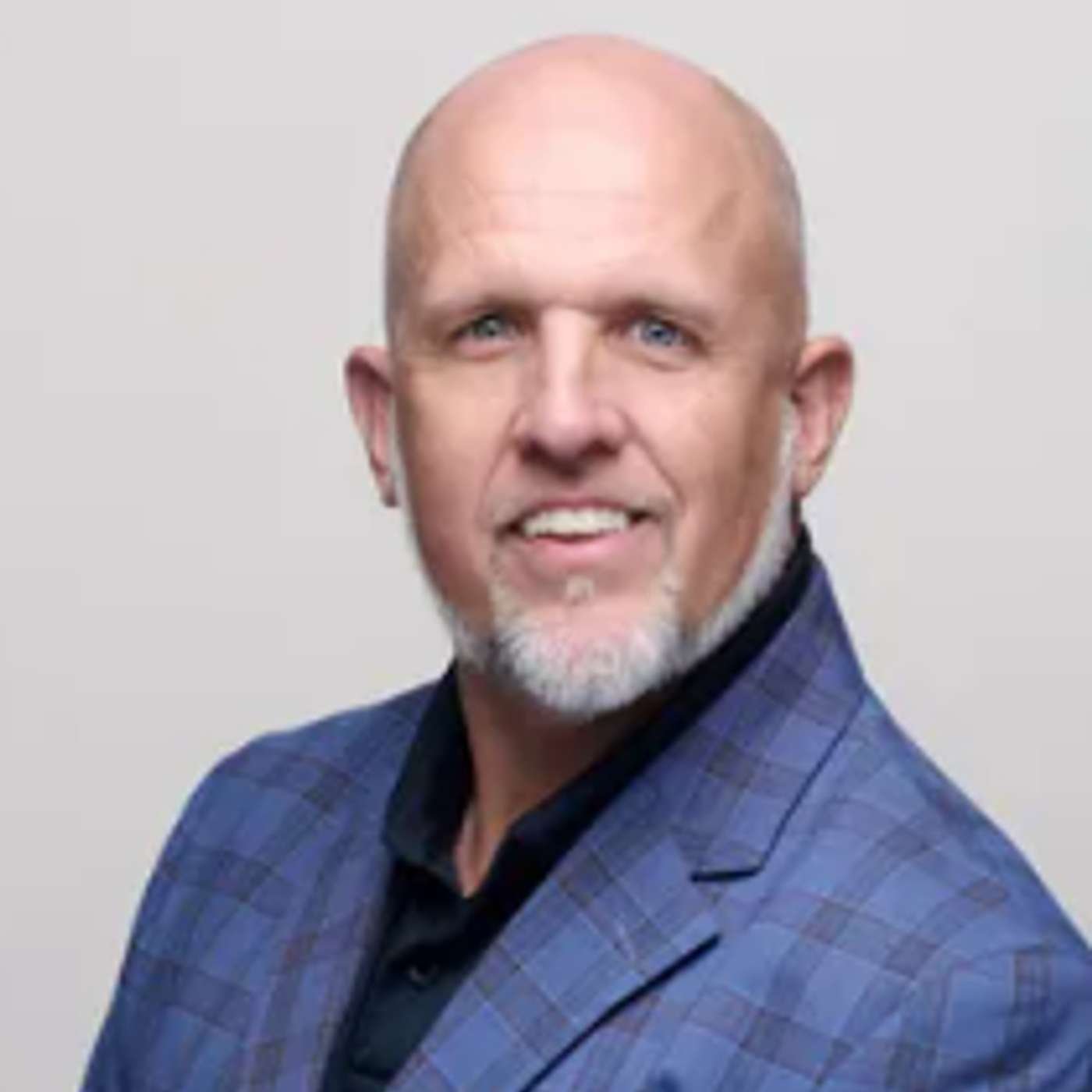
Richard Stoltzfus, CEO of Sunrise Solar, and Kendrick Tice, COO of Sunrise Solar, join host Tim Montague to walk through their Chestertown-based company’s build for Harbor Sales.
Montague and Stoltzfus dig into the mechanics of commercial solar incentives in Maryland, the sunset of the 30 percent federal ITC, and why rural electric cooperatives in the PJM region are capping new solar interconnections even as demand for grid capacity grows.
Here is what you will learn in this conversation about dual-use solar and commercial solar incentives:
- Learn how Sunrise Solar stacked a USDA REAP grant with Maryland’s MEA grant to push a customer’s levelized cost of energy toward zero on a 700 kW system.
- Find out how a 700 kW array offsets 70 percent of Harbor Sales Company’s load and pencils out to more than 3 million dollars in savings over 25 years.
- Understand why the 30 percent ITC sunset and Delmarva Power’s tightening interconnection limits pushed this project from planning into construction.
- Hear Kendrick Tice explain why Sunrise Solar sources its racking from one manufacturing partner instead of juggling multiple vendors, and what that does for project timelines.
- Hear Tim Montague weigh in on whether rural cooperatives in the PJM region can keep pace with rising demand for grid capacity and where incentive structures differ from state to state.
Maryland’s grant-stacking model, layering a USDA REAP grant on top of a state MEA grant, offers a template for other states as the federal 30 percent ITC winds down. At the same time, rural cooperatives across the PJM footprint are capping new solar interconnections, a constraint Stoltzfus and Tice say is already blocking chicken farmers and dairy operations from going solar. Professionals financing behind-the-meter projects in cooperative territory will find the co-op discussion directly relevant to deals in the pipeline right now.
Connect with Guests
Connect with Tim
Clean Power Hour
Clean Power Hour on YouTube
Tim on Twitter
Tim on LinkedIn
Email tim@cleanpowerhour.com
Review Clean Power Hour on Apple Podcasts
The Clean Power Hour is produced by the Clean Power Consulting Group and created by Tim Montague. Contact us by email: CleanPowerHour@gmail.com
Corporate sponsors who share our mission to speed the energy transition are invited to check out https://www.cleanpowerhour.com/support/
The Clean Power Hour is brought to you by CPS America, maker of North America’s number one 3-phase string inverter, with over 6GW shipped in the US. With a focus on commercial and utility-scale solar and energy storage, the company partners with customers to provide unparalleled performance and service. The CPS America product lineup includes 3-phase string inverters from 25kW to 275kW, exceptional data communication and controls, and energy storage solutions designed for seamless integration with CPS America systems. Learn more at http://www.chintpowersystems.com
0:50
And then when I got into solar and electric, I said, "You know what, Jim? You need solar. I know you've been bugging me for years. That was 10 years ago. That was probably
Jim Covington:
0:58
10 years ago. It took you that long to do it. Yeah.
Richard Stoltzfus:
1:01
But now we got now we got a solar system with Jim, and I believe it's going really well. Seems like it's
Jim Covington:
1:06
going fun. The
intro:
1:08
clean energy industry is moving fast. The deals are getting bigger. The technology is evolving, and the stakes have never been higher. Welcome to the Clean Power Hour, the podcast for solar, storage, and microgrid professionals who want to stay ahead of it all. Each week, your host Tim Montague, industry advisor and president of Clean Power Consulting Group brings you unfiltered conversations with the leaders actually building the energy transition. Now, here's your host, Tim Montague.
Tim Montague:
1:42
Sunrise Solar, out of Chesterton, Maryland, built the system you're about to hear about: 700 kilowatts behind the meter at a small factory, Harbor Sales Company in Suthersville, that happens to be a dual-use solar project. We start there. Here's Jim Covington.
Jim Covington:
2:00
I'm Jim Covington, and it's the Harbor Sales Company in the booming metropolis of Suthersville, Maryland. Okay, all right. Harbor Sales been in business since 1931. We started out. We started out in Baltimore, did a bunch of stuff. Now what we're doing is we just keep on growing. So we needed more space. We moved over here. So we went from 30,000 square feet to 120,000 square feet with a little bit of growth there in the middle, and started adding a bunch of equipment. We what we normally do is we sell sheet panel products. We sell aluminum. We sell plywoods. We sell plastics. We sell anything you possibly imagine that comes in a sheet, and then we load that on 52 trucks every day that go out all over the Mid-Atlantic to make deliveries to all these different shops and different places. I'll
Richard Stoltzfus:
2:46
tell my story a little bit. With the first time I met Jim, I did construction with my dad all through my life, and we did a lot of buildings and that type of stuff. And I needed this product, and someone said, "Hey, you should go see Jim. Came over there. I ended up buying pallets or stacks of this four by eight plywood that we were using on the inside of the building, and that sort of built a relationship. And then when I got into solar and electric, I said, "You know what, Jim? You need solar. I know you've been bugging me for years. That was 10 years ago. That was probably 10 years ago. It took you that
Jim Covington:
3:20
long to do it. Yeah.
Richard Stoltzfus:
3:21
But now we got now we got a solar system with Jim, and I believe it's going really well.
Jim Covington:
3:26
Seems like it's doing fine.
Tim Montague:
3:27
What was it that pushed you over the edge and made you
Jim Covington:
3:29
do the? For a long time, we felt as though it was having the history that the panels actually last and they actually do what they're supposed to do, and you know that really kind of did it. I talked to a couple other guys who had Richard do some stuff for him, and they were confident with what he could do and how he did it, and so that so we kind of went and decided to go ahead and do that. It also helped that we were able to get some additional grant money to help push the program along a little bit. So that was that was that was another huge help that that grant money was could be available if if if you you know pat patted the right backs and shake the right hands and filled out the right paperwork and all that stuff.
Tim Montague:
4:09
The Clean Power Hour is brought to you by SDE Sinclair Designs and Engineering, fixed tilt and carport racking, design, engineering, permitting, and manufacturing all under one roof in Michigan. No outside vendors, no waiting in someone else's queue, just fast turnaround and steel that ships when you need it. Ask Ag Energy Co. in Illinois or Sunrise Solar in the Mid-Atlantic. They'll tell you what it's like to work with the Sinclair team. SDE Everything in-house. Visit Sinclair-Designs.com. All right, we're on the eastern shore of Maryland in the Chesapeake Bay. We're in farm country. It looks a lot like Illinois, but we're on the East Coast. We're going to visit a little solar company called Sunrise Solar, Richard Stoltzfus, and we're going to one of his projects, 700 kW ground mount. Yeah, so this project we've been working
Richard Stoltzfus:
5:07
with Jim,
Tim Montague:
5:08
just
Richard Stoltzfus:
5:09
kind of working through where we think this project would work for him. It took a little while. We've been probably talking to Jim for five years at Harbor Sales, and he finally we were like, Jim, look, it's now or never. Let's go. And he said we took a look at the numbers, and it worked out really well.
Tim Montague:
5:28
Yeah, and when you say it's now or never. What are you referring to?
Richard Stoltzfus:
5:33
Well, we knew Maryland had some pretty good grant programs, and then the 30% ITC was going to sunset, and on top of that, we're seeing Delmarva Power starting in the closed grids, and and this is actually a perfect example. This project. When we first started it, we were allowed to do a 900 kW system, and then as we worked through the details and they started looking at some of the loads that were coming on, they said, "Now we're going to put you back to 700. So we ended up doing 700 kW DC.
Tim Montague:
6:06
Yeah,
Richard Stoltzfus:
6:07
and
Tim Montague:
6:08
and that offsets what percent of their load?
Richard Stoltzfus:
6:10
About 70 percent of Jim's load.
Tim Montague:
6:12
Okay,
Richard Stoltzfus:
6:12
and we think it could maybe do some demand mitigation too because most of his load is during the day, so we're we're going to still you know watch that as it goes along to see if
Tim Montague:
6:22
yeah
Richard Stoltzfus:
6:23
Delmarva will give him any credit on that. But
Tim Montague:
6:25
sure,
Richard Stoltzfus:
6:26
that wasn't part of the payback.
Tim Montague:
6:27
Yeah, generally we're just offsetting the kWh supply charges, and then you set you mentioned grants, other incentives. What are the incentives here in Maryland?
Richard Stoltzfus:
6:37
So we were able to get Jim a USDA grant, and that was 50 percent. And then we were able to get him a Maryland grant, which kind of came in on the back end. It wasn't even a conversation when we first signed the contract. And then, as we were working through the permitting and interconnection, we found out, hey, Maryland Grant would be this this project would be a good candidate for Maryland, the MEA grant as well. So we ended up getting him a little bonus on top of that.
Tim Montague:
7:05
Nice.
Richard Stoltzfus:
7:05
Yeah, Jim still owes me.
Tim Montague:
7:08
And why? Just in general, for for a company like this, what's the basic the basic math? You buy a solar array, it pays back with savings, incentives, and the net savings are what on an annual basis.
Richard Stoltzfus:
7:25
So on well, I'm not sure about the annual basis. I think it's around 96,000 on the annual basis. Yeah, but over 25 years, he was north of 3 million, and that included some renewable energy credits and a few other things. But
Tim Montague:
7:39
yeah, so in in my experience, you know, CNI customers they want to save money. They may care about the environment, and clearly this is an Agriville takes project. He's got some attachment to the environment as well, but everybody wants to save money, right? And that's generally why behind-the-meter solar is happening.
Richard Stoltzfus:
7:56
Yeah, no, and and on top of that, let's
Tim Montague:
7:58
walk.
Richard Stoltzfus:
7:59
Jim was able to get. I think we levelized Jim's cost at almost zero. So with levelized cost of energy, he sort of can predict his energy as he moves forward, and that was one of the things that he was really curious about. And Jim went one step farther out. I'll come back to this sign here. Well, he, we were talking about animals because Jim loves animals, and he was like, "Hey, you know what? I'm going to put sheep in there. And he, I never even heard of these sheep before. The black Welsh mountain sheep. There's only like 10,000 in in the worldwide population. How did you find this breed?
Jim Covington:
8:35
By this is all right. The way we found it, basically, my my my oldest son does does agriculture stuff. So he was doing an internship at at Y Mill, at Y Angus down in Y Mills, so he went up there and helped with the sheep. So I went out there, saw him one day, and we were looking across the the creek or the river down there, and I see all these black sheep going back across in front of this mansion, and I'm like, "The heck is that? He said, "Oh, those are, you know, that's the Y plantation, and that's where to keep it? The birthplace of Frederick Douglass. I'm like, okay, but whatever. So years later, I'm like, you know what? We got to do something. We got to keep the grass cut. So I'm not letting Craig Ingram in there to cut grass. You don't know Craig, but I'm not letting him in there to cut grass. So let's do sheep. So what sheep do we want? I said, saw these black sheep down in Y Mill. So let's go get those. So I talked to my wife about it. She's like, "Oh no, I know her. That's Kim. I work out with Kim. Blah blah blah. And let me get you Casper's number. Casper's the shepherd, so I call Casper. I say, "Casper, what can you do? No problem. I'll set you up. Here's how much they cost. Here's what we're doing. So I went down, picked them up, brought them back up here, and it gives a good PR spin, and it helps. And everybody inside kind of gets into it, and I don't have to have Craig cut the grass and break all the solar panels. It
Richard Stoltzfus:
9:52
was funny. They had a show here in the spring, and Jim said, "Man, my staff are all into the sheep. They got names and everything. It's kind of a cool story that he did here with with his business and his and his team of people.
Tim Montague:
10:04
Yeah, it turns out you know I hear from many O and M companies that it's cheaper to run sheep on a project than to mow the project, so it again it's cost savings and in this case dual use. You're growing sheep, you're growing solar. Let's let's go behind the fence.
Richard Stoltzfus:
10:23
And the project actually we used we we love our racking companies. Sinclair Racking can't can't ask for a better partner. They've been they've been a big part of our growth. It's been amazing.
Tim Montague:
10:35
You wouldn't have said that the first time you met them, though. Tell that story, Richard. Well,
Richard Stoltzfus:
10:40
well, I came with a little bit of competitiveness because I came to Kyle. I said, Kyle, I'm flying out there to see your facility because I got burnt twice by other companies, and I said, Nah, we're. Not playing that game, so I said, "I'm flying out there. So me and Dan Baugher, my project manager, we jumped in an airplane. It was cold winter time, flew into Michigan, and we were like,"Nah, we're not. We're going to meet these guys. I'm telling you, when the very moment I met those guys, and when we got on the airplane to leave to go back home, I said, "They're the real deal, like the real deal. These guys are hands-on making the project, and and Kendrick Tice would tell you, my COO, he would tell you that unbelievable how they're the process. You can talk a little bit about their process. Absolutely.
Kendrick Tice:
11:28
So our relationship with them is such that we'll have a project come up, and Dan can call them and say our project manager will call them and just say any X amount of posts here because we know how it's going to work. They know what panels we use. They know what inverters we use, and we never worry if something's coming to a job site or not. Timelines aren't an issue. Kyle and his team-they just deliver, yeah-and it makes our process smooth, really smooth, actually. This project, we used
Richard Stoltzfus:
12:01
two.
Kendrick Tice:
12:02
Okay, we used two Chin 350s on this
Tim Montague:
12:05
one. Okay,
Richard Stoltzfus:
12:06
so this is
Tim Montague:
12:07
fairly new. Yeah,
Richard Stoltzfus:
12:08
it's a year old.
Tim Montague:
12:09
Yeah. Okay.
Richard Stoltzfus:
12:11
So the other thing that we really like about Chin is we were able to do these in two inverters for the whole project, which cuts down a huge amount of labor.
Tim Montague:
12:20
Right. So these are Chin
Richard Stoltzfus:
12:22
350s. 250s.
Tim Montague:
12:25
Sorry, 250s. Two inverters, combiner box. Yeah.
Richard Stoltzfus:
12:30
Yep.
Tim Montague:
12:31
And.
Richard Stoltzfus:
12:33
And then that's the disconnect.
Tim Montague:
12:35
Gotcha, gotcha. Humming away. The
Kendrick Tice:
12:40
other piece that we have to deal with here in this region is telemetry. The utility has to be able to shut all their systems down remotely. Yes. So we always have to build that in, and it pairs really well with Chint. Chint's easy to.
Tim Montague:
12:57
That's the system, and that's the customer. Now here's the company that built it. Back at the shop at Chesterton, we sat down with Richard Stoltzfus and his COO Kendrick Tice to find out how Sunrise Solar got started.
Richard Stoltzfus:
13:11
Tell the origin story. How did Sunrise get started? So Sunrise started in 2010 when we started getting requests. We had a roofing, we had a roofing and construction company, and we started getting requests like, "Hey, would you come do this solar install? But it was very, it was these paper companies weren't necessarily good at their jobs. They were, they were getting it wrong. They were selling good, but they were getting it wrong. The install was not going the way it was. Like, oh, we're going to put panels on the north side. Like, even I knew that it wasn't a good thing. Just
Tim Montague:
13:45
increasing the size of the project, right? That's one of the tactics.
Richard Stoltzfus:
13:49
I know, but I mean, you know the right thing. Yeah, you know the right thing, and I grew up in that way. My dad was very much about you do the right thing, and you can stay in business forever. You do the wrong thing over and over again, and you will be out of business. You will not make it. Yeah, it's the truth. It's kind of simple. Yeah, it's kind of stupid simple. You talk about
Kendrick Tice:
14:06
origin stories. This is just crossing my mind now, Richard. Richard, dad was a carpenter. They used to build chicken houses, then they started building houses. And it was my senior in high school as a summer job, and I worked with Richard. But they always tackled Richard's dad. Always tackled projects that were like nobody wanted them, right? It took crazy work. Some of it was dumb, right? But they would do those projects and beautiful projects. They were hard because some of it just took brute strength. And then when Richard did roofing and post frame construction, and even when he had the outdoor living company, we would do things that most people were like, ah, we don't want to touch. And that's really that's the solar company founded on that principle of like, what hard thing do we got to do to get a project across the line?
Richard Stoltzfus:
14:59
Yeah, yeah, it was just fun. It was fun getting to say, hey, there's another industry out there. But how did you find out about solar? How did you know it was a thing? Well, that's kind of when I started seeing it. I'm like, and then I started hearing. I started like researching, and like you know what, this might be something we want to get into because we're good at tackling stuff that is different. And I called Dan Baugher up. Dan was helping me from time to time on jobs, and he but he was a surveyor working for a surveying company. I said, Dan, you ever think about doing solar. Would you do it if I started the company? So we sat down. We had a whole conversation about it, and he was like, "I'll do it if you can. So I said, "I'm going to become a sun power dealer, and if I can be, if I get accepted, we're going to California for schooling. And two months later, he called me,"What's going on? And I'm like,"I don't." Yet, and they call me one day. I call first phone call. Dan, we're in. Oh, we're headed to California. So you were a sun
Tim Montague:
15:58
power dealer right out of the gate.
Richard Stoltzfus:
15:59
Yeah. Oh, cool. Day one. Oh, and that wasn't normal. They even told me though. Yeah. We don't often do this. Yeah. We were loyal to the end, and we sold a lot of projects. That was
Tim Montague:
16:09
2010.
Richard Stoltzfus:
16:09
Yeah. And we grew, we grew with them for years, and Dan was, I mean, Dan was like, he cut the teeth with me, man.
Kendrick Tice:
16:19
Dan's an OG. He's one of the. Dan was here from founder get go.
Tim Montague:
16:25
The Clean Power Hour is brought to you by CPS America, maker of North America's number one three-phase string inverter with over 10 gigawatts shipped in the U.S. The CPS product lineup includes string inverters ranging from 25 kW to 350 kW. Their flagship inverter, the CPS 350 kW, is designed to work with solar plants ranging from 2 megawatts to 2 gigawatts. CPS is the world's most bankable inverter brand and is America's number one choice for solar plants. Now offering solutions for commercial, utility, ESS, and balance of system requirements. Go to chintpowersystems.com or call eight to find out more. Richard is a fierce competitor. Give him something he can't beat, and he won't walk away. In the early 90s, that thing was riding bulls. You heard me right. He was a bull rider. A neighbor mentioned Cowtown Rodeo in Pyles Grove, New Jersey, where new bulls never ridden came through the chute every Sunday.
Richard Stoltzfus:
18:30
I mean, I've always had sort of a thing for adrenaline rush. I've always been a little bit that type of person. So watching PBR, watching pro bull riding, I was always intrigued by the thought of trying to overcome one of them beasts. When
Tim Montague:
18:51
was the first time you thought about being a bull rider?
Richard Stoltzfus:
18:54
Me and my brother had this wild idea. Our neighbor brought it up that hey, every Saturday or every Sunday in the spring, Cowtown Rodeo does their practice bowls, and you can go up there and get on as many as you want. And we decided we're going to go do it.
Kendrick Tice:
19:13
Gene and Richard, all they would talk about is this practice pen and that practice pen. And I remember the day they got their chats. You guys were fired up in both roads.
Richard Stoltzfus:
19:25
Yeah, we we were in, and so we we go up to the Cowtown Rodeo. They literally run the bulls through these chutes. They're brand new bulls that had never been bucked before, and you crawl over that fence and get on that thing and strap yourself to it and go out and ride. And we thought it was the greatest thing. Well, the other part of it you have to understand about me is I'm a competitor. I love to compete, and it drove me crazy that I couldn't beat these things. But my dream was to make it to the PBR. I never got there. Some injuries and that type of thing kind of started to bring the reality of like, do I really want to injure myself so bad that I can't function. That's it. Didn't stop. Speaking of injuries, you have a pretty notable injury on your head. What happened there? 2000, I took a pretty hard hit on the back of a bull. So I didn't even hit the ground yet when he hit me, he he came out jumping and if you ever watch bull riding, they can jump four or five feet off the ground with very little problem, and he hit the ground and lost his footing, and I went over the front, but I didn't leave the front because I was still strapped in, and I tried to sit up so they tell me, and the bull threw his head up to get up, and when he did that, he caught me right across his face with his horn, and broke pretty much every bone from here to here. It shattered him. Like I had to go do 14 hours of reconstructive surgery and lost like two two rounds of blood, where they had to pump me full blood. It was a it was a pretty intense type of thing. I thought I was dying at one point when I woke up in the hospital. I was thinking this was the end. Like I'm not going to get it. It felt pretty bad. A head a head injury is not something that I would ever wish on anybody, but anyways, I got through it, and a year later, from the time I got hurt, I started to ponder this whole thing of like, I can't let this thing beat me, and so I got back on five more, the fifth one I got on. I took another hard hit with a helmet on at this point. First time back in that day, it was helmets were kind of looked down on. They were looked down on actually. And so, but the second time around, I said I'm wearing a helmet, and I took it right square in the face again on that with the helmet, and I said, I think that's enough. I'm done. And I had met my wife at that point too. So at that point, I'm like, okay, it's time for me to move on. And I, I, I got a second chance.
Tim Montague:
22:14
So your bull riding career was how long?
Richard Stoltzfus:
22:16
It was about three years.
Tim Montague:
22:18
Okay.
Richard Stoltzfus:
22:19
Yeah, it was pretty short compared to a lot of young guys that grow up doing it. Business is a little bit the same way. You you take some risks. You have to, as a business owner, to go out there and and move ahead. You have to take some risk. It's a matter of time that you're going to stub your your your toe, or you're going to
Tim Montague:
22:39
yeah
Richard Stoltzfus:
22:40
you're going to see some things that you're like oh do I have do I have it in me? You know, I often ask business owners that have seemed to be doing really well and and kind of got through the hardest parts of their their years, and now they're looking at retirement. That conversation is being had, and I often ask them like, what was that? What was that year? What was that time? And they all-it's without even doubt-they all look at you and go, "Oh yeah, I had that time, and it's-it's that time where you're like, "I don't think I'm going to make it, and you pull your big boy boots up and you figure out how to get through it. Yeah, I always said, if you can get through that, then you have an opportunity to do well in business.
Tim Montague:
23:28
When you think about your solar careers, what are some times that stand out as being really significant tests of your grit and determination?
Richard Stoltzfus:
23:38
Some of my ideas were crazy. I mean, Tim, if you look back and you you would have walked beside me since '98. You'd be like, "Dude, you're a little crazy. Like, you need to slow down. I was, I was just a high energy person. Some of that had to be woke up by people that be like, "Hey, guys, you, you, you really need to slow down. Like, you're going to not make it in health wise. I mean, I went through a phase where my I didn't sleep but three hours a night. It takes grind. I don't know if it takes that kind of grind because there was too much going on. But it takes grind to run a business. I mean, Tim, you're around people all the time in business.
Tim Montague:
24:13
What would you? What was going on though that you were only sleeping three hours late? Well, you just
Richard Stoltzfus:
24:17
got to remember. I I have OCD. Maybe that OCD is one thing. I see I see things that drives me crazy when it's not perfect. That was that was one part. The other part is my attention on something was short. Like I seen opportunities everywhere I went. I mean, just driving with me down the road, I would be looking at being like, "That's an opportunity. Like, why why are we not doing that? Solar. That to me is is has been one of the hardest industries. I feel like I had to wade through, and it's kept my attention. It's not just hard; it's it's awesome because you get to build something almost from the floor up. I mean, the industry's so young, and you're just growing this industry, and you're learning new things, and there's new products coming out, new inventions. I think it's one of the most awesome industries to be in, but it's not for the faint of heart.
Kendrick Tice:
25:15
There's been many times something will go through with the utility, and the costs are higher. Richard doesn't ever pivot. Richard and Matt-they don't-they just the project goes on, and I've seen seen them eat cost overruns because they gave their customer a word, and that's why I work for him, because he lets us go do our job, and I know who's standing behind me and gunning back me, and risks like I remember writing the first USDA REIT grant. We sold the project on the REAP grant. We had never written one in our lives, and the girl that writes our grants now, Katie, when she was writing USDA REAP grants, they said there's no other company that writes a grant like you, and that's credit Haiti. But 2014, 15, we didn't have a clue about reprints. But by the time we were done, we've won millions of dollars of regrants And so there's things like that that we just stepped into over and over again. That you could say they're risky because you've never done them before, but you just step in, you wade through it, and you keep getting after it.
Tim Montague:
26:35
What do you say to customers who are critical of the solar industry for being dependent on?
Kendrick Tice:
26:43
Right. Well, there's there's two ways to look at it. We I remember telling clients back in the day, you're willing to drive your car on the road, right? The car industry is dependent on subsidy over subsidy over subsidy. I drive on this road because of my neighbor's tax dollars. It's not just my tax dollars. Right. That's a subsidy. The fuel industry is subsidized, so we I used to always use that example, and also the one thing business owners understand. Richard alluded to it, but it's opportunity. So if somebody's combative, maybe at the end of the day you weren't going to actually win them. One of the things we used to say always was, "Is this guy actually our customer, right? Is this gal actually our customer? Is this somebody we want to partner with? So that's one part of this. If somebody's going to just fight you tooth and nail, maybe they're not a good fit.
Tim Montague:
27:36
Yeah. But at the
Kendrick Tice:
27:37
end of the day, it's an opportunity that's in front of you to to protect your overhead. Do you want in or do you want out? And I
Richard Stoltzfus:
27:45
would say I would I would say in early on in 2010, you know, sitting down with with our customers, I would say we had some pushback, but I think the industry now has seen the increase of of utility bills, the increase of of so many things that are just even beyond just energy, food, for example, and and how you know agricultural is subsidized, that I believe the industry has become way more educated, whether it's self-education or whether it's folks like ourselves that are bringing the reality of like this is what's happening, guys. You you were paying you were always being subsidized on your energy. I feel like early on I wouldn't have been able to identify or didn't have the opportunity or even choice to identify a customer because maybe I needed all the work at that at that point, I think today we understand which customers we are valued by, and and so when we look at at our customers, we're like we can't we can't force you to see the value of of what for whatever reason, if it's because you're negative of of clean power, we can't force you to see that. We can only show you the numbers. If they let us in the door, I'll use an example. We we we sold a project to a school, a private school, high school in Westminster, Maryland. After sitting down with the customers, this is the second sit. The first one was Dave Castle, our sales guy. The second meeting, I was able to accompany him in this meeting. As we were talking, he because he was asking questions like, "I don't know that I need solar, and I'm like, "Well, I understand that. Let me just tell you how I see it. And when we were all done through that story, he's like, "Where do I sign? He's like, "Why isn't everybody sign? Because he's seen the dollar savings. Yeah, he understood the story I just told him. It wasn't a made-up story. It was stuff you can look up on Google, and today we can look on AI Chat GPT. But you you could look it up, and and and the story is is it's pretty pretty wild if we don't start to change how we think about energy in America, that we are just going to continue to make the same mistakes over and over again, and to me, that's an opportunity. Like if you look at it in our industry, and we say,"Okay, we can go out and we can build for who? We can build for you. We can build. We can build for anybody, but we have to we have to have that sit. We have to be able to come in and sit down and explain it to you. And like when we were at the end of this meeting, I mean, it was literally the second meeting. He was like, "Where do I sign? He was like, "Why isn't everybody doing this? Like, because not everybody lets us tell the story. The
Tim Montague:
30:35
Clean Power Hour is brought to you by SDE Sinclair Designs and Engineering, fixed tilt and carport racking, design, engineering, permitting, and manufacturing all under one roof in Michigan. No outside vendors, no waiting in someone else's queue. Just fast turn around and steal that ships when you need it. Ask Ag Energy Co. in Illinois or Sunrise Solar in the Mid-Atlantic. They'll tell you what it's like to work with the Sinclair team, SDE everything in house. Visit Sinclair-Designs.com. Rural electric cooperatives serve roughly one in eight American electricity customers. They are nonprofits owned by the communities they serve, and they exist because investor-owned utilities would not run poles and wire to sparsely populated places. Co-ops are sometimes slow to embrace the energy transition. Every state and region is different. In the case of Maryland, the co-op is standing between a Maryland dairy farm and a solar array.
Kendrick Tice:
31:39
Last week with our sales guy, we were talking about. Of this grid would open back up, or that grid would open back up. There's still so many untapped opportunities out there. There's chicken farmers that want to do solar systems right now
Richard Stoltzfus:
31:55
in the PJM.
Kendrick Tice:
31:56
In PJM, and they can't because grids close. Oh,
Tim Montague:
32:01
because there's not capacity.
Kendrick Tice:
32:02
Yeah, because there's not capacity, right? Well,
Richard Stoltzfus:
32:04
let's let's talk about that a little bit because I actually just read an article. Where does co-ops fit in today's market? Have you have you had much conversations about that, Tim? Oh,
Tim Montague:
32:15
lots. 40% of our real estate is at least 40% of our real estate is in co-ops and muni's, right? The
Kendrick Tice:
32:21
largest power company in America by square miles, is touchdown.
Tim Montague:
32:26
Yeah, and
Richard Stoltzfus:
32:27
can co-ops keep up with the AI market? I don't think they can. But I'd like to hear your opinion. Well,
Tim Montague:
32:33
I I'm no expert on public power. I'm. It's curious to me how much variance there is from place to place. Yes. In Wisconsin, the co-ops are doing solar projects in Illinois. They're barely dabbling. They're doing some pilot projects, and they they did get access to the renewable energy credit. So it depends on the incentive programs also, which can be focused more on IOUs, investor-owned utilities. So, but you know, just like we gave rural America electrification, right? That was hugely subsidized by the federal government, exactly because it didn't pencil to bring poles and wires to all these sparsely populated places 100 years ago. Did not make any sense. It's like
Richard Stoltzfus:
33:17
fiber optics today.
Tim Montague:
33:18
Yeah,
Richard Stoltzfus:
33:18
we're passing it on to everybody. It's subsidized. Power was the same way, co-ops gotta adapt, and not all the co-ops are adapting. We're seeing some, but some of them just yeah. They play
Tim Montague:
33:29
by different rules, and it's another point of friction. Unfortunately, like the U.S. is such a weird place. We're so decentralized, and we're reinventing the wheel 50 plus times over. Yes, you know.
Richard Stoltzfus:
33:45
Well, I'm. I'll use an. I'll use an example right outside of Chestertown. There's a large dairy farm that has been begging me to go solar. They're they're ready to go. Right. They can't go. Coop.
Tim Montague:
33:59
Right. Coops put. They have a cap of like 10 kW or something. Or
Richard Stoltzfus:
34:03
and and they're looking at me and going like, what can we do about this? And I'm like, at this point, we've tried everything.
Tim Montague:
34:10
And if you're a co-op operator, what? How do you think they see the world?
Richard Stoltzfus:
34:16
I think that they see it moving too fast for them. I mean, you're you're not you're not you know they're not they don't have the same opportunities as Exelon, or they're threatened somehow.
Tim Montague:
34:28
They they see us cutting into their business, perhaps. Meanwhile, we're going to triple the grid, right, with electrification.
Richard Stoltzfus:
34:34
Well, but but see, their model is different, and that's where it's got to change. Their model is that they're not allowed to sell any energy on PGM's or on Exelon's lines, they're not allowed to sell any extra energy. So as soon as they make more energy than what they use, they look at it as well. What do we do now? I think the adoption to solar is, and if if most people knew exactly how it works, they would want co-ops to go away because if as as utilities prices go up and as they're forced to follow that utility and have no choice of of going solar, like this dairy farm, they can have they can be in the same dairy co-op group, be talking to Farmer Smith, 20 miles away, that's in Delmarva region, and has now built a beautiful solar system that has levelized his cost of electric down to a penny, and they're going here. I am watching it go up and can do nothing about it. I don't know what the solution is. I would love to hear somebody that that lives in that utility world. Like there's got to be a solution.
Kendrick Tice:
35:54
I have a friend or an acquaintance. We'll call him that is in that chut tank world, and the motto is the shareholder is the client, right? They're essentially owned by whoever. Yeah, they're owned by the customers
Tim Montague:
36:11
own
Kendrick Tice:
36:11
the co-op, so they get X amount of dollars to invest back onto the line, and so if it doesn't benefit the shareholder, which is everyone but that dairy farmer, dairy farmer is not getting an upgrade because it's not beneficial to everyone, right?
Tim Montague:
36:33
Was there anything we didn't talk about that you guys wanted to talk about? Man, I think we covered a lot. We covered a lot, Tim. That was good. It was good. Richard Stoltzfus, Kendrick Tice, and Jim Covington of Harbor Sales, thank you for the time and for the tour. Links to Sunrise and Harbor Sales are in the show notes. I'm Tim Montague. Let's grow solar and storage.